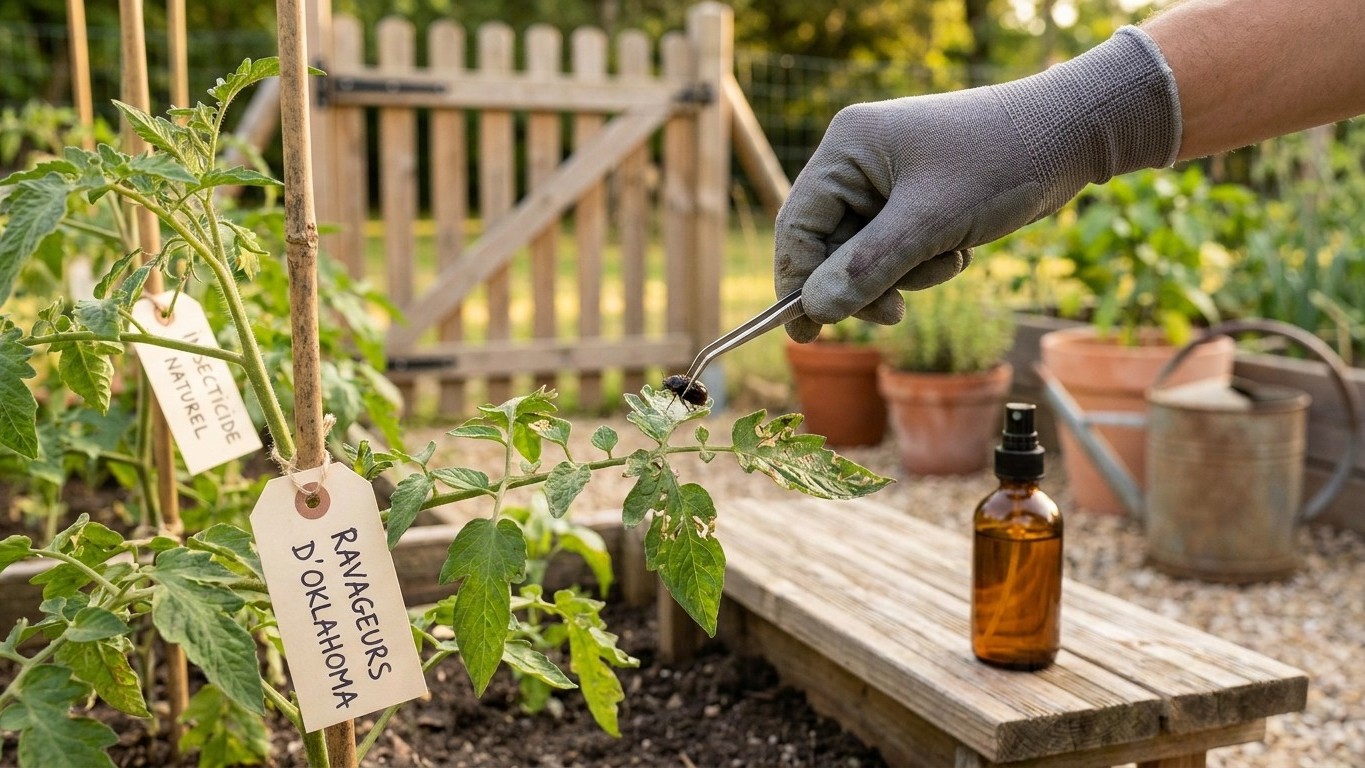

Oklahoma State University Extension’s EPP-7313 fact sheet names ten insects as the ones that most often turn up in home vegetable gardens, including Squash bug in Oklahoma, Corn earworm in Oklahoma, Grasshoppers in Oklahoma, Blister beetles in Oklahoma, Harlequin bug in Oklahoma, stink bugs and leaffooted bugs, green peach aphid, Colorado potato beetle, cucumber beetles, and Spider mites in Oklahoma, with grasshoppers among the ones that show up most reliably across the state. Walk your rows once a week starting as soon as seedlings push their first true leaves, since that early window is when small, fast-multiplying pests like aphids and cucumber beetles do damage a young plant can’t easily outgrow.
What Oklahoma gardens actually deal with

Oklahoma’s long hot summers and mild springs push several insect life cycles faster than they’d run in a cooler state, which is part of why the same ten names come up in garden after garden. Heat speeds up reproduction in aphids and spider mites especially, letting populations explode within a couple of weeks once the weather turns warm and dry. Gardeners working through our full set of Oklahoma guides will notice pest pressure is one of the few things that stays fairly consistent across the state’s different growing zones, even where frost dates and rainfall vary.
Colorado potato beetle

Adults are boldly striped and easy to spot on potato foliage soon after plants emerge. Both the adult and the humpbacked orange larvae chew ragged holes in leaves, and a heavy infestation of the Colorado potato beetle in Oklahoma can strip a plant to bare stems. Hand-picking works well at low numbers; a spinosad or bacterial (Bt) spray labeled for beetle larvae covers heavier outbreaks.
Cucumber beetles

Cucumber beetles in Oklahoma strike cucumbers, squash, and melons right at the seedling and cotyledon stage, chewing small round holes in leaves and scarring stems. The bigger risk is bacterial wilt, which the beetles carry and which kills vines outright. Floating row cover over young plants until bloom is the most reliable fix.
Green peach aphid

Look for dense clusters on the undersides of new leaves and shoot tips, plus a sticky honeydew residue that draws ants. Feeding curls and yellows leaves and stunts growth. A strong water spray knocks numbers down fast, and insecticidal soap handles the rest without wiping out beneficial insects nearby.
Harlequin bug

This is a brassica specialist, so cabbage, broccoli, and kale carry the damage: mottled, wilted patches where the bug’s piercing mouthparts have drained the leaf tissue. Adults and nymphs both feed and both are easy to hand-pick since the bright coloring makes them hard to miss.
Spider mites

Hot, dry stretches bring these on, and the first sign is usually stippled, dusty-looking foliage rather than the mites themselves. Fine webbing on leaf undersides confirms it. Regular water works as well as most miticides for home gardens, since mites thrive in dusty, moisture-stressed conditions.
Blister beetles

These show up in tight feeding groups on foliage and flowers, stripping leaves fast when they arrive in numbers. Handle them with gloves or a jar rather than bare fingers, since crushed beetles release a chemical that blisters skin. Knocking them into soapy water is the simplest control.
Grasshoppers
Adults chew large, irregular notches out of leaf edges and can defoliate whole rows during dry years when populations run high. Netting over vulnerable crops helps more than any spray, since grasshoppers move in from surrounding grass and pasture and keep coming back.
Squash bug
Gray, clustered nymphs and dark flat-backed adults feed on squash and pumpkin vines, causing sudden wilting of individual leaves that spreads through the plant. Crushed egg clusters on the undersides of leaves, laid in neat bronze-colored rows, are the earliest sign to check for.
Stink bugs and leaffooted bugs
Both pierce developing fruit, leaving pale or discolored dimpled spots on tomatoes and beans. Damage often isn’t obvious until the fruit is nearly ripe. Removing weedy edges near the garden where these bugs overwinter cuts down on the population that shows up the following year.
Corn earworm / tomato fruitworm
The same caterpillar species attacks the tip of a corn ear and the inside of a tomato fruit, chewing a tunnel and leaving behind dark frass. A few drops of mineral oil in the ear tip just after silking discourages egg-laying on corn.
Telling damage apart

Reading the pattern before you reach for anything
Chewed leaf edges with ragged, irregular bites point to a beetle or grasshopper feeding at night or dusk. Fine stippling, a dusty gray or bronze cast across the whole leaf, is the signature of spider mites or heavy aphid feeding rather than a chewing insect. Sticky, shiny residue on leaves and the soil beneath is honeydew, a byproduct of aphids feeding, and it often shows up with a black sooty mold growing on top of it.
Sudden wilting of a single leaf or whole vine, with no discoloration on the leaf itself, is a classic squash bug or vine borer sign, and it’s easy to mistake for underwatering. Check the base of the stem and the undersides of nearby leaves before assuming the plant just needs more water. A wilted leaf that’s still green is a pest or disease problem, not a thirst problem, since a genuinely dry plant droops evenly and its leaves dull in color first.
Disease is easiest to separate out by symmetry and spread rate. Fungal and bacterial problems tend to move in blotchy, spreading patterns across a leaf over days, often starting at the leaf margin or around a vein, while insect damage shows up as discrete holes, bites, or clusters tied to wherever the insect is currently feeding. A watering fault, by contrast, shows up as uniform yellowing or browning starting at the leaf tips or lower leaves and moving evenly upward, with no holes, no stippling, and no residue anywhere.
When each one shows up
OSU Extension’s EPP-7313 fact sheet describes pest timing in relative terms rather than fixed calendar dates, and that’s the more useful way to think about it anyway since a cool spring or an early heat wave shifts everything by a couple of weeks. Thrips are described as very abundant early in the season, showing up on cotyledons and the first true leaves of young transplants, which makes that seedling stage worth checking closely even though thrips aren’t one of the ten named garden pests.
Squash bug and corn earworm, by contrast, are described as less numerous early in the season, which means an early-planted crop often gets a head start and escapes the worst of the damage before populations build. That’s the logic behind pushing transplant dates as early as your local frost window allows: a plant that’s already fruiting by the time these pests peak has less exposed, tender tissue for them to target.
Watching the calendar by plant stage instead of date
Seedling and cotyledon stage is when to start scouting for cucumber beetles, thrips, and aphids, since all three favor the softest, newest tissue on a plant. Once plants are flowering and setting fruit, shift attention to squash bug egg clusters, stink bugs and leaffooted bugs on developing pods and fruit, and corn earworm on silking ears. Hot, dry stretches at any point in the season are when to check for spider mites regardless of plant stage, since it’s the weather rather than the crop stage that drives their numbers.
Gardeners just south in Texas work through many of the same names on a warmer, earlier clock, which is covered in our Texas pest guide. Further north and east, gardeners in Massachusetts deal with a shorter season overall and different aphid and beetle pressure, since a shorter, cooler summer changes which generations a pest gets through before frost.
What actually works
Prevention beats intervention almost every time
Rotating where you plant squash, tomatoes, and brassicas each year breaks up the overwintering cycle that many of these pests rely on, since several species spend the cold months in soil or debris right where last year’s crop stood. Floating row cover over seedlings blocks cucumber beetles and squash bug egg-laying during the vulnerable early weeks, and it comes off once plants flower and need pollinator access. Clearing weedy borders near the garden removes the overwintering shelter that stink bugs, leaffooted bugs, and grasshoppers use to survive winter close to next year’s planting bed.
Encouraging predators matters more than most gardeners give it credit for. Lady beetles, lacewings, and parasitic wasps all feed on aphids and caterpillar eggs, and a broad-spectrum insecticide sprayed at the first sign of trouble kills those predators along with the pest, often making the next generation of aphids worse rather than better. Planting a strip of flowering herbs like dill or cilantro near vegetables gives those predatory insects somewhere to live between meals, which keeps them around instead of passing through.
When intervention is genuinely needed, match the tool to the pest rather than reaching for whatever’s on the shelf. Hand-picking works for anything large enough to see and slow enough to catch: blister beetles, Colorado potato beetle adults, harlequin bugs. Bacterial and spinosad-based sprays target caterpillars like corn earworm without harming most beneficial insects. Insecticidal soap and a strong water spray handle soft-bodied aphids and mites without the residual kill-everything effect of a broad-spectrum product.
A few popular home remedies simply don’t hold up. Interplanting marigolds is often repeated as a cure-all repellent, but there’s no consistent evidence it reduces damage from any of the ten pests named here. Diatomaceous earth washes off in the first rain or heavy watering and needs reapplying constantly to matter, which makes it a poor fit for anything but the driest stretches of summer.
What control costs
Comparing the real cost of each method
Hand-picking costs nothing but time, and for pests like blister beetles, Colorado potato beetle, and harlequin bug it’s genuinely effective if done two or three times a week during their active weeks. The tradeoff is that it doesn’t scale. A gardener with a few raised beds can stay ahead of squash bug egg clusters by hand; a gardener with a quarter acre of squash usually can’t.
| Method | Money cost | Time cost | Repeat frequency |
|---|---|---|---|
| Hand-picking | None | High, ongoing | 2-3 times weekly during active season |
| Row cover / barriers | Low, one-time material cost, reusable | Low after initial setup | Install once, remove at bloom |
| Biological controls (Bt, spinosad) | Moderate per application | Low, spot-treat | Every 7-10 days while pest is active |
| Broad-spectrum sprays | Moderate to high over a season | Low per application | Frequent, and often repeated due to killing off predators too |
Row cover and other physical barriers are the cheapest option over a full season once you own the material, since the same cover gets reused year after year and needs almost no attention once it’s installed correctly. Biological controls cost more per application than a barrier but less in labor, and they’re worth the expense specifically for caterpillar pests like corn earworm where hand-picking isn’t practical. Broad-spectrum sprays are usually the most expensive option over a full season, not because any single application costs much, but because killing off the predator insects that would otherwise keep pest numbers down means spraying again sooner and more often than the other three methods combined.
Local help
Oklahoma State University Extension’s county offices identify unfamiliar insects from a sample or photo and track outbreak patterns across the state as they develop through the season. Pest pressure documented near Oklahoma City doesn’t always match what shows up in the Panhandle or in the southeast corner of the state, so a local office is the fastest way to confirm what’s actually in your garden rather than guessing from a photo online. Find your county’s contact information through the OSU Extension directory before you commit to a treatment plan.
Common questions
Do I need to spray every week all summer to keep pests down?
No, and doing so usually backfires by killing the predator insects that would otherwise be doing some of the work for you. Scout weekly, but only treat when you actually find damage or a pest at a stage worth acting on.
Why did my squash die overnight with no warning?
Sudden wilting with no leaf discoloration almost always points to squash bug or vine borer feeding at the stem base, not a watering problem. Check the stem and the leaf undersides before assuming it’s dehydration, since by the time a squash bug infestation causes visible collapse the damage is usually already extensive.
Are the bugs on my tomatoes the same ones that get my squash?
Not usually. Squash bug is specific to squash-family plants, while stink bugs, leaffooted bugs, and corn earworm all feed on tomato fruit directly and can move between several crops in the same garden.
Is it worth planting extra to cover for pest losses?
It can help with pests you can’t fully prevent, like grasshoppers moving in from surrounding grassland in a dry year, but it’s not a substitute for row cover, rotation, or scouting on crops where those methods actually stop the damage before it starts.