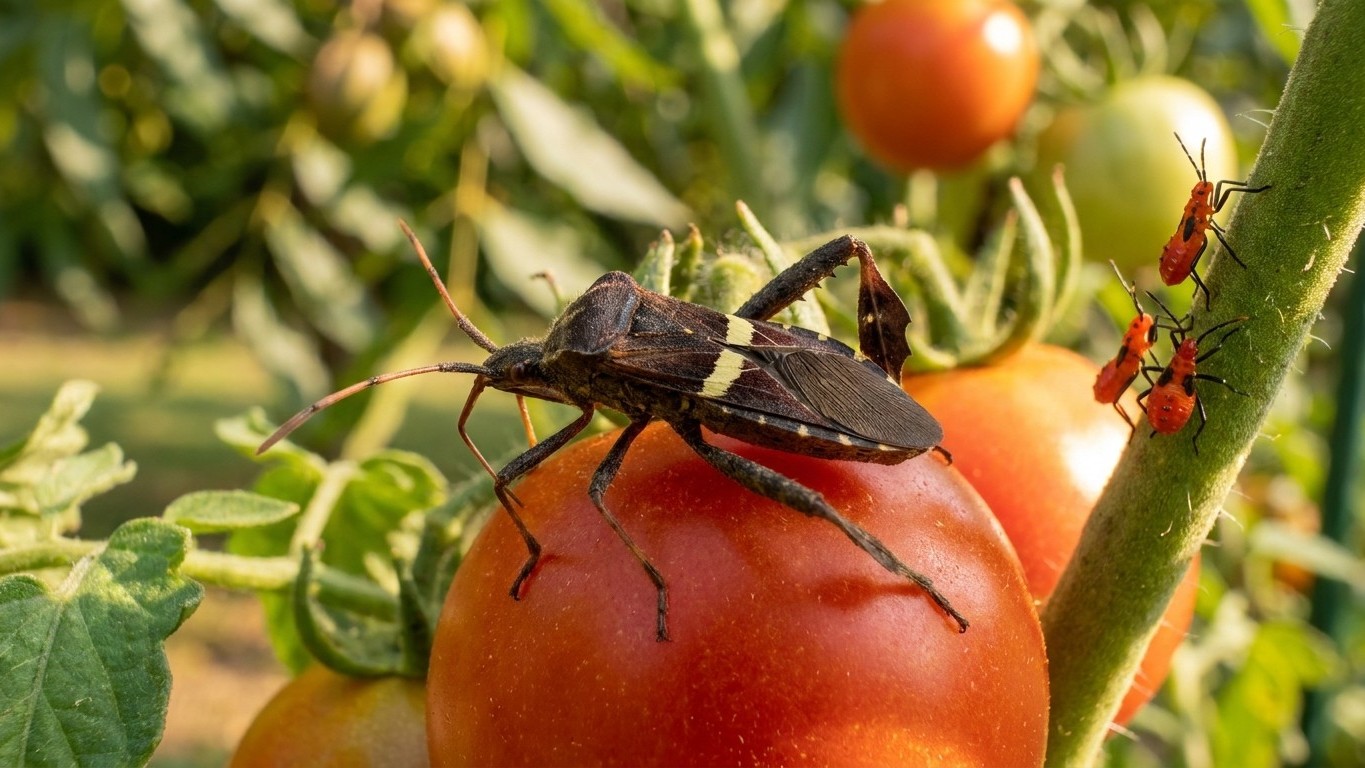

Leaffooted bugs show up in Alabama gardens and pecan orchards starting in late March or early April, once daytime temperatures hold above 70°F, and they stay active through the first hard frost, usually mid-to-late November. Adults overwinter in leaf litter, wood piles, and even siding gaps, then emerge to feed on early tomatoes, peppers, and blooming pecan trees. Two or three overlapping generations follow through summer, with numbers peaking in July and August when nymphs and adults crowd onto ripening fruit.
How to Tell a Leaffooted Bug From a Stink Bug

Alabama gardeners often lump leaffooted bugs in with brown stink bugs, and the confusion is understandable. Both are shield-shaped, both pierce fruit with a needle-like mouthpart, and both release a sharp odor when crushed. The giveaway is the leg. Adult leaffooted bugs (Leptoglossus phyllopus) have a flattened, leaf-shaped flare on the hind legs, which is where the name comes from. They also run larger, close to three-quarters of an inch long, with a narrow white or yellow band across dark brown wings.
Young nymphs look nothing like the adults. Early instars are bright orange-red with black legs and antennae, resembling large aphids or spider mites at a glance. As they mature through five nymphal stages over roughly five weeks, they darken toward the adult’s brown coloring and grow the telltale leg flare. Finding clusters of these orange nymphs on a tomato stem in June is a reliable early warning sign, well before the damage on fruit becomes obvious.
Seasonal Timeline for Alabama
Because Alabama spans humid subtropical conditions across most of the state, the timing skews earlier in the Gulf Coast counties and slightly later in the northern tier near Huntsville. Even so, the general pattern holds statewide.
Overwintering adults become active as soon as sustained warmth returns in spring, often moving first into weedy field edges, blackberry brambles, and early-planted vegetables before crops fill in. Egg-laying begins once host plants are producing tender growth or setting fruit, since females need that resource to support egg development. By midsummer, when tomatoes, peppers, cotton, and pecan trees are all bearing fruit or nuts simultaneously, populations from multiple generations overlap, which is why late July through September tends to bring the heaviest pressure. Activity tapers as nights cool in October, and adults seek shelter for winter once temperatures drop consistently below 50°F.
Why Pecan Growers Watch This Bug Closely
Alabama ranks among the top pecan-producing states, and leaffooted bugs cause a specific kind of damage that growers call “black pit.” Feeding punctures during the water stage of nut development introduce bacteria and enzymes that kill the kernel, leaving nuts that look normal outside but are hollow or discolored inside. Because the damage isn’t visible until harvest, orchard scouting has to happen earlier, typically starting when nuts enter the gel stage in July.
What Attracts Leaffooted Bugs to a Yard or Garden
These insects are opportunistic feeders drawn to whatever is fruiting. In home landscapes, that usually means:
- Tomatoes and peppers, especially fruit that’s already turning color
- Pecan, hickory, and other nut trees during nut fill
- Blackberries and other cane fruits along fence lines
- Pomegranate and citrus in warmer parts of the state
Weedy areas matter more than most gardeners realize. Leaffooted bugs breed readily on wild hosts like pigweed and Carolina horsenettle, using those plants as a staging ground before moving into cultivated crops once the weeds dry down or get mowed. A field edge left unmanaged from May through July can function as a nursery for the population that shows up on tomatoes in August.
What Actually Stops Them
Control works best as a layered approach rather than a single spray, since adults fly readily between properties and can reinvade within days.
Cultural and Mechanical Steps
Clearing weedy borders before they bloom removes a major breeding site without any chemical input. Fall and winter sanitation matters just as much: raking leaf litter and clearing brush piles near the garden eliminates overwintering shelter for adults that would otherwise emerge right where they spent the cold months. Row covers over young tomato and pepper plants keep egg-laying females out during the vulnerable fruit-set window, though covers need to come off once pollination is required.
Hand removal works surprisingly well on a small scale. Adults and nymphs are sluggish in cool morning temperatures, which makes early hours the easiest time to knock them into a bucket of soapy water. This won’t touch a large infestation, but on a backyard tomato patch with a dozen plants, fifteen minutes of morning collection two or three times a week can hold numbers down through the season.
Biological Pressure
Natural enemies provide some background suppression, though rarely enough on their own during a heavy year. Tachinid flies parasitize adults, and certain assassin bugs and spiders feed on nymphs. Encouraging these predators means avoiding broad-spectrum insecticide applications that wipe out beneficial insects along with the target pest, which is one reason blanket spraying often backfires by removing the natural checks that would otherwise help.
When Insecticides Make Sense
Leaffooted bugs are tolerant of many contact insecticides once they reach adulthood, which is why timing an application against nymphs produces far better results than treating mature adults. Pyrethroid-based products labeled for the specific crop, applied when nymphs are actively feeding, tend to be the most effective chemical option home gardeners have access to. Coverage matters more than concentration since these insects can simply relocate to an untreated part of the plant.
The Alabama Cooperative Extension System recommends scouting fruit and nut trees weekly during the growing season and treating only when populations cross a damage threshold, rather than spraying on a calendar. This targeted timing reduces the number of applications needed and limits harm to pollinators working the same plants. Anyone dealing with a pecan orchard or a larger vegetable operation should reach out to their county extension office for current threshold guidance, since recommendations get updated as resistance patterns and new products change from year to year.
For homeowners managing a backyard garden rather than a commercial planting, the combination of weed management, fall cleanup, and morning hand removal usually keeps damage to a tolerable level without any spray at all. Reserve insecticide use for years when nymph populations are visibly heavy on tomatoes or when pecan nut set is at risk, and always check the product label for the specific crop and pre-harvest interval before applying anything near food plants.