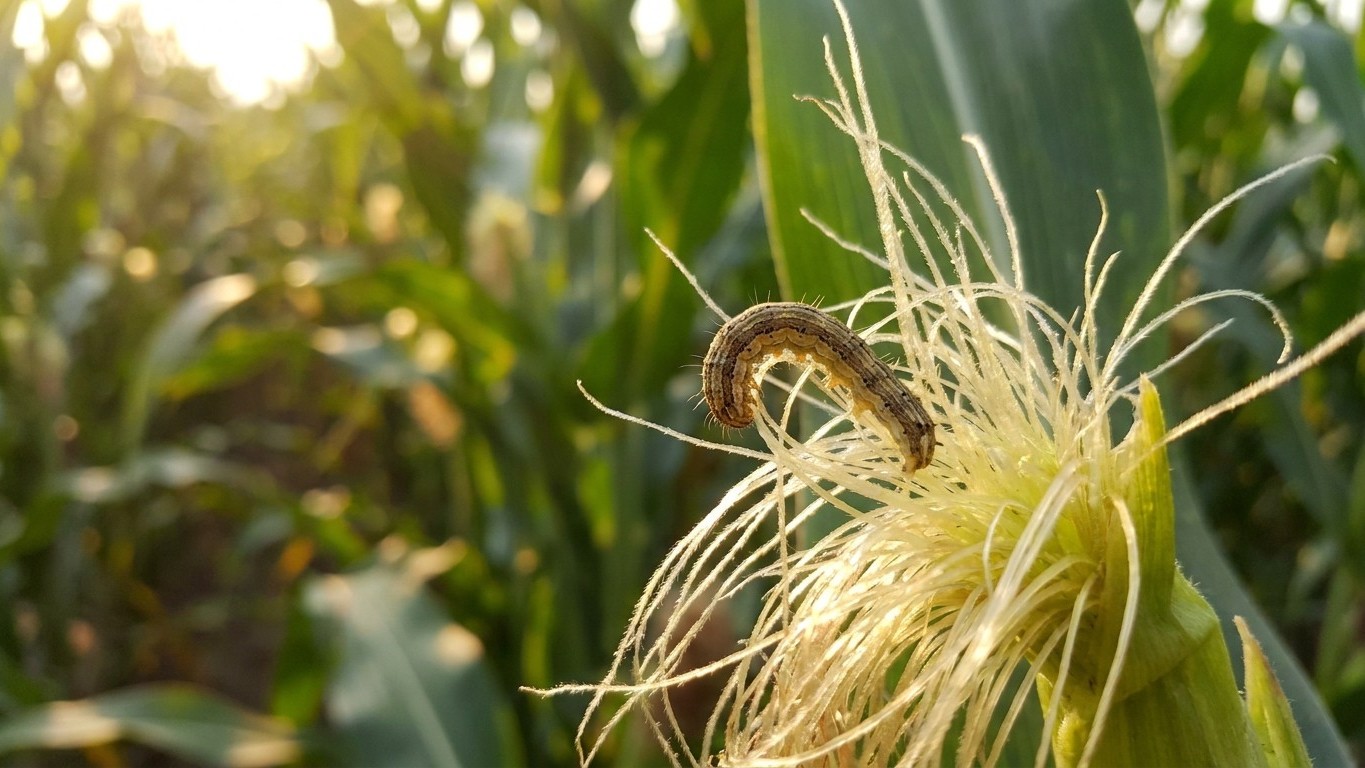

Corn earworm moths start showing up in North Carolina fields as early as May in the coastal plain, but the real trouble builds through July and August, when late-planted sweet corn starts silking right as moth numbers peak for the season. Nothing eliminates the pest entirely. What actually works is timing: planting to dodge peak flight, watching trap counts, and treating the silk stage before larvae tunnel into the ear tip where sprays can’t reach them anymore.
When corn earworm moths show up across North Carolina

This insect (Helicoverpa zea) doesn’t behave the same way in every part of the state. The coastal plain, where winters stay mild enough that pupae can survive underground, often has resident populations emerging by late April or early May. Once those first moths get going, the state typically sees three to four overlapping generations before frost, each one roughly a month apart depending on temperature.
The Piedmont sits in between. Some pupae make it through a mild winter there, but a lot of the early-season pressure comes from moths riding warm fronts up from South Carolina and Georgia. In the mountains, cold winters generally kill off overwintering pupae outright, so populations depend almost entirely on migrants blown in on weather systems. That means western North Carolina often sees corn earworm activity start later and stay lighter, though a warm, windy spring can still bring in a wave of moths from the south with little warning.
Across all three regions, the worst damage tends to land on late-season sweet corn. A patch planted in April and silking in June often escapes with minor injury. The same variety planted in June, silking in late July or August, runs into the year’s highest moth density and usually takes the heaviest hit. That single scheduling difference explains why two gardens a few miles apart can have wildly different outcomes in the same season.
Recognizing the damage before it ruins the ear
The adult moth is easy to miss: a tan to olive-brown night flier with a wingspan around 1.5 inches, active mostly at dusk and after dark. Females seek out fresh, moist silk and lay single eggs directly on it, sometimes more than a thousand over a two- to three-week lifespan. That fecundity is a big part of why the pest is consistently ranked among the most economically damaging insects in American row-crop and vegetable production.
Larvae hatch within a few days and head straight down the silk channel toward the ear tip. Color varies a lot, green, brown, even pinkish, but a striped body and a hardened dark head are consistent markers. Because the larvae are cannibalistic, it’s rare to find more than one per ear even when several eggs were laid, which limits the damage to the tip rather than the whole cob.
Look for chewed silk, a ragged entry hole at the husk tip, and dark frass (insect droppings) pushed out of the opening. Pulling back the husk usually reveals a hollowed-out section of kernels at the top, sometimes just an inch or two deep. On tomatoes, the same species goes by tomato fruitworm and bores in near the stem instead, leaving a small, water-soaked entry wound that’s easy to overlook until the fruit starts rotting from the inside.
What actually stops corn earworm in NC gardens and fields
Timing beats almost everything else. Corn planted early enough to silk before the season’s moth population builds up sees measurably less damage, which is why extension agents across the state routinely recommend the earliest planting date the local frost schedule allows for sweet corn intended to avoid this pest.
For larger plantings and non-Bt field corn, insecticide applications timed to fresh silk emergence remain the standard commercial approach. Sprays applied every three to five days during the silking window, guided by pheromone trap counts and degree-day accumulation, target the eggs and newly hatched larvae before they burrow past reach. Once a larva is inside the ear, no spray touches it.
Bt corn hybrids carrying traits effective against Lepidoptera pests cut down the need for repeated spraying substantially, though research has documented reduced susceptibility to some older Bt traits in earworm populations in parts of the Southeast. That’s a reason to check current trait recommendations rather than assume any Bt label guarantees full protection.
Home garden options that don’t require a sprayer
For backyard sweet corn, a widely used low-tech method involves applying a few drops of mineral oil into the silk channel at the tip of each ear, timed after pollination is complete so it doesn’t block pollen from reaching the kernels. Some gardeners mix in a small amount of Bacillus thuringiensis (Bt) for added effect. This smothers small larvae right at the entry point without broad-spectrum spraying that would also kill pollinators and beneficial insects working the same plants.
Choosing varieties with tighter husk coverage that extends well beyond the ear tip also helps physically, since it gives larvae a longer, tougher path to travel before reaching the kernels. It won’t stop a determined moth from laying eggs, but it does reduce the odds any single larva makes it all the way in before the ear is harvested.
Reducing pressure season to season
Natural enemies do more work than most home gardeners realize. Trichogramma wasps parasitize corn earworm eggs before they even hatch, and minute pirate bugs and lacewings pick off newly emerged larvae. Birds regularly pull larvae right out of open ear tips once the husk has been breached. Cutting back on broad-spectrum insecticide use, especially outside the actual silking window, keeps these predators around instead of wiping them out along with the pest.
Crop rotation offers only limited benefit against this particular insect compared to pests that stay put in one field. Because so much of the state’s population arrives on wind currents from further south each year, rotating a garden bed away from last year’s corn patch does less here than it does for soil-dwelling pests. It’s still worth doing for overwintering populations in the coastal plain, where local pupae survival is more of a factor.
County extension offices in North Carolina maintain pheromone trap networks through the growing season, tracking weekly moth catches that translate directly into spray-timing recommendations for commercial growers and useful early warning for home gardeners keeping an eye on local pest pressure. Checking those counts before a late planting decision can save a patch of corn that would otherwise silk right into the peak of the season.
Related guides
- Corn earworm in Tennessee: When It Shows Up and What Stops It
- Corn earworm in Georgia: When It Shows Up and What Stops It
- Corn earworm in North Dakota: When It Shows Up and What Stops It
- Corn earworm in Oklahoma: When It Shows Up and What Stops It
- Corn earworm in Utah: When It Shows Up and What Stops It