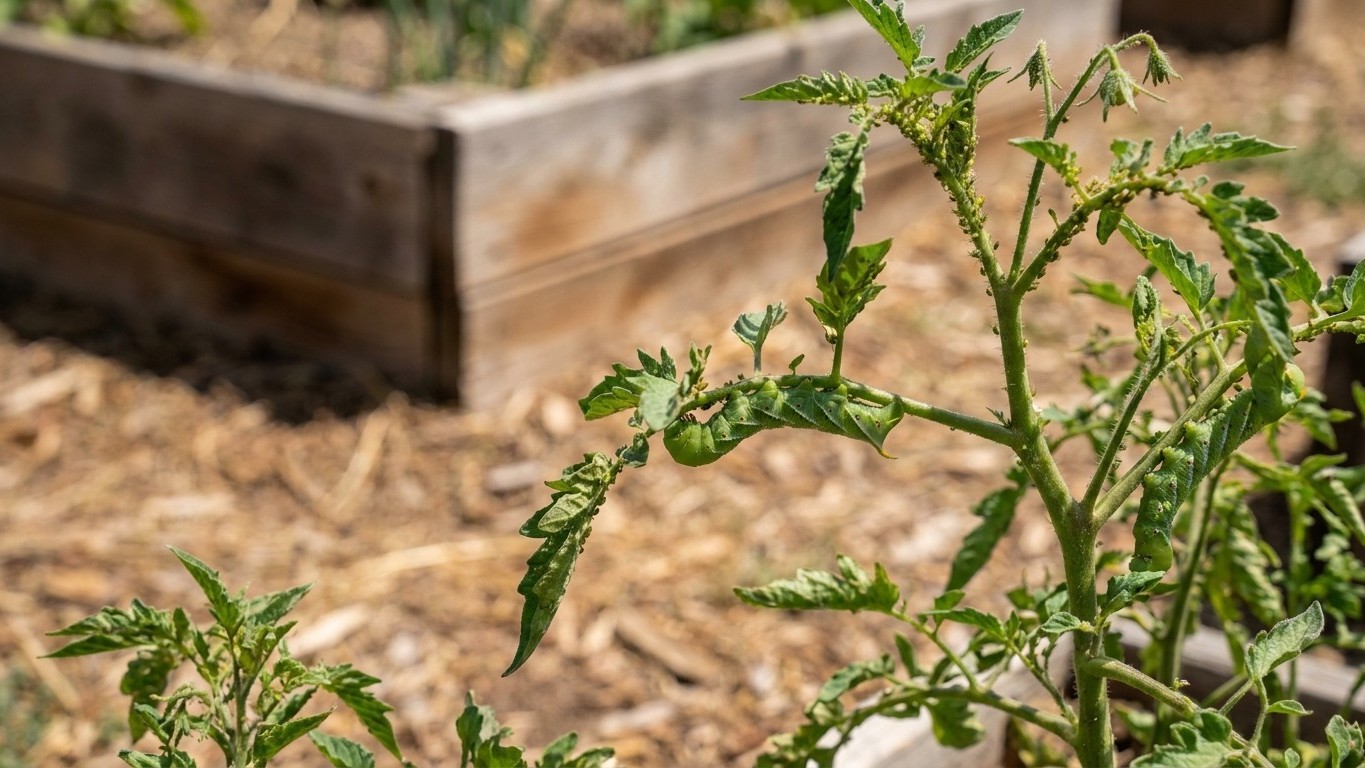

Colorado’s tomato pest list is shorter than most states’, and it runs to about six names: flea beetles, Colorado potato beetle, aphids, beet leafhopper, two-spotted spider mite, and tomato hornworm. NOAA’s 1991-2020 climate normals put Denver’s frost-free window between the last spring freeze of May 1 to May 11 and the first fall freeze of September 30 to October 12, and that dry, high-elevation stretch is what decides which of these pests actually build up numbers before the season ends. Start checking transplants weekly the day they go in the ground, since flea beetles and potato beetles do their damage early, while the plant is still small enough that a bad week sets it back for good.
What this comes down to in Colorado

Denver’s growing season, bounded by NOAA’s frost dates above, runs a little over four months in a typical year, and that short, dry, sunny window favors a specific set of insects over the slower fungal and bacterial problems that dominate in humid states. Colorado’s low relative humidity slows down many leaf-spot diseases, but it suits spider mites and the beet leafhopper that spreads curly top virus, both of which prefer dry conditions to the wet leaf surfaces that fungi need. The pests below are ordered by when they typically show up, from the week you transplant through late summer.
Flea beetles
These show up within days of setting transplants out, often before the plants have hardened off from the shock of the move. They chew hundreds of tiny round holes in young leaves, and a bad infestation on a small transplant can stunt it permanently. Floating row cover laid over the bed at transplant, removed once plants start flowering, keeps the first wave off without a spray.
Colorado potato beetle
Despite the name, it eats tomato foliage readily, especially where potatoes are grown nearby or were grown in that bed the year before. Adults emerge from the soil as it warms in spring and lay clusters of orange eggs on the underside of leaves. Hand-picking adults and crushing egg clusters works well in a small garden, since the beetle has few natural predators here.
Aphids
Green peach aphid is the one most gardeners find, clustered on new growth and the undersides of leaves, sometimes with ants tending them for the honeydew they excrete. Light populations do little harm, but heavy ones curl and yellow leaves and can spread virus between plants. A strong jet of water knocks most colonies down, and ladybird beetles usually arrive on their own within a couple of weeks.
Beet leafhopper
This one matters more in Colorado than in most states, because it carries curly top virus, a disease with no cure once a plant shows it. The insect itself moves in from drying rangeland and weedy ground as early summer heat sets in, feeds briefly, and moves on, so you often see the disease without ever spotting the leafhopper. Removing weeds around the garden and using shade cloth over young plants during the leafhopper’s peak movement reduces the risk, though it will not eliminate it in a bad year.
Two-spotted spider mite
Hot, dry, dusty conditions bring this one on fast, usually by mid-summer. Leaves take on a stippled, bronzed look before you can see the mites themselves, and fine webbing shows up on the undersides in heavier infestations. Regular overhead watering of foliage (not the fruit) and a strong water spray to the leaf undersides interrupt the population before it needs a miticide.
Tomato hornworm
The biggest, most obvious pest on this list, a hornworm can strip a branch of leaves in a day or two once it reaches full size. It hides well despite its size, thanks to the color matching the foliage, and is usually found by following a trail of dark green droppings on the leaves below. Hand-picking is effective and the only control most home gardens need, though a caterpillar covered in small white cocoons should be left alone, since those are a parasitic wasp already doing the job for you.
Working it out for your own garden
Matching a symptom to the right pest saves a wasted trip for a spray you don’t need. Start with where the damage is and when it appeared, since that narrows the list fast in most cases.
Use the damage pattern, not the season alone
A plant chewed full of small round holes within the first week or two after it went into the ground, following the transplant window that Tomato Planting Dates in Colorado: Counting Back From Your Frost Window lays out, points to flea beetles rather than anything that arrives later. A plant with curling, thickened, purple-veined leaves and a general stunted look, showing up as the weather turns hot and dry, is more likely curly top than a nutrient problem. Stippled, dusty-looking leaves with no visible chewing usually mean spider mites, while large chunks missing from upper leaves with droppings below point straight to a hornworm.
| Pest | Typical timing | Where damage shows | What to look for |
|---|---|---|---|
| Flea beetle | Right after transplant | Young leaves | Small round shot holes |
| Colorado potato beetle | Early to mid season | Foliage, egg clusters underneath | Striped adult, red humpbacked larva |
| Aphid | Anytime, peaks early summer | New growth, leaf undersides | Clusters of tiny soft insects |
| Beet leafhopper | Early summer | Whole plant, no visible insect | Curling, purple-veined leaves |
| Two-spotted spider mite | Mid to late summer, hot and dry | Leaf undersides | Stippled leaves, fine webbing |
| Tomato hornworm | Mid to late summer | Upper foliage | Large green caterpillar, dark droppings |
If two pests seem to match, favor the one that fits the calendar. A short-season cultivar you set out under Tomato Varieties That Ripen in Time in Colorado is already through its most vulnerable seedling stage by the time spider mites usually build up, so damage on a young plant is far more likely flea beetle or potato beetle than mites. Choosing a cultivar with intermediate nematode resistance, where the catalogue lists it, is worth doing if a bed has grown tomatoes or potatoes for several years running, since the beetle and nematode pressure both build up in the same soil over time.
What changes across the state
Denver’s plains climate is not Colorado’s only climate, and pest pressure shifts a fair amount with elevation and moisture. Higher mountain towns, sitting well above the Denver station NOAA uses for the frost dates above, run a shorter and cooler season, and a compressed season generally means fewer generations of fast-breeding pests like aphids and spider mites before frost shuts things down. The western slope’s irrigated valleys carry more humidity than the dry eastern plains, which can favor aphid buildup slightly while working against the beet leafhopper, since that insect prefers the drier rangeland vegetation more typical of the plains and foothills.
South-facing, low-elevation gardens warm earlier and stay hot longer, which tends to bring spider mites on sooner and gives potato beetles more time to complete a second generation. North-facing or higher gardens run the opposite way, with a later, milder pest season overall but a narrower window to get ahead of any one pest before the season runs out.
None of this changes which pests you’re dealing with, since the same short list applies statewide, but it does change the timing. A grower at higher elevation should expect the whole sequence to run a few weeks later than what’s described here, and should watch for the season closing in fast once the first fall freeze approaches.
The mistakes this state punishes

The costliest mistake is treating for the wrong problem. A gardener who sees curling leaves and reaches for an aphid spray, when the real cause is curly top virus carried in by beet leafhopper earlier in the season, wastes time on a plant that was already lost the moment it got infected. There is no treatment for curly top once symptoms show, only removal of the plant to stop it from being a source for more leafhoppers.
The second mistake is skipping the early check on new transplants because the plant looks fine at planting time. Flea beetles and Colorado potato beetle both move fast on small plants, and a week of inattention right after the transplant window covered in the planting calendar can undo a head start that took weeks to build. Row cover at transplant, pulled once flowers appear, avoids most of this without a single spray.
The third is assuming a resistant variety solves an insect problem. Disease resistance codes on a seed packet, like tolerance to certain viruses or nematodes, say nothing about whether flea beetles or hornworms will leave the plant alone, since those ratings cover pathogens and soil pests, not chewing insects. A resistant cultivar still needs the same weekly look at the leaves that any other tomato does.
Checking this against your county
Everything above is measured at or near Denver, and a garden in the mountains, on the western slope, or down toward the state’s southern border will see the same pests on a different schedule. Your county extension office is the right next call for a local read on pest timing, since they track what’s actually showing up in traps and gardens that season. COLOSTATE Extension keeps a directory of county offices and its own tomato growing resources at extension.colostate.edu, and it’s worth a look before assuming a statewide figure applies exactly to your yard.
Common questions
Do I need to spray for tomato hornworms every year?
Most home gardens don’t. Hand-picking keeps hornworm numbers low enough that a spray is rarely worth the cost or the effect on the beneficial insects that also help control aphids and other pests.
Why do my tomato leaves curl but I never see any bugs on them?
That pattern, especially with purple leaf veins and a stunted plant, points to curly top virus rather than a live insect problem, since the beet leafhopper that spreads it feeds briefly and moves on. Pull and discard the plant rather than waiting to see if it recovers, since it won’t.
Are ladybugs actually going to control my aphids?
Often, yes, if you give them time and avoid broad-spectrum insecticides that kill them along with the aphids. A light aphid population usually draws in enough ladybird beetles and lacewings within a couple of weeks to bring it back down on its own.
Is it worth buying row cover just for flea beetles?
For a small home garden, yes, since it’s reusable for several seasons and needs no chemical follow-up. Remove it once plants start flowering so pollinators can reach them, as flea beetle pressure usually drops off by then anyway.