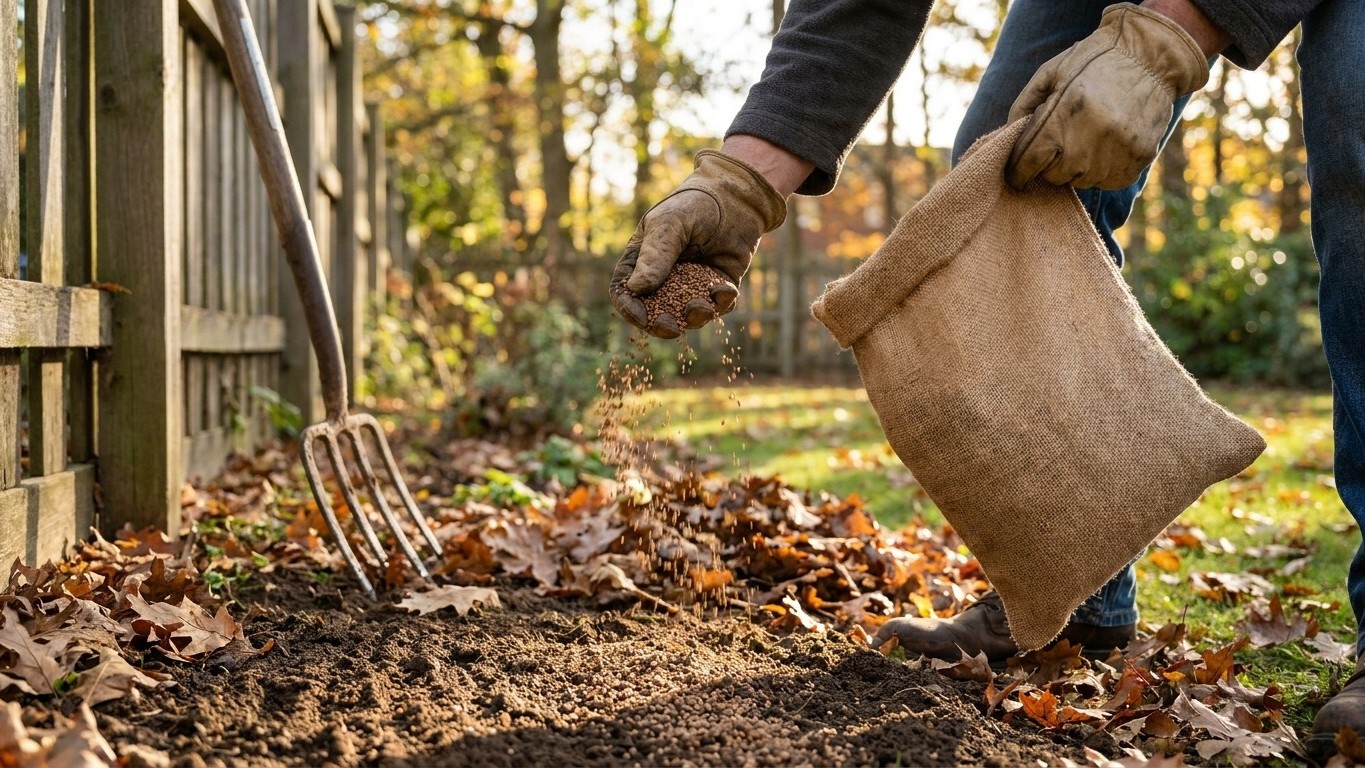

October’s bare patches don’t stay small. Skip overseeding a cool-season lawn while the soil is still warm enough to work, and those thin spots left by summer sit empty all winter, then crack open for crabgrass the moment July heat returns. Scalp a warm-season lawn right before dormancy and nothing looks wrong in November — the damage is hiding in the roots, and it surfaces in April as patchy, uneven green-up while the neighbor’s lawn fills in clean.
Why this matters
A lawn does not show a fall mistake in the fall. Skip overseeding a cool-season lawn in October and the bare patches left by summer stay bare all winter, then widen come July when crabgrass moves into the gaps. Mow a warm-season lawn too low right before it goes dormant and the crown damage does not show until spring green-up comes in patchy instead of even. The lawn banks whatever it does in fall and cashes it out months later, which is exactly why the mistake feels sudden even though it was set weeks earlier.
Cool-season grasses like tall fescue and Kentucky bluegrass use fall to rebuild the root mass that summer heat and foot traffic wore down. That root system is what gets the lawn through next year’s dry spells and heavy use. Warm-season grasses like bermudagrass and zoysiagrass spend fall doing the opposite: pulling energy down into rhizomes and roots before top growth stops, per Clemson Cooperative Extension. Interrupt that process, whether by scalping or by feeding nitrogen too late in the season, and the lawn has less stored energy to come out of dormancy with in spring.
The real cost of getting fall wrong is not visible for months, which is what makes it easy to skip. A lawn that looks fine in November can be thin, weak-rooted, or slow to green up by the time neighbors are out mowing in April or May. By then the window to fix it has closed for another year, because the corrective window is fall again, not spring.
When to do it
The single fact that governs fall lawn care: cool-season grasses are entering their main growth phase in fall, while warm-season grasses are entering dormancy at the same time. Everything else follows from that split. A calendar date means nothing on its own. What matters is which side of that line the grass falls on, and a reader unsure which type is growing should start with the comparison in Lawn Grass Types: Cool-Season and Warm-Season Compared before doing anything else this fall.
Cool-season timing
For species such as tall fescue, Kentucky bluegrass, perennial ryegrass and the fine fescues, fall is when soil temperatures drop back into the range that favors root and rhizome growth over top growth, per Penn State Extension. That makes fall the best window of the whole year for overseeding, dethatching and any fertilizer application aimed at rebuilding density. Clemson Cooperative Extension’s HGIC 1219 Tall Fescue Maintenance Calendar lays out a full season of tasks for that species specifically, and a grower with tall fescue should work from that calendar rather than guessing at dates.
Warm-season timing
For species such as bermudagrass, zoysiagrass, centipedegrass and St. Augustinegrass, fall is the wind-down. Growth slows, then stops, as the grass shifts into dormancy for winter. The species-specific calendars from Clemson (HGIC 1215 for centipedegrass, HGIC 1216 for bermudagrass, HGIC 1217 for zoysiagrass, HGIC 1218 for St. Augustinegrass) each spell out when that transition happens and what to stop doing before it does. The short version: a warm-season lawn wants fewer inputs going into fall, not more, since new growth pushed out too late has little time to harden off before cold weather.
How to do it

General mowing and watering habits carried through summer, the basics covered in Lawn Care, still apply into fall since fall tasks build on top of that baseline rather than replacing it.
Mowing height going into fall
Keep the mower set inside the same range recommended all season rather than scalping before winter. Penn State Extension recommends 2.5 to 3.5 inches for fine fescues, and 2 to 3 inches for Kentucky bluegrass and perennial ryegrass. Clemson Cooperative Extension’s HGIC 1214 puts tall fescue at 2.5 to 3.5 inches as well, and gives the warm-season ranges too: 0.75 to 1.5 inches for bermudagrass, 0.75 to 2 inches for zoysiagrass, 1.5 to 2 inches for centipedegrass, and 2.5 to 4 inches for St. Augustinegrass. A warm-season lawn going into dormancy should stay at the upper half of its range for the last few mows, since more leaf surface going into winter means more stored energy.
Overseeding and dethatching
Fall is the recommended overseeding window for cool-season lawns because germinating seedlings get the same cool, moist conditions the established grass is using to rebuild roots. Before spreading any seed, check the thatch layer with the method in Dethatching: The Measurement That Tells You Whether To, since seed on a thick mat of thatch never reaches soil and never germinates. If overseeding a bluegrass lawn thinned by summer heat or wear, Penn State Extension rates Kentucky bluegrass as good for wear tolerance but only fair for shade, which is worth weighing against a fine fescue if the thin patches sit under trees.
| Species | Mowing height | Shade tolerance | Drought tolerance | Wear tolerance |
|---|---|---|---|---|
| Fine fescues | 2.5-3.5 in | Excellent | Good | Poor |
| Kentucky bluegrass | 2-3 in | Fair | Fair | Good |
| Perennial ryegrass | 2-3 in | Fair | Fair | Good |
| Rough bluegrass | 2-3 in | Excellent | Poor | Poor |
| Tall fescue | 2.5-3.5 in | Good | Fair | Fair |
Figures for the first four species come from Penn State Extension’s lawn establishment guidance. Tall fescue’s figures come from Clemson Cooperative Extension’s HGIC 1214, which tracks it as a widely grown transition-zone species alongside the warm-season grasses.
Fertilizing
Fall nitrogen timing differs sharply by grass type, and the actual pounds-per-1000-square-foot rate depends on the specific product’s guaranteed analysis and the species being fed, so check Clemson Cooperative Extension’s HGIC 1201 Fertilizing Lawns, or a local state extension service, before buying a bag. What generalizes across sources: cool-season lawns can typically take a fall feeding aimed at root and rhizome growth, while warm-season lawns should be finishing their feeding program well before dormancy sets in, since new growth pushed out too close to frost has little time to harden.
What goes wrong
The most common fall mistake is treating both grass types the same way. Fertilizing a warm-season lawn with a high-nitrogen fall feed because that is what the bag says to do in fall pushes tender new growth right before the first hard frost, and that growth is what turns black and mushy after freezing instead of going dormant cleanly. The damage does not show until the following spring, when the lawn greens up in patches instead of evenly.
Scalping is the other repeat offender. Dropping the mower for a last cut before winter strips too much leaf tissue off a warm-season lawn right when it needs that leaf area to keep storing energy in the roots. On a cool-season lawn, the opposite mistake shows up: leaving the grass too tall into winter can mat down under snow or wet leaves and invite snow mold, visible as circular patches of matted, gray or pink-tinged grass as soon as the snow melts.
A few tells to check before the ground freezes:
- Thin, pale patches that do not fill in after overseeding: usually a thatch layer blocking seed-to-soil contact
- New growth still soft and bright green a week before the first hard frost: fertilized too late for the species
- Mower leaving visible scalped stripes on high spots: deck set below the species’ minimum height
- Matted, gray-white patches under old leaf piles in late winter: leaves left on the lawn too long into dormancy
None of these show up the day they happen. That gap between the mistake and the visible damage, often months long, is why fall lawn care rewards following a schedule instead of reacting to how the lawn looks that particular week.
How this changes across the country
A grower in the northern half of the country, where cool-season grasses like Kentucky bluegrass and tall fescue dominate, treats fall as the busiest lawn season of the year: overseeding, dethatching, and a rebuilding fertilizer application all happen while the grass is actively growing roots. A grower in the Deep South, where bermudagrass, centipedegrass, St. Augustinegrass and zoysiagrass are common, spends fall doing far less: mowing at the upper end of the species’ range, tapering off nitrogen, and otherwise letting the lawn ease into dormancy on its own schedule.
The transition zone, a band running through states like Tennessee, North Carolina and Virginia, is where neither answer fully applies. Both cool-season and warm-season lawns are common there, sometimes in the same neighborhood, which is why identifying the actual species in the yard matters more in that zone than in either the North or the Deep South. Tall fescue is the cool-season species most often grown through the transition zone, which is likely why Clemson Cooperative Extension, based in South Carolina, publishes a full maintenance calendar for it (HGIC 1219) alongside its warm-season calendars.
Coastal South Carolina lawns leaning on centipedegrass or St. Augustinegrass, per Clemson’s HGIC 1214 ratings, are managing very different drought and shade tolerances than a Pennsylvania lawn built on Kentucky bluegrass and perennial ryegrass, per Penn State Extension’s ratings for the same traits. Neither region’s fall calendar transfers to the other, which is why the species growing in the yard, not the region’s reputation for a certain grass, should decide the schedule.
Common questions
Should I fertilize my lawn in fall if I don’t know what type of grass it is?
Not until you find out. Identify whether the lawn is a cool-season or warm-season species first, since a fall feeding that helps one type can push late growth on the other right before frost.
Is it too late to overseed if the leaves are already dropping?
It depends on how much growing season the seedlings have left before soil temperatures drop too far for germination, and that varies by location. Check a state extension service’s local fall planting window rather than going by leaf drop alone, since leaf drop timing and soil temperature do not track each other precisely.
Do I need to keep mowing a dormant lawn?
A dormant lawn is not a dead lawn, and it usually still needs occasional mowing if any green growth or weeds are present. Brown, dormant grass can look finished for the season while the crown and roots underneath are alive and will green back up on their own schedule.
Can I dethatch and overseed on the same day?
Yes, and doing both in the same visit is common practice, but dethatch first. Seed spread onto an unbroken thatch layer sits on top of it instead of reaching soil, which is the single biggest reason fall overseeding fails to fill in thin patches.