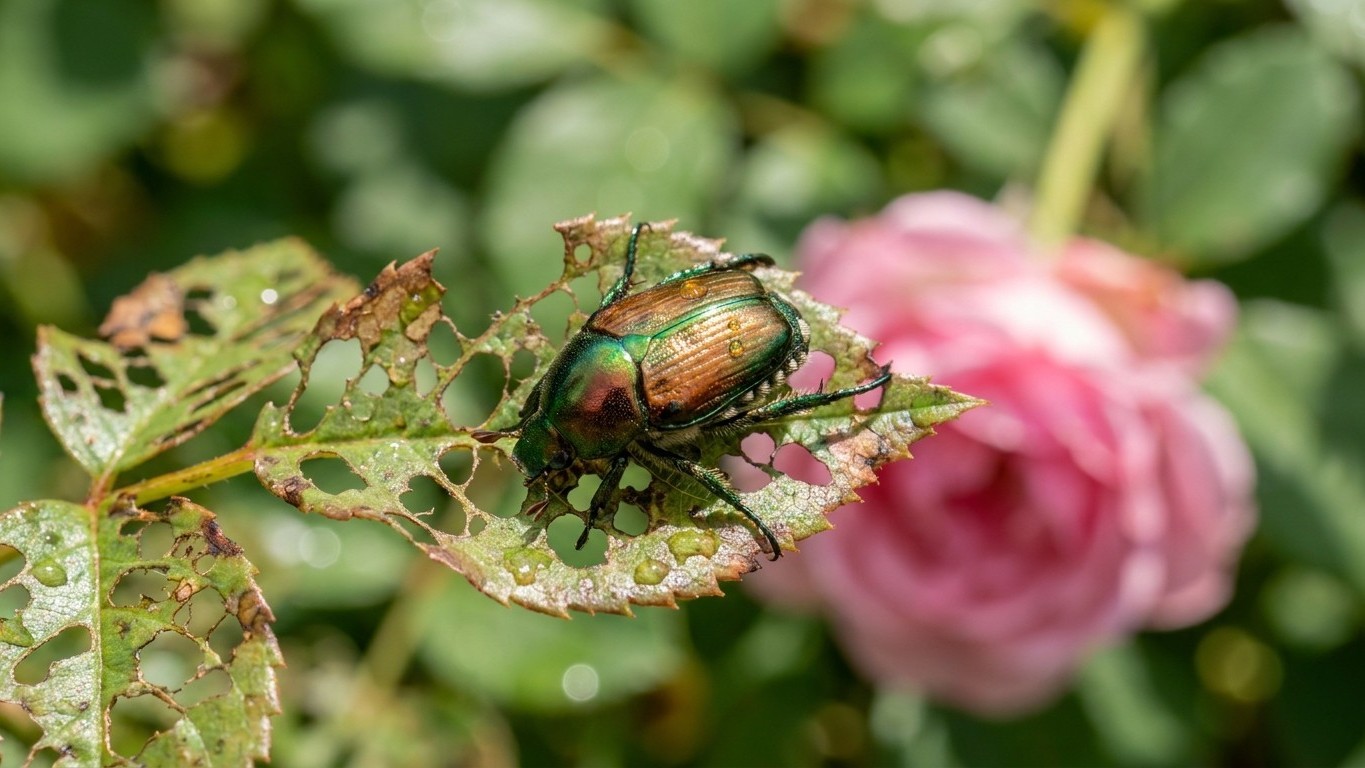

If you’re seeing metallic green beetles chewing through your roses or skeletonizing your linden leaves in Nebraska, the timeline runs from late June through August, with peak damage in mid-July. The beetle has been expanding westward across the state for two decades, and control depends on hitting two different life stages: grubs in the soil during spring and fall, and adults on foliage during summer. Neither approach alone solves the problem for long.
Where Japanese Beetle Has Spread Across Nebraska

Japanese beetle isn’t native to Nebraska, or to North America for that matter. It arrived from Japan in the early 1900s and spent decades creeping across the eastern and midwestern United States before showing up in Nebraska’s population centers. Omaha and Lincoln were among the first areas to report established populations, and from there the beetle has pushed west along the Platte River corridor and into smaller cities with irrigated turf and ornamental plantings.
The pattern matters because it tells you something about risk. Japanese beetle grubs need moist soil to survive, and adults need a steady food supply of leaves and flowers. Dryland farm ground in western Nebraska doesn’t offer much of either, which is why the beetle’s westward march has been slower there than in irrigated cropland and suburban lawns further east. Counties around Douglas, Sarpy, Lancaster, and the string of communities along Interstate 80 report the heaviest and most consistent populations. Further west, sightings tend to cluster around golf courses, nurseries, and municipal parks, places with reliable irrigation.
The University of Nebraska-Lincoln Extension tracks distribution and fields reports from homeowners and landscapers, and that data has shown a fairly steady creep rather than a sudden statewide explosion. That’s typical for this pest. Japanese beetle doesn’t fly hundreds of miles in a season. It spreads gradually through natural flight, and much faster through nursery stock, sod, and soil that gets moved from infested areas to new ground.
The Nebraska Beetle Calendar
Adult Japanese beetles emerge from the soil when ground temperatures climb into the mid-60s and stay there, which in Nebraska usually lands somewhere in the last two weeks of June. Emergence isn’t a single event. Beetles keep pushing up out of the ground for several weeks, so the population builds through late June and peaks during July. By early August numbers start declining, though scattered adults can still be found feeding into September during a warm year.
Before any of that happens, the beetle spends most of its life underground as a grub. Eggs laid in July and August hatch within two weeks, and the resulting grubs feed on grass roots through late summer and fall. As soil temperatures drop, grubs move deeper to overwinter below the frost line, then migrate back up near the surface in spring to resume feeding before pupating into adults. That grub stage, running roughly from August through the following May, is actually the longest part of the beetle’s life cycle and the stage most people never notice until their lawn turns brown in irregular patches.
Here’s the part that trips people up: by the time you see adult beetles skeletonizing leaves in July, the grub damage from the previous fall has often already weakened the turf. Treating adults on your rose bushes doesn’t touch the grubs chewing roots under your lawn. Both stages need separate attention, on separate schedules.
What Japanese Beetles Actually Damage in Nebraska Yards
Adults feed on more than 300 plant species, but in Nebraska landscapes they show a clear preference. Roses top the list, often reduced to lace-like skeletons within days. Linden trees, crabapples, grapevines, raspberries, and Virginia creeper also take heavy hits. Beetles feed from the top of the plant downward and from the outside in, which is why damage often looks worse on the sunny, exposed side of a shrub or tree.
Turf damage comes from the grub stage, not the adults. Grubs feed on grass roots just below the surface, and a lawn under grub pressure develops soft, spongy patches that pull up like carpet because the root system has been severed. Skunks and raccoons digging up lawns in September and October are often chasing grubs, and that torn-up turf is frequently the first sign homeowners notice, well before they connect it to beetles they saw months earlier.
Not every green beetle in a Nebraska yard is a Japanese beetle. Several native scarab beetles look similar at a glance. The real giveaway is the combination of coppery-brown wing covers, a metallic green thorax and head, and small tufts of white hair along the sides of the abdomen. If you’re unsure, a local extension office can confirm identification, and getting it right matters because treatment for Japanese beetle grubs differs from treatment for other lawn-damaging insects like sod webworms or chinch bugs.
What Actually Stops Japanese Beetles
Managing the Grub Stage
Grub control works best as a preventive treatment applied in early to mid-summer, before eggs hatch, rather than as a rescue treatment after damage appears. Products containing imidacloprid or chlorantraniliprole, applied and watered into the soil in June or early July, target young grubs before they do serious root damage. Waiting until fall, when grubs are larger and damage is already visible, cuts effectiveness because bigger grubs tolerate treatment better and the harm to roots has already happened.
Milky spore, a naturally occurring bacterium marketed as a long-term grub control, has a mixed track record in Nebraska’s climate. It performs better in regions with milder winters and more consistent soil moisture; cold winters and dry spells common in the Great Plains can slow its buildup in soil, so it’s rarely a standalone solution here.
Keeping lawns on the drier side during late July and August, when female beetles are laying eggs, also helps. Beetles seek out moist soil for egg-laying, and a lawn that’s allowed to go a bit dormant during that window is less attractive for egg deposits than one that’s watered daily.
Handling Adult Beetles on Plants
Hand-picking beetles off plants in the early morning, when they’re sluggish from cool overnight temperatures, remains one of the more effective non-chemical options for small gardens. Dropping them into a bucket of soapy water kills them quickly. This works because beetles release an aggregation pheromone when feeding, drawing more beetles to already-damaged plants, so removing early arrivals before they attract a crowd limits the snowball effect.
Contact insecticides labeled for Japanese beetle, including products with carbaryl or pyrethroids, can knock down adult populations on ornamentals, but they typically need reapplication every one to two weeks during peak activity because new beetles keep flying in from surrounding areas. Systemic insecticides applied to high-value trees and shrubs offer longer protection but require careful timing to avoid harming pollinators, since many of the same plants beetles favor, like roses and linden trees, also attract bees.
Pheromone traps deserve a specific warning: research from multiple state extension services, including work referenced by the EPA on Japanese beetle management, has consistently found that these traps attract more beetles to a yard than they actually catch, often making nearby plant damage worse. Extension entomologists generally recommend against placing them near plants you’re trying to protect, if you use them at all.
A Practical Nebraska Approach
Treating grubs preventively in early summer and staying on top of adult beetles through hand-picking or targeted spraying from late June through August covers both halves of the life cycle. Skipping the grub stage and only reacting to visible adult damage tends to produce a frustrating cycle where the same yard gets hit every year, since untreated grubs simply mature into next summer’s adult population.
Nebraska’s expansion pattern also means new areas keep crossing the threshold from occasional sighting to established population every few years. A yard that saw no beetles five summers ago may see a manageable handful this year and a real infestation within two or three seasons if grub populations go unchecked in the surrounding neighborhood. Checking with the local extension office for current distribution maps before assuming beetles either are or aren’t a problem in your specific county is worth the five-minute phone call, especially for anyone planting new roses, grapes, or linden trees this fall.
Related guides
- Japanese beetle in Iowa: When It Shows Up and What Stops It
- Japanese beetle in Missouri: When It Shows Up and What Stops It
- Japanese beetle in Nevada: When It Shows Up and What Stops It
- Japanese beetle in New Hampshire: When It Shows Up and What Stops It
- Japanese beetle in Connecticut: When It Shows Up and What Stops It
- Japanese beetle in Virginia: When It Shows Up and What Stops It