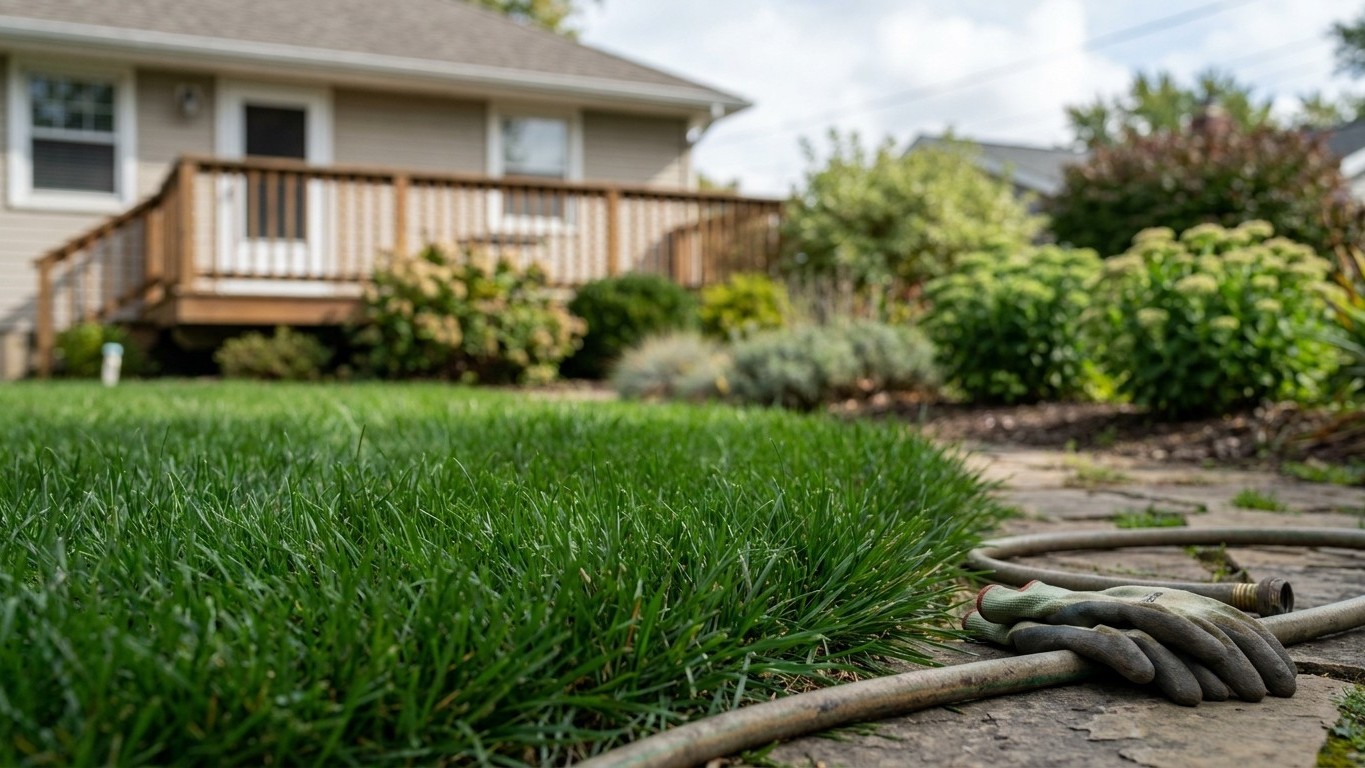

What kind of grass will actually make it through an Ohio winter and still look decent by August? Cool-season grass, full stop — Kentucky bluegrass, turf-type tall fescue, and perennial ryegrass are the three that hold up here, since the bermuda and St. Augustine types sold further south just die out in our cold. Before you buy a single bag of seed, figure out which of those three (or which blend of them) actually fits the sun, shade, and wear your own yard gets.
Cool-season or warm-season grass

Ohio’s winters get cold enough, and stay cold long enough, that warm-season grasses like bermudagrass, centipede grass, and St. Augustine simply cannot survive here. Zoysia is the one warm-season grass that hangs on in the state’s warmer southern pockets, but it spends a large part of the year brown and dormant, greening up late in spring and browning out early in fall. For nearly every Ohio lawn, cool-season grass is the only real option, and getting that right the first time saves years of frustration and reseeding.
Within the cool-season group, three species do almost all the work. Kentucky bluegrass forms a dense, self-repairing lawn because it spreads by underground rhizomes, filling in bare patches on its own over time. It wants full sun and consistent moisture, and it germinates more slowly from seed than its cousins do. Turf-type tall fescue, sold under cultivar names like ‘Rebel Exeda’ and ‘Titanium 2LS’, sends roots much deeper than bluegrass, which makes it noticeably more tolerant of the dry spells that hit Ohio in most summers. It grows in bunches rather than spreading, so a thin patch needs reseeding rather than filling in on its own. Perennial ryegrass germinates fast, often within a week or two, which makes it useful as a nurse grass in seed mixes even when it isn’t meant to carry the whole lawn on its own.
Fine fescue, a group that includes creeping red fescue, hard fescue, and chewings fescue, is the one to reach for in shaded side yards and under mature trees, where bluegrass thins out and tall fescue struggles. It tolerates low light and poor soil better than either of the others, but it doesn’t hold up as well to heavy foot traffic or repeated close mowing.
Most bagged lawn seed sold for Ohio is a blend of these species rather than a single one, usually Kentucky bluegrass paired with turf-type tall fescue, sometimes with a small percentage of perennial ryegrass added for quick early cover. That blend approach hedges against the weakness of any single species. If drought stresses the bluegrass, the fescue’s deeper roots carry the lawn through, and if a fungal disease hits the fescue patches, the bluegrass fills in behind it. Reading the tag on a bag of seed matters more than the marketing on the front, so check the percentage breakdown by species and pick a mix where the named cool-season grasses make up the bulk of it, with as little filler crop seed as the label allows. Because soil, shade, and microclimate vary a lot across the state, from the heavier clay flats near Lake Erie to the more forgiving soils farther south, it’s worth comparing notes with other Ohio guides before settling on a species mix for a particular yard.
Seeding or sodding
Cool-season grass establishes best when the soil is still warm from summer but the air has started to cool, which points to early fall as the strongest seeding window for Kentucky bluegrass, tall fescue, and perennial ryegrass across Ohio. Fall seeding gives roots weeks of mild weather to grow before winter dormancy sets in, and weed pressure runs much lower than in spring, when crabgrass and other annual weeds are germinating right alongside your new grass. Spring seeding works as a second choice, but the seedlings have to fight weeds and then survive their first summer heat before they’ve built any real root system. Check Ohio State University Extension’s regional turfgrass calendar for seeding dates specific to your part of the state, since the window shifts by several weeks between the northern counties near Lake Erie and the Ohio River valley to the south.
Getting the ground ready
A soil test is worth doing before either method, since it tells you the pH and whether the site needs lime, and Ohio soils run acidic often enough that this isn’t a formality. Clear the site of old thatch and debris, loosen the top few inches with a rake or a core aerator, and grade out low spots that will hold standing water after a storm. For seed, a light covering of straw or a seed-starter mulch keeps the surface from drying out between waterings. For sod, the goal is a smooth, firm bed, since gaps under sod pieces dry out the roots before they can knit into the soil beneath.
Watering is what makes or breaks establishment, more than seed quality or sod freshness ever will. Newly seeded ground needs the top inch of soil kept consistently damp, which usually means light watering more than once a day until germination, tapering to fewer, deeper waterings as roots go down. Sod needs the same early attention: water it heavily right after laying, then daily for the first couple of weeks until you can no longer lift a corner easily, a sign the roots have grabbed the soil beneath.
Sod gives you a lawn that looks finished within days, which matters if bare dirt and mud for a season isn’t an option, but it costs several times more per square foot than seed and limits your cultivar choice to whatever the sod farm grows. Seed costs less and lets you pick named cultivars suited to your yard’s shade and traffic pattern, but it takes a full growing season before the lawn can handle regular use, and longer still before it can take the kind of daily traffic established turf shrugs off without thinning.
Through the year

Mowing height matters more than how often you mow. Cool-season grasses like Kentucky bluegrass and tall fescue do best kept on the taller end of what your mower allows, rather than scalped short for a tidy look. Taller grass shades the soil surface, which keeps crabgrass and other weed seeds from getting the light they need to germinate, and it lets the plant keep more leaf area to fuel deeper roots. Never cut more than about a third of the blade length in one pass. Removing more than that in a single mowing stresses the plant and can push it into shock right when heat or drought is already testing it.
Watering and feeding
Deep, infrequent watering builds a deeper root system than frequent light sprinkling does. Light daily watering keeps roots shallow, because they never have to reach down for moisture, which leaves the lawn more vulnerable the moment a dry stretch hits in July or August. Watering less often but long enough to soak several inches down trains roots to grow deeper and gives the lawn more resilience through the summer. Early morning is the best time to water, since it gives grass blades time to dry before evening and cuts down the hours the lawn sits wet, which is when fungal disease gets a foothold.
Fall is the main feeding window for cool-season grass, not spring. A fall application supports root growth and lets the plant store energy for winter, which pays off as faster green-up the following spring. A lighter feeding in spring is reasonable, but heavy nitrogen in late spring or summer pushes fast, weak top growth right as heat and drought are stressing the roots, which works against the plant instead of for it. Check Ohio State University Extension’s fertilization guidance for the actual timing and rate suited to your grass type and soil, since over-applying nitrogen wastes money and can run off into local waterways.
Core aeration, which pulls small plugs of soil out of the lawn rather than just poking holes in it, relieves the compaction that heavy foot traffic and clay soil cause over time. Compacted soil chokes off water, air, and fertilizer before they reach the roots that need them. Aerating in the same season you’d choose for seeding gives the lawn the added benefit of open channels for new seed to settle into if you’re overseeding thin spots at the same time.
What goes wrong
Most Ohio lawn problems trace back to one of four causes: weeds moving into thin turf, soil compaction, a fungal disease favored by wet conditions, or ordinary summer dormancy that gets mistaken for a dying lawn.
Weeds are usually a symptom rather than the root problem. Crabgrass, dandelion, and clover move into bare or thin spots where turf isn’t dense enough to shade them out, so a lawn mowed too short or fed on the wrong schedule will always fight more weeds than one kept thick and at proper height. Spot-treating the weeds without fixing the mowing height or the thin patch underneath just buys another season of the same fight.
Thin patches and disease
Thin or bare patches usually point to one of a few specific causes: soil compaction from foot traffic or equipment, deep shade a lawn grass species can’t tolerate, a spot where the wrong species was planted for the site, or dog urine burning the grass in a concentrated area. Aerating compacted soil, switching to fine fescue in shaded areas, or reseeding a burned patch each solves a different one of those causes, so it’s worth figuring out which is actually happening before throwing seed at it blindly.
Fungal diseases like brown patch, dollar spot, and red thread show up as circular or irregular discolored patches, usually after stretches of high humidity, overnight leaf wetness, or nitrogen applied at the wrong time of year. Watering in the early morning instead of the evening cuts down the hours grass blades stay wet overnight, which is the single biggest thing a homeowner can do to reduce disease pressure without reaching for a fungicide.
Drought stress and outright dormancy get confused constantly, and the two look almost identical from a distance. Cool-season grasses are built to survive extended dry heat by going dormant. The blades turn a uniform straw-brown color, but the crown at the base of the plant stays alive underground, waiting for cooler, wetter weather to resume growth.
- Dormant grass: uniform brown color across the whole lawn, crown resists a gentle tug, greens back up within a couple of weeks once rain or cooler weather returns.
- Dead grass: brown or straw-colored patches that pull free from the soil with almost no resistance, often in irregular shapes rather than covering the whole lawn evenly.
- Disease-damaged grass: distinct rings, patches, or thread-like discoloration, usually with a different color or texture than the surrounding healthy grass rather than a uniform tan.
The tug test settles most doubts. Grab a small handful of brown grass and pull gently. If it resists and stays rooted, the lawn is dormant rather than dead, and the right move is to leave it alone rather than reseeding ground that was only ever going to green back up on its own once the weather breaks.
Common questions
Can I plant zoysia or bermuda grass in Ohio?
Bermuda grass won’t reliably survive Ohio winters and isn’t a practical choice anywhere in the state. Zoysia can survive in the warmer southern counties, but it stays brown for a long stretch of spring and fall while cool-season lawns around it are already green, which is why most Ohio homeowners stick with Kentucky bluegrass or tall fescue instead.
Why is my lawn turning brown in summer even though I water it?
It’s most likely summer dormancy rather than a watering failure, especially if the whole lawn browns evenly rather than in patches. Cool-season grass slows down and browns off in extended heat as a survival strategy, and watering it less, not more, during that stretch actually keeps the crown healthier for regrowth once cooler weather returns.
What’s the best grass seed for a shady yard in Ohio?
Fine fescue, meaning creeping red fescue, hard fescue, or chewings fescue, tolerates low light far better than Kentucky bluegrass or tall fescue. Many shade seed mixes blend two or three fine fescue types together with a small amount of shade-tolerant tall fescue, since no single cool-season species covers both deep shade and heavy foot traffic well.
How long until new grass seed can be mowed or walked on?
Mow new seedlings for the first time once they’ve grown noticeably taller than your regular mowing height, so the mower is trimming rather than shocking them, and keep the blade sharp for that first pass. Hold off on regular foot traffic and games in the yard until the grass has had a full season to build root depth, since young turf pulls out of the ground easily before then.