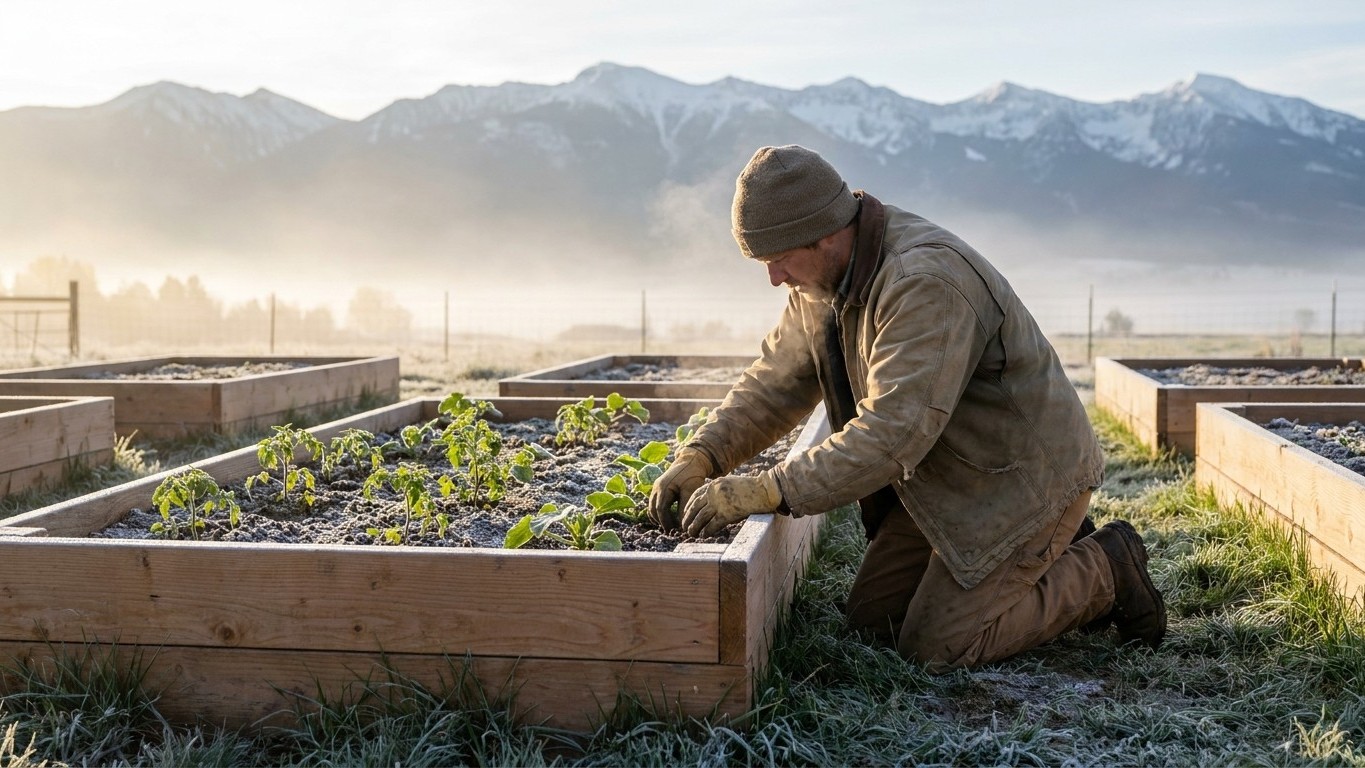

Montana gardeners work with a frost-free window that runs roughly from early May to early October, in a state that spans hardiness zones 3a to 6a. That gap between “last spring frost” and “first fall frost” is the number that actually runs your garden, more than any seed packet promise or neighbor’s advice.
How long your season really is

Start with the numbers that matter, using Billings as the reference point. The USDA places the state across hardiness zones 3a to 6a, a wide spread that reflects how much elevation and latitude change things from one valley to the next. The average last spring frost falls between April 29 and May 10. The average first fall frost arrives between October 1 and October 14, which is also a useful marker for knowing When to Carve a Pumpkin in Montana without losing your harvest to an early freeze. Subtract one from the other and you get a frost-free window of somewhere between four and a half and five months.
That’s the whole story, in one number. Five months, at best, is not a long-season climate. It rules out the crops that need six months or more of warm ground to finish: many winter squash varieties, some slow dry beans, the longest-maturing tomatoes bred for southern gardens. Shorter-season staples fare better within that window, which is why Growing Potatoes in Montana remains one of the more forgiving choices for local gardeners, and with the right variety selection and season-extension tricks, Growing Peppers in Montana can work too, much like Growing Carrots in Montana, Growing Parsnips in Montana, Growing Beets in Montana, Growing Spinach in Montana, and even Growing Pumpkins in Montana with a well-chosen shorter-maturing variety, fit comfortably within the shorter growing window. Attempting the longer-season crops here isn’t impossible, but it’s a bet against the calendar, and the calendar usually wins.
Here’s the part gardeners skip past too fast: those frost dates are averages, not guarantees. NOAA builds them from a 30 to 70 percent probability band across the 1991-2020 climate record, which means in roughly half of all years, frost arrives later in spring or earlier in fall than the stated date. A gardener who plants tender starts on May 10 because “that’s the average last frost” is playing a coin flip, not following a rule. The safer read is to treat the early end of the window, April 29, as the date frost risk starts dropping, not the date it disappears.
Mountain valleys make this worse. The Billings figures come from one of the state’s milder low-elevation locations. Higher valleys and anything north or west of the reference station can see frost in months that a Billings gardener would consider safely warm. That’s not a detail to shrug off. It’s the reason a planting date that works in one part of Montana can fail two counties over.
What the summer does to a garden here
Heat isn’t a bonus round for a garden. It has a ceiling, and Montana crosses it more than people expect: the Billings reference station averages 28.3 days a year at or above 90F. That’s not a description of a hot afternoon here and there. It’s a measurable stretch of the growing season where certain plants stop functioning the way a gardener wants them to.
Above roughly 90F, tomato flowers drop without setting fruit, because the plant can’t manage pollen viability at that temperature. Lettuce and spinach bolt, going straight to seed instead of producing leaves. Broccoli and other cool-season vegetables that were doing fine in June can stall out entirely in a hot July stretch. None of this is a disease or a pest. It’s just heat load doing what heat load does, and 28.3 days of it a year is enough to reshape how a Montana garden behaves in the middle of summer.
The practical shape this creates is not one long growing season but something closer to two productive windows with a rough patch in between. Cool-season crops thrive in the weeks right after the last frost and again as fall approaches, while the hottest stretch of summer becomes a management problem more than a growth opportunity. This is worth knowing before you plan a garden that only accounts for planting and harvest dates.
Winter cold matters just as much for what survives from year to year. The coldest month at the Billings reference station averages a daily low of 17.9F, which is the figure that decides whether a perennial, shrub, or fruit tree makes it through winter at all. That’s not the same as an occasional record cold snap. It’s the typical low during the coldest stretch, and it’s the number worth checking against any plant’s stated cold tolerance before it goes in the ground.
What tends to go wrong in Montana
Montana State University Extension keeps its garden-pest list short, five fact sheets covering the insects gardeners here actually report, not the long rosters some states publish. That brevity is itself a useful piece of information: it says something about which pests actually show up with regularity in Montana gardens, as opposed to the wider cast of characters that trouble growers elsewhere.
Grasshoppers are the one most gardeners already know. They build up through summer and can strip leaves fast once populations spike in a dry year, hitting vegetable gardens and ornamental beds without much preference. Thrips on vegetables and flowers show up earlier, feeding on leaf and flower tissue in a way that leaves stippled, silvery scarring rather than obvious holes, often noticed on onions, beans, and flowering annuals.
The brown marmorated stink bug has been expanding its range and shows up later in the season, piercing fruit and vegetables to feed, which leaves discolored, sometimes corky spots on things like tomatoes. Miller moths pass through in late spring on their way to higher elevations, more a nuisance around porch lights than a plant-damaging pest, though large numbers can be unsettling. Social wasps build nests through summer and become more aggressive by late season as their colonies peak, a concern for people more than plants.
Four pests, four different windows in the season. No spray calendar is included here on purpose. Timing and treatment depend on what’s actually present in a given garden, and that’s a call for the extension service, not a generic schedule applied statewide.
Where to check before you plant
Everything above is a state-level starting point, built from one reference station in Billings. It is not a substitute for local information, and treating it that way would be a mistake. A state that stretches across hardiness zones 3a to 6a doesn’t behave the same way in Missoula, Bozeman, Havre, and Kalispell. A planting calendar tuned to the state capital’s climate can run three weeks off at either edge of the state, which is more than enough to lose a crop to a frost nobody expected.
Montana State University Extension is the land-grant resource built for exactly this gap. Its state extension office maintains the pest fact sheets referenced above and connects to county-level offices that track local frost patterns, soil conditions, and planting windows than any statewide average can.
Before committing to a planting date this year, the county extension office is the better first call. It’s the difference between gardening off a state average and gardening off what’s actually happening in the ground nearby.
Three Crops Worth Getting Right
Cold is the thread running through all of this, and it shows up differently depending on what you’re growing. Plant garlic too early and warm soil never lets it split into cloves at all — growing garlic in Montana lays out the planting dates and varieties that actually get a bulb to divide before harvest. Lawns face the same test from the other direction: a warm-season grass planted on faith turns brown by Halloween and never comes back, so Montana lawn care covers which grass survives a 17.8°F January night and when to feed it. Tomatoes run on a tighter calendar still, pinned to the last spring freeze — growing tomatoes in Montana walks through NOAA’s freeze-date normals for Billings and what that means for when you can set plants out. Read them together and the pattern is the same: know your cold, then plant to it.