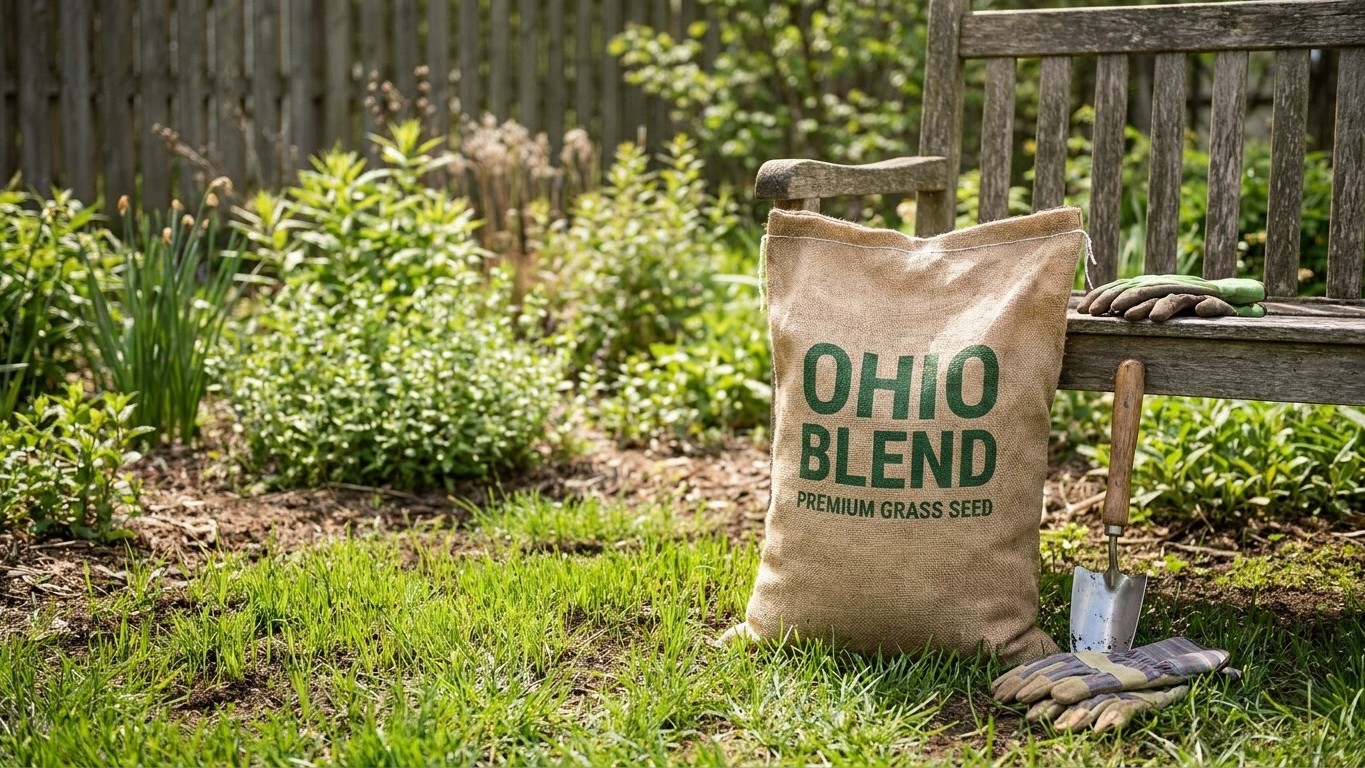

The short answer for Ohio’s climate zone puts it in cool-season turf country, based on Columbus climate data. Fine Fescues, Kentucky Bluegrass, Perennial Ryegrass, Rough Bluegrass and Tall Fescue are the species Clemson Cooperative Extension (HGIC 1214) and Penn State Extension list for this zone. Check your county’s first fall frost window before you buy seed, since that window sets your planting date.
The short answer for Ohio
Ohio’s cool-season climate means five grasses actually work here — Tall Fescue, Kentucky Bluegrass, Perennial Ryegrass, Fine Fescue, and Rough Bluegrass — and picking between them comes down to how much sun, foot traffic, and summer water that patch of yard gets, not what’s popular at the store. Skip anything warm-season; Bermuda and zoysia will brown at the first hard freeze and likely won’t come back. Walk the yard, answer those three questions honestly, then check your county’s first fall frost date before buying seed, since that date sets your planting day.
Which of the five you pick depends less on the state and more on the yard. Tall Fescue tolerates drought and foot traffic better than the others, which makes it the common pick for a lawn that gets real use. Kentucky Bluegrass spreads by rhizome and heals itself after damage, but it drinks more water doing it. Perennial Ryegrass germinates fast and is often blended into a bluegrass mix for that reason, not planted alone. Fine Fescue and Rough Bluegrass both take shade better than the other three, which is the trade a shaded yard makes for slightly less wear tolerance.
None of the warm-season grasses, Bermudagrass, zoysia, centipede, belong on this list for Ohio. They go dormant and brown at the first hard freeze and, planted this far north, they frequently do not green back up the following spring because the crown doesn’t survive a cold enough winter. That is a zone mismatch, not a maintenance mistake, and no amount of feeding fixes it.
What the “best” answer depends on, in order: how much sun the yard gets, how much foot traffic it takes, and how much water you’re willing to run in a dry August. Get those three answered honestly and the species list narrows itself.
Working through the year

Because Ohio’s recommended grasses are cool-season species, the whole year runs on the opposite schedule from a Bermuda or zoysia lawn: the growing pushes happen in spring and fall, not mid-summer. Clemson’s HGIC 1219 Tall Fescue Maintenance Calendar lays out the sequence for tall fescue specifically, and it’s the closest published, dated calendar for the species most Ohio homeowners actually have on the ground.
Spring
Mow tall fescue at a height in the 2 to 3 inch range through spring green-up, per HGIC 1219, and apply a pre-emergent herbicide before summer annual weeds germinate rather than after you see them. Spring is not the season to overseed a cool-season lawn. New seedlings sown in April or May run straight into summer heat before their roots are established, and that’s a losing bet almost every year.
Summer
Keep mowing height on the higher end of the range through summer heat, since a taller blade shades the soil and slows moisture loss. HGIC 1219 calls for roughly 1 inch of water per week during dry stretches, split across one or two waterings rather than a daily light sprinkle that only wets the surface. Skip nitrogen feeding here. Pushing new growth during heat stress is one of the calendar’s clearer warnings, and it’s where a lot of home lawns go wrong.
Fall
Fall is the main event for cool-season grass, and it’s also where the two calendars in play, Clemson’s species calendar and Ohio’s own frost dates, actually meet. Ohio State University Extension’s Ohio Gardening Calendar puts the first fall frost at October 5 to October 15 for the zone 6a area around Columbus, and overseeding needs to happen well ahead of that, while soil is still warm enough for germination. HGIC 1219 calls for the bulk of the season’s nitrogen, split across applications, to go down in fall rather than spring, since cool-season roots do most of their building once the heat breaks. Aeration falls in this same window, opening compacted soil right before overseeding so new seed reaches soil contact instead of sitting on a thatch mat. For the full month-by-month sequence around this window, The Ohio Lawn Care Calendar, Month by Month lays out what precedes and follows the fall push.
Winter
Cool-season turf goes dormant but stays alive under snow cover. There’s no feeding or mowing to do, and pushing fertilizer onto frozen or snow-covered ground wastes the product and can run off instead of feeding the grass.
What changes across Ohio
The Columbus-area figures used above describe the middle of the state, and Ohio is big enough that both ends of it run on a different clock. Lake Erie’s shoreline counties in the northeast get a moderating effect from the lake itself: the water delays fall’s first freeze along the immediate shore and slows spring warm-up in that same strip, so a seeding window timed to Columbus can run early or late depending which side of that lake effect a yard sits on.
Southeastern Ohio’s Appalachian foothill counties sit at higher elevation than the Columbus reference point, and higher ground cools faster in the evening. That typically pushes the first fall frost earlier than the Columbus-area range, which matters directly for overseeding, since seed sown too close to a frost that arrives earlier than expected won’t have time to establish before dormancy.
None of that changes which species belong on the list. Fine Fescue, Kentucky Bluegrass, Perennial Ryegrass, Rough Bluegrass and Tall Fescue are the cool-season group for the whole state, lake effect or elevation aside, because the zone classification comes from broader winter and summer temperature patterns, not a single week’s frost date. What shifts across the state is timing, not species. A homeowner in Ashtabula County and one in Adams County are both planting the same grasses, on slightly different calendars.
The mistakes this climate punishes
Seeding at the wrong end of the season
Sowing cool-season grass in late spring is the most common miss. The seed germinates fine in the mild weather, then the seedlings hit their first real heat wave with roots too shallow to survive it. The damage doesn’t show up until July or August, weeks after the mistake was made, which is exactly why it keeps happening: nothing looks wrong at planting time.
Mowing short going into summer
Scalping a cool-season lawn right before a hot, dry stretch removes the leaf tissue that shades the soil and roots. The lawn doesn’t die outright, but it thins and browns faster than a lawn left at a taller mowing height, and it shows up as patchy stress within two to three weeks of a hot spell rather than immediately.
Feeding at the wrong time
Heavy nitrogen in the middle of summer pushes top growth exactly when the plant is under heat stress and least able to support it. The visible result is a lawn that looks lush for a week and then burns or wilts hard once the next dry stretch hits. Fall is where the nitrogen budget belongs for these species, not summer.
Assuming brown means dead
Cool-season turf browns during summer drought as a survival response, not death. Tearing it out and reseeding a lawn that’s simply gone dormant in a dry August wastes seed and money on a lawn that would have greened back up on its own once rain returned. This is different from a warm-season lawn browning after frost, which is normal dormancy for that grass type too, just on the opposite half of the calendar. Ohio homeowners, working with cool-season grass, will see the drought version far more often than the frost version.
Checking this against your county
Every figure above is anchored to Columbus, and county-level frost dates, soil types and even recommended cultivars can shift from there. Ohio State University Extension runs a county office network built for exactly this kind of local check, and its site at extension.osu.edu is the fastest way to confirm your own county’s numbers before you buy seed or fertilizer. If you’re still working out the broader seasonal routine, Ohio Lawn Care covers the groundwork this page assumes you’ve already got in place.
Common questions
Can I mix tall fescue with Kentucky bluegrass?
Yes, and many bagged mixes already do this, often with perennial ryegrass added as a nurse grass for fast germination. The mix works because bluegrass fills in bare patches by rhizome while tall fescue carries the drought and wear tolerance. Keep the mowing height set for the taller-growing species in the blend, since cutting too low stresses one grass more than the other.
Why did my new grass seed not come up?
The most common cause is letting the top inch of soil dry out during germination, which cool-season seed doesn’t tolerate well. The second most common cause is seeding outside the fall or spring windows, when soil temperature is either too cold for germination or too hot for the seedling to survive past its first week.
Is it too late to overseed if I missed the fall window?
A late fall seeding, sown close to the first frost, usually fails to establish before dormancy and gets crowded out or winter-killed. Spring seeding is possible but riskier for the reasons covered above, since young roots then have to face summer heat with far less time to establish than a fall-sown lawn gets.
Do I need to dethatch before I aerate?
Not usually, and the two jobs solve different problems. Aeration relieves soil compaction so water, air and new roots can get through, while dethatching removes a built-up mat of dead grass tissue sitting on top of the soil. If thatch is thicker than about half an inch, deal with it separately rather than expecting aeration to fix it.