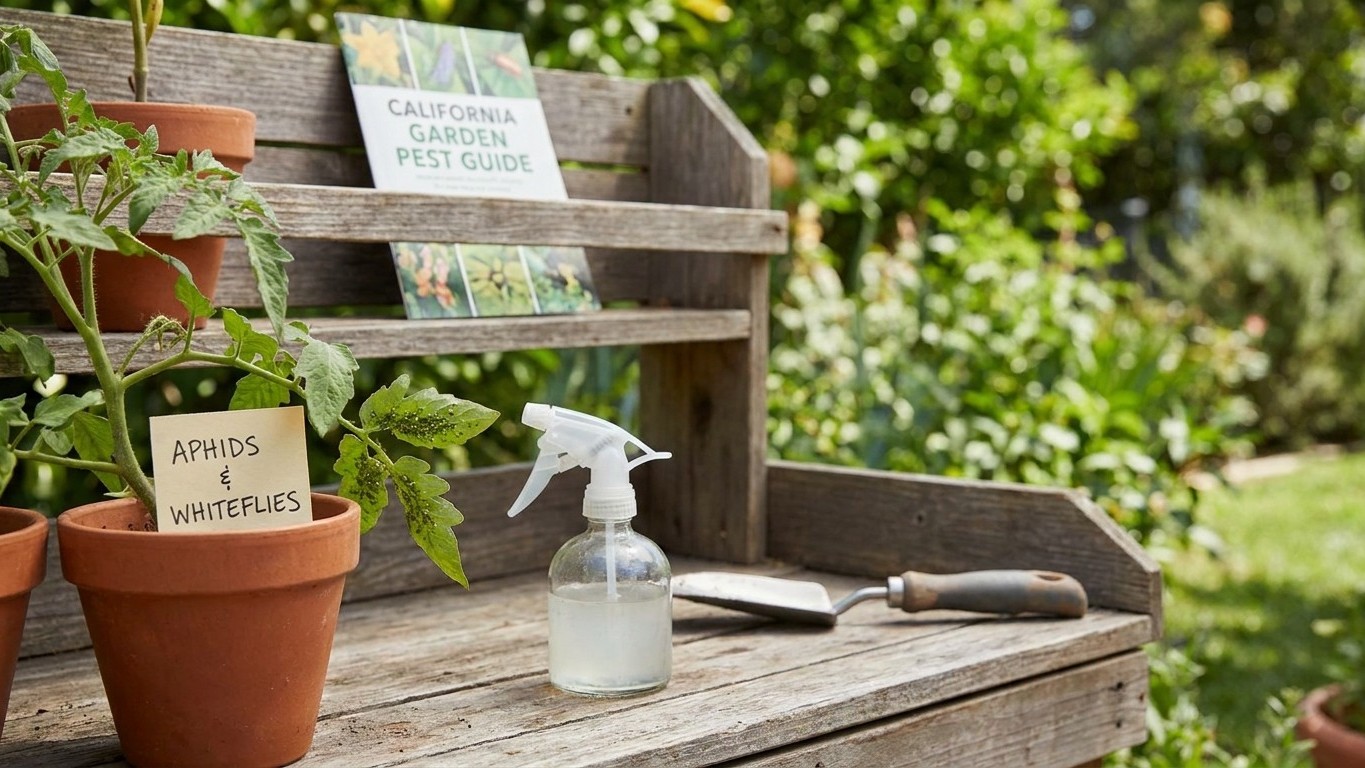

California’s home vegetable gardens deal with a recurring list of eleven pests, according to the University of California’s Master Gardener Program and UC IPM Pest Notes: brown garden snails and slugs, aphids, Spider mites in California, Earwigs California, stink bugs, leaffooted bugs, the Tomato hornworm in California, tomato fruitworm (also known as the Corn earworm in California), Cucumber beetles in California, along with Whiteflies in California and Root-knot nematodes in California. Snails and slugs can stay active through the night and on foggy days year-round in the mildest coastal parts of the state, including around Los Angeles. Check the soil surface and leaf undersides with a flashlight after dark before you plant anything else, since that is when the two most persistent pests on the list actually show themselves.
What California gardens actually deal with

Slugs and snails are the ones actually eating your garden alive right now, and they do their worst work in the dark. Both stay active nearly year-round in mild coastal climates, sliding out at night or on foggy days to strip a row of lettuce before morning. Before you plant another thing, take a flashlight out after dark and check the soil surface and leaf undersides — that’s when you’ll actually catch them.
Brown garden snail and slugs

The brown garden snail carries a rounded, brown shell mottled with darker bands, about an inch across. Slugs are its shell-less cousins, soft gray-brown bodies that leave the same silvery slime trail. Both rasp ragged holes in leaves and seedlings overnight and can level a row of lettuce in one session. Hand-picking after dark, plus a copper tape or diatomaceous earth barrier around the bed, does more than any bait product.
Aphids

Aphids are soft, pear-shaped insects the size of a pinhead, pale green to black, clustered on new growth and the undersides of leaves. They suck sap, curl leaves, and leave a sticky honeydew that draws ants and grows sooty mold on top of it. A strong water spray or insecticidal soap knocks a colony back within days.
Earwigs

Earwigs are dark reddish-brown, flattened, about three-quarters of an inch long, with a pair of pincers at the tail end. They chew irregular holes in soft leaves and seedling stems at night and hide in mulch or under pots by day. A rolled, damp newspaper tube set out overnight traps them well, since they crawl in to hide before dawn and can be shaken out into a bucket in the morning.
Cucumber beetles

These are small, quick beetles about a quarter-inch long, greenish-yellow with black spots or three black stripes down the back. They chew holes in cucurbit leaves and flowers and can spread bacterial wilt as they feed. Row cover over young squash and cucumber plants until bloom keeps them off the seedlings during the stage when the damage matters most.
Spider mites

Spider mites are barely visible without a hand lens, pale yellow to reddish specks that cluster on leaf undersides and spin fine webbing in heavy infestations. Feeding shows up as a fine, dusty stippling across the leaf surface rather than holes. Mites build up fastest in hot, dry, dusty conditions, so a regular hose-down of foliage is real preventive work, not just tidying.
Whiteflies

Whiteflies are tiny, pale, moth-shaped insects that lift off the underside of a leaf in a small cloud when the plant is disturbed. Both the adults and the flat, translucent nymphs feed on sap and leave the same sticky honeydew aphids do. Yellow sticky traps hung near affected plants catch enough adults to show whether a population is building before it gets out of hand.
Hornworms
Hornworms are heavy, pale to bright green caterpillars three to four inches long at full size, with white diagonal stripes down each side and a curved horn-like spike at the tail. One caterpillar can strip a tomato branch of leaves in a couple of days. According to UC’s Master Gardener Program, they peak in midsummer with a smaller second wave in late summer, so a daily look through the tomato foliage in July pays off.
Stink bugs
Several kinds turn up in vegetable gardens: the mottled brown-and-gray consperse stink bug, the boldly red-orange-and-black harlequin bug, and the bright green southern green stink bug, all shield-shaped and roughly half an inch to three-quarters of an inch long. They pierce fruit and stems to feed, leaving pale or discolored blotches under the skin. Adults tolerate most home sprays reasonably well, so hand-picking into a bucket of soapy water works better than reaching for a bottle.
Leaffooted bugs
Leaffooted bugs are narrow, brown, about three-quarters of an inch to an inch long, named for the flattened, leaf-shaped flare on their hind legs, with a pale zigzag stripe across the back. They feed on developing tomato and pomegranate fruit, causing sunken discolored spots at the feeding site. Shaking them into soapy water early in the morning, while they’re still sluggish from the cold, catches the most in one pass.
Tomato fruitworm and corn earworm
This is a single species, Helicoverpa zea, that attacks tomato fruit and corn ears under two different common names. The caterpillar varies from green to brown to pink, faintly striped lengthwise, growing to about an inch and a half. It bores directly into the fruit or ear, so the first sign is usually a hole with dark frass around it rather than the caterpillar itself. Checking developing tomatoes and corn ears weekly and removing damaged fruit limits how much a single larva gets to eat.
Root-knot nematodes
These are microscopic roundworms living in the soil, invisible to the naked eye. The evidence is underground: pull up a stressed, stunted plant and look for swollen, bead-like galls along the roots instead of a normal, thin root system. There’s no spray that fixes an infested bed. Rotating out of susceptible crops and choosing a nematode-resistant tomato variety are the only practical responses once a bed is confirmed.
Telling damage apart

Chewed leaf margins and full-thickness holes almost always mean an insect or mollusk fed while you weren’t looking. Ragged, torn edges point to snails, slugs or earwigs working at night. Clean, rounded punch-outs across a whole leaf usually mean a caterpillar such as a hornworm or fruitworm has been resident for a day or two. A fine, sand-like stippling with no visible holes is different: that’s the signature of spider mites feeding on individual cells rather than chewing tissue.
Sticky, shiny residue on leaves and stems, sometimes followed by a black sooty film, means a sap-feeder has been at work rather than a chewer. Aphids and whiteflies both produce this honeydew, and ants trailing up and down a stem are usually farming it. Wilting is the sign most often misread. A plant that wilts despite moist soil, especially one that’s also stunted with swollen knots on the roots when you pull it, points to root-knot nematodes rather than anything happening above ground. A plant that wilts because the soil is actually dry, or because it’s been overwatered and the roots are rotting, is a watering fault and not a pest at all. Check the soil with a finger before treating for insects you haven’t actually seen.
Discolored, sunken patches on ripening fruit are usually feeding damage from stink bugs or leaffooted bugs piercing the skin to reach the flesh, not a fungal spot, which tends to look more circular and concentric and often shows up on older or already-damaged tissue first. The fastest way to separate an insect problem from a disease is to check the time of day and the underside of the leaf. Most of the state’s key insect pests either feed at night, like snails, slugs and earwigs, or cluster where you have to turn the leaf over to see them, like aphids, mites and whitefly nymphs. Fungal and bacterial diseases show up in daylight on the leaf surface you’re already looking at, and they usually follow a wet or humid spell rather than any particular hour.
- Ragged holes, torn edges: snails, slugs, earwigs, caterpillars
- Fine white or yellow stippling, no holes: spider mites
- Sticky residue, sooty mold, ants present: aphids or whiteflies
- Sunken or discolored spots on fruit: stink bugs or leaffooted bugs feeding
- Wilting with normal soil moisture and root galls: root-knot nematodes
- Wilting with dry or waterlogged soil: a watering problem, not a pest
When each one shows up
Pest activity in California tracks temperature and plant stage more than the calendar, and the state’s mild winters change the rhythm compared to colder regions. Snails and slugs can stay active on foggy nights and overcast days right through winter in the milder coastal parts of the state, including around Los Angeles, according to the University of California’s Master Gardener Program, though inland and mountain gardens see them slow down more during cold, dry stretches. That’s a real contrast with places that get a hard freeze: in New York gardens or the higher elevations covered in the Colorado pest guide, a real winter knocks slug and snail numbers back each year in a way much of California’s coast never gets.
Early in the season, as transplants go in and soil warms, watch for earwigs and cucumber beetles working on tender seedlings and cucurbit leaves before the plants have grown enough to shrug off the damage. Aphid colonies typically build on the soft new growth of spring, ease off during the hottest, driest weeks of summer, then return. Melon aphid in particular turns troublesome again in September and October, per the UC Master Gardener Program’s figures for the Los Angeles area, right as gardeners are pushing a fall crop of greens and brassicas into the ground.
Spider mites build fastest during the hot, dry, dusty middle of summer, when a plant under any water stress is even more exposed. Whiteflies follow a similar warm-season curve, showing up as temperatures climb and staying a problem into fall wherever the weather stays mild. Hornworms have their own separate pattern: the University of California’s Master Gardener Program puts their peak in midsummer, with a second, smaller wave in late summer, so a July and August tomato patch needs a closer daily look than one in May.
Stink bugs and leaffooted bugs move in as fruit sets and ripens, from midsummer through fall, drawn to the sugars in developing tomatoes and pomegranates. Root-knot nematode damage has no season of its own, since the nematodes live in the soil year-round, but symptoms show up fastest in warm soil during active root growth, which in practice lands in the same summer stretch when everything else on this list is also under pressure.
What actually works
Prevention beats intervention on every one of these pests, and it starts with timing and rotation rather than a bottle. Rotating tomatoes, peppers and other nightshades to a different bed each year starves root-knot nematode populations of a host and slows their buildup, and the same rotation limits soilborne disease that gets confused with pest damage in the first place. Choosing a nematode-resistant tomato variety, and getting cucurbits under row cover before cucumber beetles find them, removes two of the harder problems on this list before they start.
Encouraging what already eats these pests
Lady beetles, lacewings and syrphid fly larvae eat aphids by the hundred, and a bed that isn’t sprayed indiscriminately keeps them around. Birds take a real bite out of hornworm and fruitworm populations if the garden has some cover for them to work from. Broad-spectrum insecticides do more harm than good in most home vegetable gardens, because they clear out the predators along with the pest, and the pest population usually rebounds faster than the predators do.
For pests that are already established, targeted action beats a general spray. Hand-picking snails, slugs, hornworms and stink bugs works because these are large enough to see and slow enough to catch, and it does no collateral damage to anything else in the bed. A hard water spray dislodges aphids and mites well enough that it’s often the only intervention a small infestation needs. Insecticidal soap and horticultural oil handle the soft-bodied sap feeders, aphids, whiteflies and young stink bug nymphs, when a spray really is warranted, because they work on contact and break down quickly rather than lingering on the plant.
Some widely repeated remedies don’t hold up. Coffee grounds and eggshells scattered around a plant do not reliably deter snails or slugs, whatever the gardening forums claim. A physical barrier like copper tape or a ring of diatomaceous earth does. Ultrasonic pest repellers have no meaningful effect on insects or mollusks. Interplanting marigolds throughout a vegetable bed is often sold as a general pest deterrent, but the evidence for it working against the pests on this list, as opposed to a few specific nematode species under controlled conditions, is thin. Spend the effort instead on physical barriers, timing and hand-picking, since those three consistently do what they promise.
What control costs
None of the effective options here cost much by garden standards, but they cost very different amounts of your time, and that’s usually the deciding factor for a home gardener working a small plot.
| Method | Money cost | Time cost | How often |
|---|---|---|---|
| Hand-picking (snails, hornworms, stink bugs) | None | A few minutes, daily during peak weeks | Daily to every other day while active |
| Barriers and row cover | Low, a one-time purchase reused for years | Set up once per bed per season | Installed once, checked occasionally |
| Biological controls (attracting or releasing predators) | Low to none if attracting, some cost if buying beneficial insects | Little ongoing effort, but slower to show results | Ongoing, ramps up over weeks |
| Insecticidal soap or oil sprays | Low, one bottle lasts a season | Mixing and application each time | Every 7 to 10 days while pests persist, more often after rain |
Hand-picking is the cheapest option in dollars and the most demanding in attention, which makes it a good fit for a small backyard bed and a poor fit for anyone gardening a large plot alone. Barriers and row cover cost more upfront than a pair of gloves but need almost no repeat labor once installed, which makes them the best return over a full season against cucumber beetles and earwigs. Biological control, mostly a matter of not spraying and planting a few flowering herbs to keep predator insects fed, costs the least of all but takes longer to show a visible effect, so it suits a gardener planning a whole season rather than reacting to an outbreak already underway.
Sprays sit in the middle. Insecticidal soap and horticultural oil are cheap per application, but they only kill what they touch and break down quickly, so a real infestation needs repeat applications through the season rather than a single treatment. For a typical home vegetable garden, the combination of hand-picking, physical barriers and a spray held in reserve for outbreaks costs the least overall and needs the least equipment.
Local help
The University of California’s statewide extension service, UC ANR, and its Master Gardener Program track pest pressure by region and will identify a specimen you can’t put a name to. Find your county’s office and the relevant UC ANR resources, including the UC IPM Pest Notes, before you spray anything you’re not sure about. A correct identification is worth more than any product on the shelf, since a treatment aimed at the wrong pest wastes the money and the week you could have spent on the real one. For other seasonal gardening tasks across the state, see our California guides.
Dig Deeper Into Specific Pests
Knowing the broad seasonal patterns of California pests is a good start, but if you’re dealing with a specific culprit in your garden right now, it helps to get into the details. Take a closer look at earwigs, which show up across the state from early spring clear through fall, spending their days tucked into damp mulch and other hiding spots before coming out at night to chew on tender leaves, flowers, and soft fruit. If you garden along the coast or in Southern California, you’ve probably noticed these pests don’t fully disappear even in the off months — they’re active nearly all year in those milder zones. That page breaks down exactly when to watch for them and what actually works to stop the damage before it spreads through your beds. It’s the kind of pest-specific detail that a general overview can’t fully cover, and it’s worth reading if earwigs have been showing up in your own garden lately.
Common questions
Is the brown garden snail the same one used for escargot?
Yes. The brown garden snail is Cornu aspersum, the same species used in French cuisine. Home garden populations aren’t raised for eating, and treating them as a free food source skips the purging and handling that farmed escargot goes through, so it’s not something to try casually.
How soon after spraying insecticidal soap can I eat the vegetables?
That depends on the specific product, so check the pre-harvest interval printed on the label rather than assuming a standard number. Insecticidal soaps and horticultural oils generally break down fast, but the label is the only place with the exact figure for what you’re holding, and it can vary between formulations.
My tomato leaves have holes but I can’t find a hornworm anywhere?
Look harder before you assume it’s gone. Hornworms are colored to disappear against tomato foliage, and the easiest way to spot one is to look for dark, pellet-shaped droppings on the leaves below the damage and then trace upward. If you find a hornworm covered in small white, rice-shaped cocoons, leave it alone: those are parasitic wasp larvae already working on it.
Do raised beds keep these pests out?
Not on their own. A raised bed makes hand-picking snails and slugs a little easier since there’s less cover at ground level, but it does nothing to stop flying pests like whiteflies, cucumber beetles or stink bugs from finding the plants. Root-knot nematodes can still turn up in a raised bed if they came in with the soil or compost you filled it with, so a new bed isn’t automatically clean.