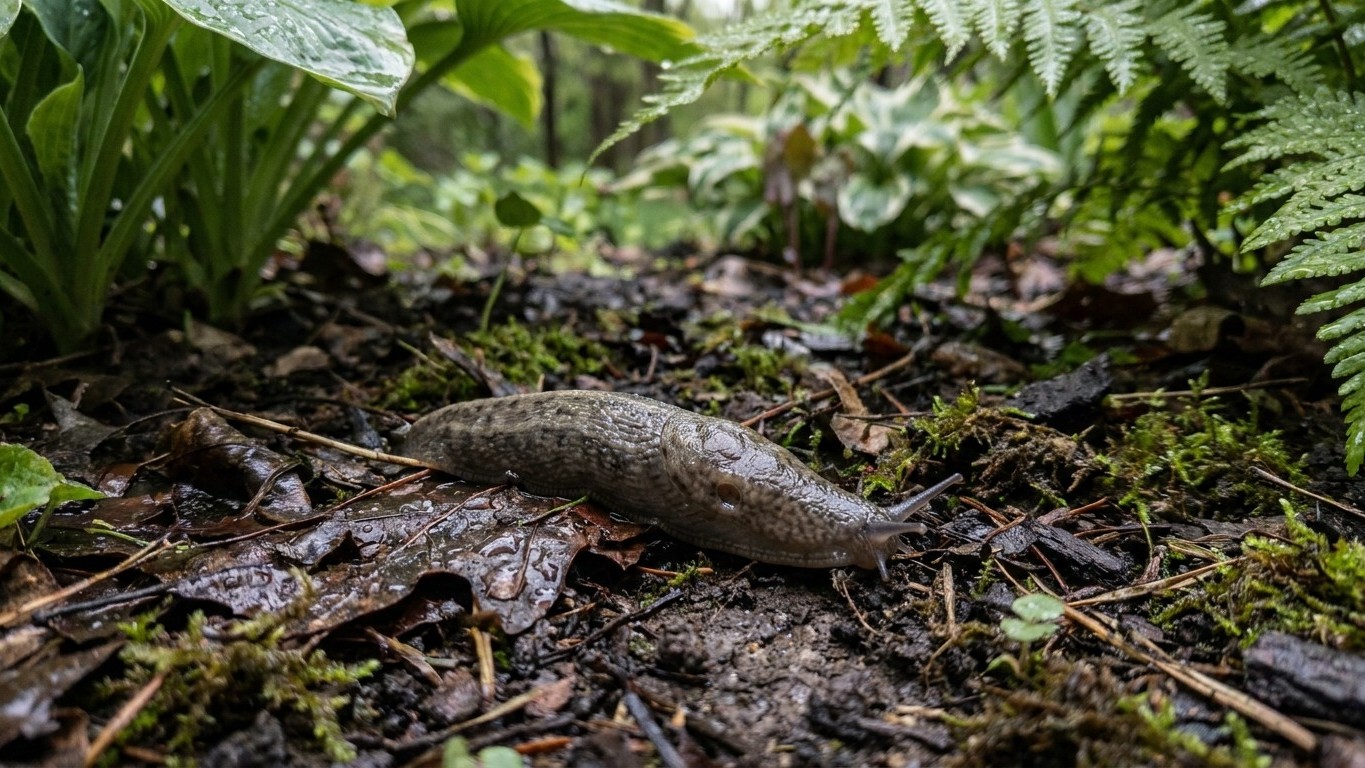

Slugs turn active across Ohio once nighttime temperatures climb into the 50s, usually by mid-April, and they stay busy until the first hard frost in late October or early November. The trigger isn’t the calendar. It’s moisture. A wet spring or a rainy stretch in September will bring them out in force, while a dry July can make them nearly disappear from a garden bed for weeks.
When Slugs Are Most Active in Ohio

Ohio’s humid continental climate gives slugs exactly what they need twice a year: cool, damp conditions in spring and again in fall. Between those windows, summer heat and dry spells push them underground or under mulch during the day, where they wait out the sun and come out only after dark or during rain.
The gray garden slug (Deroceras reticulatum) is the species most commonly found chewing on hostas, lettuce, and strawberries statewide. It’s small, usually under an inch and a half, and mottled gray-brown. Larger banded slugs show up too, especially in wooded or shaded suburban yards with heavy leaf litter. Both types share the same biology: they’re mollusks, not insects, and they breathe through a small pore on one side of their body called a pneumostome. That’s why dry air kills them faster than almost anything else you could spray.
Eggs are the part of the cycle people miss. A single slug can lay dozens of clear, jelly-like eggs in the top inch of soil in fall, and those eggs overwinter just fine under Ohio’s snow cover. They hatch as soon as soil temperatures warm in April, which means the slugs you see in May aren’t new arrivals. They’re the offspring of whatever was living in your beds the previous autumn.
Why Cincinnati, Columbus, and Cleveland See Different Timing
Southern Ohio, around Cincinnati, tends to warm up ten days to two weeks earlier than the Cleveland area, so slug activity starts sooner in spring along the Ohio River valley. Cleveland and the rest of the Lake Erie shoreline get a moisture boost from lake-effect humidity that can keep slugs active later into fall than in the drier central part of the state around Columbus. None of that changes the control approach, but it does mean a lakeside gardener in Lorain County might still be fighting slugs in November while someone in Dayton has already stopped seeing them.
Spotting Slug Damage Before You Spot the Slug
Slugs feed at night and hide during the day, so most homeowners find the damage first. Look for irregular holes in leaves, especially on hostas, marigolds, lettuce, and strawberries, with the edges left ragged rather than clean-cut like you’d see from caterpillars. On thicker leaves, slugs will scrape away the surface tissue without going all the way through, leaving translucent patches that look almost like window screening.
The giveaway sign is the slime trail. Dried slug mucus leaves a silvery, slightly shiny path across soil, pavement, or leaves, and it’s visible in morning light even after the slug itself has retreated to a hiding spot under a board, a pot, or a pile of damp mulch. If you see fresh trails but no slugs, check under anything sitting flat on damp ground within ten feet of the damage. That’s almost always where they’re spending daylight hours.
Ohio State University Extension notes that slug damage often gets mistaken for damage from cutworms or earwigs, but the slime trail is the fastest way to tell them apart in the field. No other common Ohio garden pest leaves that residue behind.
What Actually Stops Slugs in Ohio Yards
Slug control comes down to three approaches: making the environment less hospitable, physically trapping or removing them, and using targeted baits. Most successful strategies combine at least two.
Cut the Moisture and Cover
Slugs need damp, dark hiding spots to survive daylight hours. Thick mulch layers, especially wood mulch piled more than two inches deep against plant stems, are basically slug hotels. Pulling mulch back a few inches from stems, thinning it to about an inch, and watering in the early morning instead of the evening removes the overnight humidity slugs depend on. A garden watered at 6 a.m. dries out by nightfall; one watered at 7 p.m. stays wet all night, which is exactly when slugs are foraging.
Raised beds also help. Slugs are slow and don’t climb well onto raised structures unless there’s a direct bridge, like an overhanging leaf or a wooden edge touching the ground on both sides.
Traps and Barriers That Work
Beer traps remain a reliable low-cost option. A shallow container sunk into the soil so its rim sits at ground level, filled with an inch of beer, draws slugs in overnight and they drown. It needs to be refreshed every few days and emptied of the ones it catches, but it’s cheap and doesn’t involve chemicals near food crops.
Copper tape or copper mesh around raised beds and pots creates a barrier slugs won’t cross, since contact with copper produces a mild electrical reaction against their slime layer. It has to stay clean and untarnished to keep working, and it loses effectiveness once it’s coated in dirt or plant debris.
Diatomaceous earth, spread in a dry ring around vulnerable plants, works by drying out the slug’s underside as it crosses. The catch is that it stops working the moment it gets wet, which in Ohio’s rainy spring means reapplying often, sometimes every day or two during a wet week.
Baits: Iron Phosphate vs. Metaldehyde
Iron phosphate baits are the option most commonly recommended for home gardens because they’re approved for use around vegetables and considered low-risk for pets and wildlife when used as labeled. Slugs eat the bait, stop feeding within a day or two, and die over the following week, usually retreating underground rather than leaving visible carcasses.
Metaldehyde-based baits kill faster but carry real risk to dogs, cats, and some wildlife if ingested directly, and the EPA has restricted several older metaldehyde products over the years because of pet poisoning incidents. Anyone with pets or a yard near a creek or drainage area (common across much of Ohio’s suburban development) should default to iron phosphate products and keep any bait away from pooling water where it can wash into storm drains.
Handpicking and Nighttime Checks
For smaller gardens, a flashlight and a pair of gloves after dark still beats most other methods for immediate results. Slugs come out roughly 30 to 60 minutes after sunset in warm, damp weather, and a ten-minute walk through a vegetable bed with a headlamp will usually turn up the culprits actively feeding. Dropping them into a bucket of soapy water is the simplest disposal method, and doing this three or four nights in a row during an active infestation noticeably thins the population because it catches adults before they lay another round of eggs.
Chickens and ducks, where local zoning allows backyard poultry, will happily eat slugs and can keep populations down in fenced garden areas, though they’ll also eat seedlings if given the chance, so timing their access matters.
Conditions That Make Ohio Yards Slug-Friendly
Certain yard setups practically invite slugs in. Dense ground cover like hosta beds, ivy, and pachysandra creates the cool, shaded microclimate slugs prefer, especially on the north side of a house where sun exposure is limited. Compost piles and leaf litter left against a foundation offer both food and shelter, and homes backing up to wooded lots or drainage ditches tend to see more pressure simply because there’s a constant source population nearby.
Clay-heavy soil, common across much of central and southwest Ohio, holds moisture longer than sandy soil, which extends the hours each day that conditions stay favorable for slug activity. Yards with heavier clay content generally need more aggressive moisture management (morning watering, pulled-back mulch) than those with lighter, faster-draining soil.
A last practical note: slug pressure tends to spike the year after a wet fall, since more eggs survive the winter when soil stays consistently moist rather than freezing and thawing repeatedly. Ohio winters with heavy snow cover, which insulates soil and keeps it from freezing solid, often set up a heavier slug season the following spring than a winter with less snow and more freeze-thaw cycling.
Related guides
- Slugs in Michigan: When It Shows Up and What Stops It
- Slugs in West Virginia: When It Shows Up and What Stops It
- Slugs in Ontario: When It Shows Up and What Stops It
- Slugs in Oregon: When It Shows Up and What Stops It
- Twospotted spider mite in Ohio
- Slugs in Colorado: When It Shows Up and What Stops It
- Slugs in Wisconsin: When It Shows Up and What Stops It