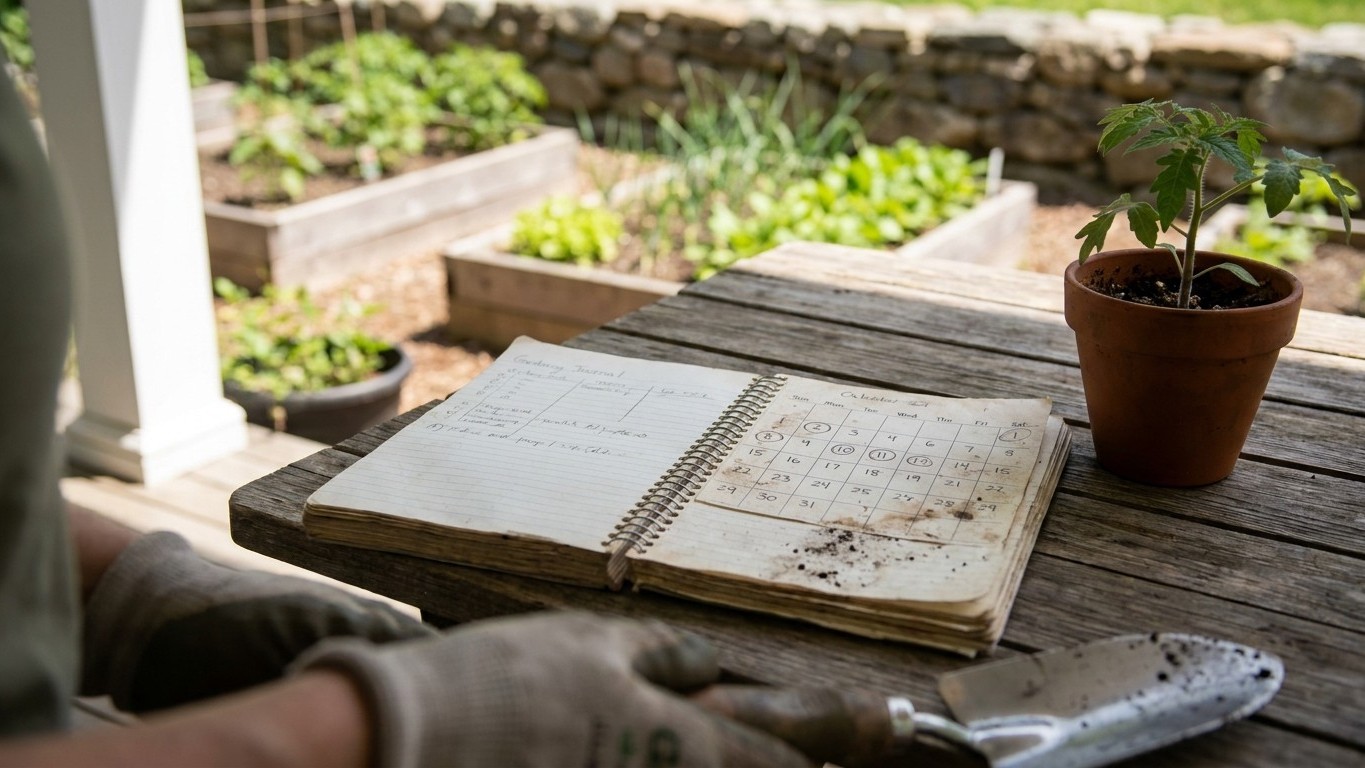

April 1 to April 8 is the window that decides everything else, because that’s when Boston’s last spring frost typically clears, and a tomato seedling with zero frost tolerance can’t go in the ground before it does. But Massachusetts spans zones 5a to 7b, so that Boston date is just one point on a much longer curve. Push toward the Berkshires and the safe date slides weeks later, which is why the count-back has to start from your own station, not the state’s.
What this comes down to in Massachusetts

The basics of growing tomatoes in Massachusetts are already familiar, and the dates for your own garden are what matter. Tomato transplant dates follow directly from when the last spring frost is likely to pass, and NOAA’s 1991-2020 climate normals put that window at April 1 to April 8 at the Logan Airport station in Boston. Tomato seedlings have zero frost tolerance, so the safe transplant window opens only after that range has passed, and most gardeners near Boston wait until the soil has had a chance to warm on top of it before they set anything out. USDA’s Plant Hardiness Zone Map, built on the same 1991-2020 period, spreads Massachusetts across zones 5a to 7b, which is the clearest sign that no single statewide date exists.
The other end of the season matters just as much for deciding what to plant. NOAA’s normals put the first fall frost at Boston at November 3 to November 14, which gives a growing season near the coast that runs roughly seven months from the earliest safe transplant to the latest safe harvest. That window is generous enough that almost every catalogue tomato, from a 55-day cherry to an 85-day paste type, can ripen a full crop if it goes into the ground on time. The question is not whether tomatoes will ripen in Massachusetts. It is when to set them out so they do, which depends on where in the state you garden and which variety you have already picked (see Tomato Varieties That Ripen in Time in Massachusetts if you have not chosen one yet).
Working it out for your own garden
The method is the same wherever you garden in the state. Start from your local last-frost window, add the week or two it takes soil to warm enough for a tomato root system to take hold, and that gives you a transplant range, not a date. Near Boston, NOAA’s normals put the last freeze at April 1 to April 8, so the transplant window that follows runs from mid April to late April, which is the range every catalogue variety below is set out from. If your county’s last frost lands later than Boston’s, which most of the state does, shift this whole range later by roughly the same number of days your local frost is late.
Running the arithmetic on real varieties
Once you have a transplant range, count forward using the variety’s days-to-maturity figure, printed on every seed packet and catalogue listing, and remember that catalogue figures are counted from transplant, not from seed, and shift by a week or two either way depending on the season. Sun Gold lists 57 days to maturity. Transplanted mid to late April near Boston, it reaches first ripe fruit by mid June, leaving something like 138 days of margin before NOAA’s fall frost window closes the season on November 3 to 14. That margin is enormous relative to what the plant actually needs, which is why short cherry types are the forgiving choice for a gardener still learning their own frost dates.
Run the same arithmetic on a slower variety and the margin narrows fast. Amish Paste, the longest-season tomato in this list at 85 days, transplanted in that same mid-to-late-April window, reaches first ripe fruit around mid July and still carries roughly 110 days of margin before the Boston-area fall frost. That margin holds only if the transplant actually goes in on time. Push the transplant back three or four weeks, which happens easily in a cold, wet spring when the soil refuses to warm, and an 85-day paste tomato can be reaching for its last flushes right as the first fall frost arrives, especially away from the coast where that frost lands earlier than Boston’s.
| Variety | Days to maturity | Transplant window | First ripe (Boston-area) | Margin before fall frost |
|---|---|---|---|---|
| Sun Gold | 57 days | Mid to late April | Mid June | About 138 days |
| San Marzano II | 78 days | Mid to late April | Early July | About 117 days |
| Amish Paste | 85 days | Mid to late April | Mid July | About 110 days |
What changes across the state
Boston’s frost window is the mildest reference point Massachusetts has, and the NOAA station behind it sits on the waterfront at Logan Airport, about as favorable a microclimate as the state offers. Move inland, gain elevation, or lose the moderating effect of the ocean, and both ends of the frost-free season move against you. The last spring frost lands later, and the first fall frost arrives sooner, which squeezes the usable growing season from both directions at once.
The USDA hardiness map’s spread of 5a to 7b across the state is the clearest single number for how wide that difference runs. A zone jump of that size does not happen without a real difference in how early the ground can be worked in spring and how late a plant can hang on in fall. Coastal counties and the immediate Boston suburbs sit toward the warm end of that range. Higher ground to the west and north sits toward the cold end, and gardeners there should plan on a transplant window that opens later than anything calculated from the Boston figures in this article, not the same dates shifted by guesswork.
Local geography inside a single county matters too. A garden in a low spot where cold air settles overnight will frost before a garden three hundred feet up the same hillside, regardless of which NOAA station happens to be closest on a map. A south-facing bed against a wall or fence holds heat longer into fall than an open field nearby. None of these differences show up in a climate normal built from decades of airport data, which is exactly why the Boston figures in this article are a starting point and not a substitute for watching your own ground.
The mistakes this state punishes

The most common mistake is planting by the calendar instead of by the soil. A warm stretch in early April can push air temperature up fast near the coast, and a gardener who plants the moment the air feels like spring often does it before NOAA’s own last-frost window at Boston, April 1 to April 8, has even closed. A late cold snap after an early warm spell is a familiar pattern in New England spring weather, and a tomato transplant simply does not survive a hard freeze once it is in the ground.
The second mistake is choosing a long-season variety without running the arithmetic first. An 85-day paste tomato like Amish Paste carries a comfortable margin under normal conditions, as shown above, but that margin only exists if the planned transplant date actually holds. Stack a late, cold spring on top of an ambitious long-season variety, and a gardener anywhere outside the mild Boston microclimate can watch the last fruit still turning color when the first fall frost, NOAA’s November 3 to 14 window at Boston, arrives.
The third is ignoring what shows up in the garden once the transplants are actually in the ground. Massachusetts has its own list of tomato pests that arrive on a fairly predictable schedule through the season, and missing that window costs more in a bad year than a late planting date does (see Tomato Pests in Massachusetts: Which Ones Actually Show Up Here for what to watch for once your plants are established).
Checking this against your county
Every figure in this article comes from one NOAA weather station at Boston, and it is the mildest point of reference the state has. Before you commit to a transplant date, call your county’s extension office or check the University of Massachusetts Extension service directly at ag.umass.edu for frost data and tomato guidance closer to your own garden. That office can also translate a statewide normal into what your specific soil and microclimate actually allow, which a climate average cannot do on its own.
Common questions
Can I put tomatoes out earlier if I use a wall of water or row cover?
Season-extending covers can buy you a week or so ahead of the open-ground date, since they trap heat and keep frost off the leaves directly. They do not change the underlying NOAA frost window, so keep a backup plan for a hard freeze even under cover rather than treating it as a way to skip the whole month.
What if my last frost date is different from what this article says?
Use your own. The April 1 to April 8 window given here is measured at Logan Airport in Boston, and NOAA’s own data shows the rest of the state running later, sometimes by weeks, inland and at elevation. Treat the Boston figure as a floor for the earliest anyone should plant, not a rule for your particular yard.
Do I need to start seeds indoors or can I direct-sow tomatoes in Massachusetts?
Start seeds indoors and transplant out. Massachusetts’ frost-free season, even at its longest near Boston, is not long enough for most tomato varieties to go from a direct-sown seed to a ripe fruit before the first fall frost, which is why every date in this article is a transplant date, not a seeding date.
How late can I still transplant tomatoes and expect a harvest?
It depends on the variety’s days to maturity and how far you are from Boston’s mild end of the state. A short-season cherry type such as Sun Gold or Sakura can go in weeks after the mid-to-late-April window and still ripen well before the first fall frost, while a long-season paste tomato loses that cushion fast the later it goes into the ground.
If you follow the almanac, here is when to plant tomatoes by the moon. It is a tradition, not a proven method.