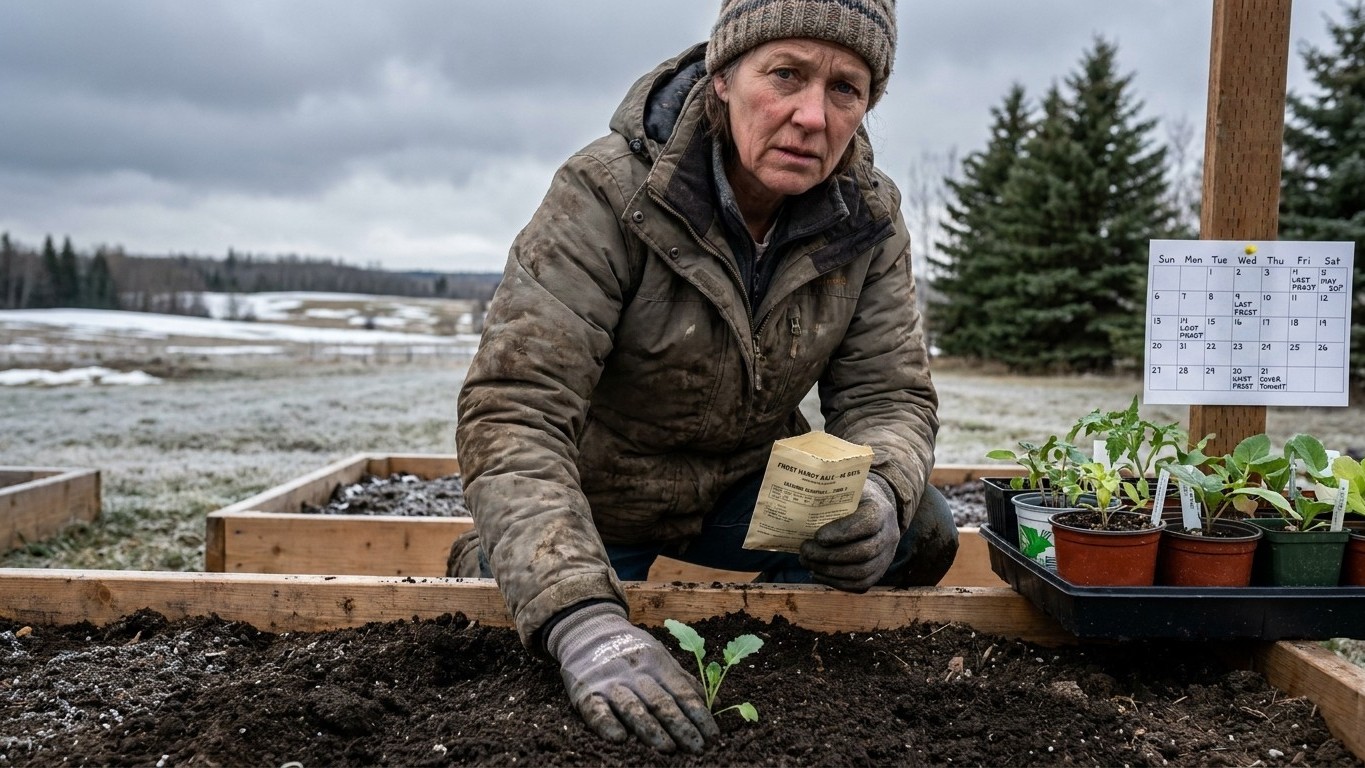

Alberta gives gardeners a growing window of roughly 90 to 120 frost-free days, depending on where you live in the province. That’s the blunt reality behind every seed packet decision, every tomato start, every rose bush that might not make it through winter. The season opens late, typically after the last frost in mid-to-late May, and closes fast, often by mid-September when the first hard frost hits. Everything else, soil prep, plant selection, timing, bends around that narrow window.
If you’ve gardened in a milder climate before moving to Alberta, the adjustment can feel abrupt. A friend who gardened for years in Ohio told me she lost an entire crop of squash her first Alberta summer because she planted on the same calendar date she always had back home. The frost came three weeks earlier than she expected. That kind of mismatch is common, and it’s exactly why understanding the season’s actual boundaries matters more here than in almost any other part of North America.
How Short Is Alberta’s Growing Season, Really

Southern Alberta cities like Lethbridge and Medicine Hat get closer to 120 frost-free days most years. Calgary sits in the middle, often around 100 to 115 days, though a late spring frost or early fall snap can shave that down without warning. Edmonton and areas further north typically see 90 to 100 days, and the Peace River region up in the northwest can be even tighter.
Compare that to a place like Kansas or Missouri, where growers routinely count on 180-plus frost-free days, and the difference becomes obvious. Alberta gardeners are working with roughly half the calendar. That forces a different set of priorities: fast-maturing varieties like Growing Potatoes in Alberta or the cold-hardy staple of Growing Parsnips in Alberta, root vegetables well suited to short seasons such as Growing Carrots in Alberta and Growing Beets in Alberta, quick-cycling leafy greens like those covered in Growing Spinach in Alberta, patient perennial investments like Growing Asparagus in Alberta, sprawling vine crops that need extra planning such as Growing Pumpkins in Alberta, warm-season crops that need careful timing such as Growing Sweet Corn in Alberta, season-extension tools like those used for Growing Peppers in Alberta, and a willingness to accept that some plants simply won’t finish their cycle before the cold returns.
Elevation plays a role too. Areas near the foothills, including Calgary’s western suburbs, sit at higher elevation than the prairie flatlands to the east, and that altitude brings cooler nights even in July. A tomato variety that ripens reliably in Brooks might struggle thirty miles closer to the mountains, not because of latitude but because of the extra few hundred feet of elevation change.
Canada uses its own plant hardiness zone system, based on seven climate variables rather than the single measure used by the American scale familiar to some gardeners, and expresses zones such as 4a to describe average minimum winter temperatures and how well perennial plants survive them. Most of Alberta falls between zones 2b and 4a on the Canadian scale, according to Natural Resources Canada’s plant hardiness mapping. Zone 2b covers much of the northern and central prairie, while pockets around Lethbridge and the Milk River area edge into zone 4a, the mildest conditions the province offers.
These zones roughly correspond to USDA zones 2 through 4, which means a perennial rated for USDA zone 5 or warmer, many popular roses, certain hydrangeas, some fruit trees, is a gamble in most of Alberta without serious winter protection. That’s not a technicality. It’s the difference between a shrub that comes back reliably every spring and one that needs replacing every couple of years.
The practical takeaway: check the hardiness rating before buying, and lean toward plants bred specifically for prairie conditions. Alberta has a strong nursery culture built around this reality, and many garden centers now flag “prairie hardy” varieties directly on their tags. Skipping that check is the single most common reason new perennials fail to return the following spring.
Microclimates Change the Math
A south-facing wall, a sheltered courtyard, or a spot protected from prevailing northwest winds can push a garden’s effective zone up by half a step or more. Urban gardeners in Calgary and Edmonton often push the limits of what “should” grow by tucking marginally hardy plants against brick walls or fences that trap heat. It’s not a guarantee, but it’s a real technique, one worth testing on a small scale before committing a whole bed to it.
Frost Dates and Timing Your Planting
Last spring frost dates vary widely across the province. Southern Alberta typically clears its last frost by mid-May, sometimes earlier in warm years. Central Alberta, including Calgary and Red Deer, usually isn’t safe until the last week of May or even early June. Northern regions and the Peace Country can see frost risk linger into the first week of June in a cool year.
Fall works in reverse. First frost can arrive as early as late August in the north and typically hits central and southern Alberta sometime between mid-September and early October. That gives a realistic outdoor growing window, and it’s why so many experienced Alberta gardeners start seeds indoors six to eight weeks before the expected last frost rather than direct-sowing everything once the ground warms.
Cold frames, row covers, and simple plastic tunnels aren’t optional extras here, they’re standard equipment for anyone trying to stretch the season on either end. A row cover thrown over young transplants can buy two or three extra weeks of protection in late spring, which in a 100-day season is a meaningful percentage of the whole year’s growing time.
Watching the actual weather matters more than trusting the calendar date alone. Alberta’s chinook winds, warm, dry gusts that can spike temperatures 20 to 30 degrees Fahrenheit within hours, then drop just as fast, add a layer of unpredictability that gardeners in more stable climates rarely deal with. A chinook in April can trick early bulbs into breaking dormancy, only for a hard freeze to follow days later.
Regional Differences Worth Knowing
Alberta isn’t one climate. Southern Alberta, around Lethbridge and Medicine Hat, is drier and slightly warmer, closer in some ways to the shortgrass prairie of eastern Montana. Central Alberta, the Calgary-Red Deer-Edmonton corridor, deals with more variable spring weather and those chinook swings. Northern Alberta and the Peace River region have a shorter, more compressed growing season, but often benefit from longer daylight hours in summer, which pushes plant growth fast once the season finally starts.
That extended daylight is an underappreciated advantage. Because of Alberta’s northern latitude, summer days can stretch to 16 or 17 hours of light in June and July. Plants that get going pack in growth quickly once temperatures cooperate, which partly explains why gardeners in Edmonton and further north can still pull off decent harvests despite a shorter frost-free window than their southern neighbors.
Foothill and mountain-adjacent communities, think Cochrane, Canmore, or areas west of Calgary, deal with the coolest, most unpredictable conditions in the province outside the far north. Nighttime cooling off the mountains can bring frost even in mid-summer in some pockets, which is why gardeners there often lean heavily on greenhouses and cold frames rather than fighting the open air.
What Actually Grows Well Given These Constraints
Cool-season vegetables thrive under Alberta’s conditions almost by design. Peas, spinach, lettuce, radishes, and root vegetables like carrots and beets tolerate the cooler nights and can go in the ground earlier than heat-loving crops. Potatoes do well across most of the province and are a traditional prairie staple for good reason.
Warm-season crops, tomatoes, peppers, squash, need a head start indoors and benefit from being planted as transplants rather than seeds, and even then, choosing short-season varieties bred to mature in 60 to 75 days rather than 90-plus makes a real difference. Skipping that step is where a lot of first-time Alberta gardeners run into frustration, expecting the same tomato variety that thrived in a longer season elsewhere to perform the same way here.
Perennial flower and shrub choices that consistently perform well include:
- Peonies, which are practically synonymous with prairie gardens and handle the cold with no fuss
- Rugosa roses, bred tough enough for zone 2 and 3 winters
- Saskatoon berry bushes, a native prairie fruit that’s both hardy and productive
- Daylilies and hardy irises, which tolerate the swing between dry summers and cold winters
Soil is its own consideration separate from climate. Much of Alberta’s prairie soil is naturally alkaline and can run heavy in clay, particularly around Edmonton and parts of central Alberta, while some southern areas deal with sandier, faster-draining ground. Testing soil before amending it saves money and guesswork, rather than assuming a fix that works in one part of the province will work everywhere.
Alberta’s growing conditions aren’t a limitation to work around so much as a framework that rewards planning. Gardeners who track their local frost dates, match plant hardiness to their actual zone, and build in season-extension tools tend to get results that rival gardens in far milder climates, just compressed into a tighter window. The plants that do best here aren’t necessarily the showiest options at the garden center, they’re the ones bred and selected for exactly this kind of short, intense, occasionally unpredictable growing season.
Where to check before you plant
A frost date that holds true for Edmonton can be off by two or three weeks if you’re gardening near Grande Prairie, in the Peace Country, or down in the Chinook belt around Lethbridge. Alberta’s size and its mix of hardiness zones mean the general figures in this article are a starting point, not a schedule to plant by.
Alberta Agriculture and Irrigation alberta.ca keeps updated frost data, zone maps, and crop guidance built specifically for the province’s growing regions, including the soil and moisture differences between the north, the central parkland, and the drier south. It’s a more reliable check than any single city’s average, especially in a year that runs early or late.
Beyond that, your county or municipal district’s agricultural service board is worth a call or a look at their website. Many keep their own frost records, run soil testing programs, and track pest and disease pressure specific to their patch of the province. That local layer of detail is often the difference between a planting date that works on paper and one that actually fits the ground you’re standing on.
What to Grow Once You Know Your Season
Once the frost dates and cold snaps make sense, the next question is what to actually put in the ground. Garlic is the easy answer for anyone worried about winter — growing garlic in Alberta covers planting dates and varieties suited to a climate that hands out more cold than the crop even requires to split into cloves. If it’s the lawn you’re staring at instead, Alberta lawn care lays out what to plant and when to feed it, starting from the fact that these are cool-season lawns with essentially no hot days to plan around. And for gardeners chasing something less forgiving than grass or garlic, growing tomatoes in Alberta works backward from Calgary’s roughly 117-day frost-free window to figure out which varieties and planting dates actually get you ripe fruit before the first fall frost shows up. Between the three, you’ve got the low-risk crop, the everyday lawn, and the one that tests how well you’ve actually read the season.