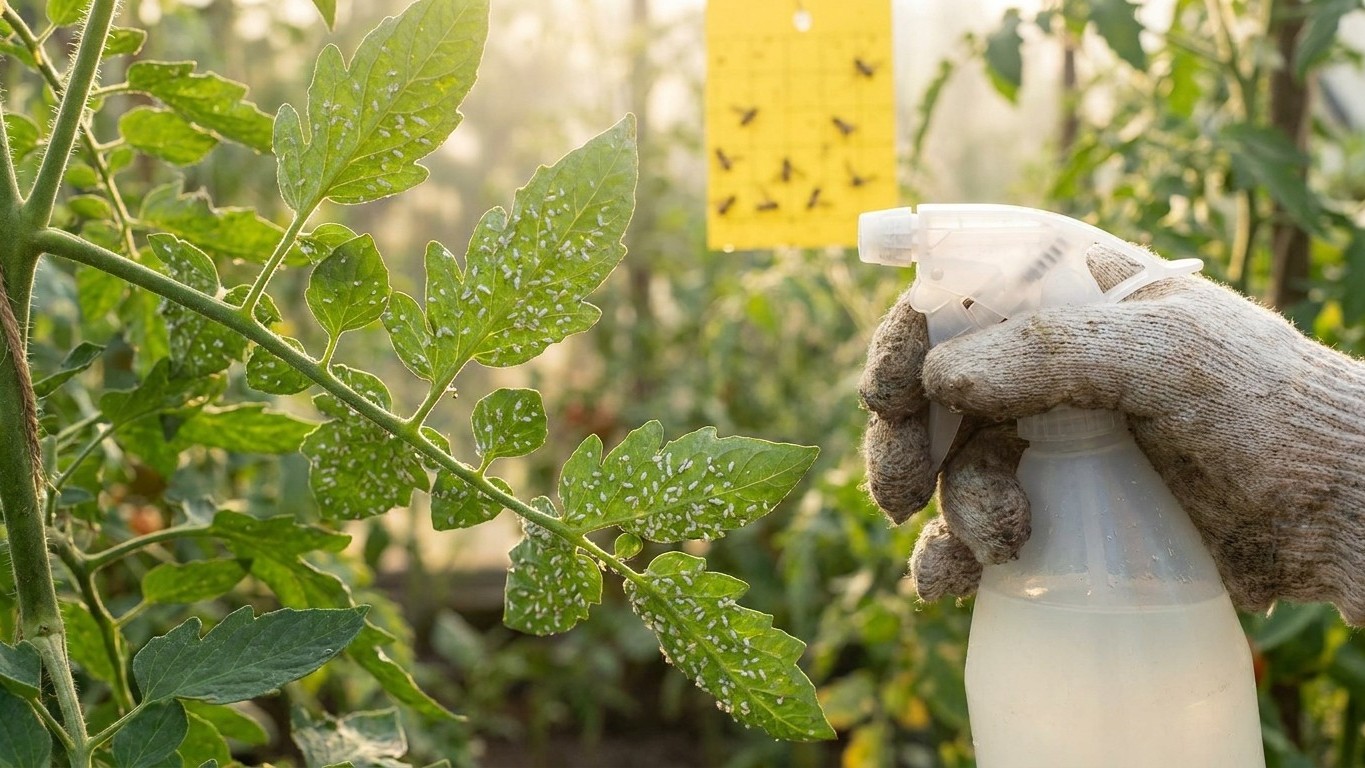

Whiteflies become active in Arkansas as soon as daytime temperatures hold steady above 70°F, which usually means late April in the southern Delta and mid-May farther north. Numbers stay low through spring, then explode from July through September when heat and humidity let a new generation hatch every two to three weeks. What actually stops them is a combination of yellow sticky traps for early detection, insecticidal soap or horticultural oil applied to the undersides of leaves, and a hard freeze, which is the one thing Arkansas whiteflies can’t survive outdoors.
When Whiteflies Show Up in Arkansas

Arkansas doesn’t have a single “whitefly season” so much as a long window of opportunity that opens with warm weather and closes with the first real cold snap. In the Delta counties around Helena, Lake Village, and Osceola, where cotton and soybean acreage still runs into the hundreds of thousands, growers start scouting for whiteflies by early June. Farther north, in the Ozarks and the River Valley, home gardeners usually don’t notice them on tomatoes and peppers until July.
The reason for that spread is simple biology. A whitefly egg can become a reproducing adult in as few as 16 days when temperatures sit in the mid-80s, and closer to a month when nights cool into the 60s. That means a single infested plant brought home from a garden center in May can produce eight or more overlapping generations before Arkansas sees its first frost, typically in late October or early November in the north and a few weeks later in the south. Cold is the real reset button. Whiteflies don’t have a diapause stage built for freezing weather, so populations outdoors collapse hard once nighttime lows drop into the 20s.
That collapse doesn’t mean they disappear from the state. Greenhouses, nurseries, and heated sunrooms let whiteflies skip winter entirely, which is why plants purchased in late winter or early spring, especially poinsettias, hibiscus, and bedding tomatoes, are a common source of the first infestation each year.
Why Arkansas Gardens and Farms Attract Them
Two things make Arkansas particularly hospitable to whiteflies: the plants people grow and the climate they grow them in. The state’s humid subtropical summers, long growing season, and heavy production of soft-tissue crops like tomatoes, okra, cucumbers, and sweet potatoes give whiteflies exactly the kind of sap-rich foliage they prefer.
Arkansas also has a documented history with this pest on a much larger scale than backyard tomatoes. In the mid-1990s, the sweetpotato whitefly (a strain now generally classified as Bemisia tabaci) triggered outbreaks across cotton fields in the Mississippi Delta region, including parts of eastern Arkansas, after mild winters and heavy cotton acreage let populations build unchecked. That episode pushed the University of Arkansas System Division of Agriculture to expand scouting recommendations for cotton and soybean growers, and those monitoring practices are still the backbone of commercial whitefly management in the state today.
Home gardens face a smaller but similar dynamic. Nitrogen-heavy fertilizing produces the soft, lush growth whiteflies favor for egg-laying, so a tomato bed pushed hard with fertilizer in June is often more attractive to whiteflies than a plant grown at a slower, leaner pace. Dense plantings with little airflow, common in raised beds packed tight for maximum yield, also let populations build faster because adults don’t have to travel far to find a new host.
Spotting an Infestation Before It Spreads
Whiteflies rarely announce themselves the way a hornworm or a Japanese beetle does. The first real sign most Arkansas gardeners notice is a small cloud of white specks lifting off a plant when a branch is brushed or shaken. Adults are barely an eighth of an inch long, pale and moth-like, and they tend to cluster on the undersides of leaves near the growing tips.
A few other clues usually show up before the population gets out of hand:
- Yellow stippling or a faded, mottled look on leaves where whiteflies have been feeding
- A sticky film called honeydew coating leaves and anything beneath the plant, including patio furniture or mulch
- Black sooty mold growing on that honeydew, which can itself block sunlight from reaching the leaf
- Stunted growth or leaf drop on heavily infested tomatoes, peppers, or hibiscus
On a commercial scale, Arkansas cotton and soybean scouts check for immature whiteflies (nymphs, which are flat, oval, and nearly clear) on the undersides of leaves in the lower and middle canopy, since adults alone don’t give an accurate picture of how bad an infestation has actually become. That same logic applies to a backyard vegetable patch: flipping a few leaves over every week during peak season catches problems while they’re still manageable.
What Actually Stops Whiteflies in Arkansas
No single method wipes out a whitefly population on its own. What works is layering a few tactics, starting before numbers spike rather than after.
Cultural and Physical Controls
Yellow sticky traps placed just above plant canopy height catch adults and give an early warning of rising populations, which is exactly how commercial scouts in the Delta track cotton fields. Reflective mulch, including aluminum-coated plastic sheeting, disrupts the way adult whiteflies locate host plants and has shown measurable reductions in landing rates in university trials on vegetable crops. Removing and destroying heavily infested leaves or entire plants, rather than composting them, keeps a small outbreak from reseeding the rest of the garden.
Biological Controls
Arkansas gardens already host a decent lineup of natural whitefly predators, including lady beetles, lacewing larvae, and several species of tiny parasitic wasps that lay eggs inside whitefly nymphs. Broad-spectrum insecticides tend to kill these predators along with the pest, which is part of why heavy spraying sometimes makes whitefly problems worse in the following weeks. Skipping unnecessary pesticide applications, especially early in the season, gives these predators time to establish and do the work for free.
Chemical and Direct Treatments
For active infestations, insecticidal soap and horticultural oil remain the most reliable low-toxicity options, and both work best when sprayed directly on the undersides of leaves where whiteflies actually feed and lay eggs. Neem oil offers similar results with the added benefit of some fungicidal action against the sooty mold that often follows a heavy infestation. Systemic insecticides containing imidacloprid or similar active ingredients are available for severe cases, but they carry real risk to pollinators and should be treated as a last resort on flowering plants, not a routine first step.
Commercial growers in Arkansas rely more heavily on insect growth regulators and rotating chemical classes to slow resistance, a lesson learned directly from the 1990s cotton outbreak, when repeated use of the same insecticide class allowed whitefly populations to bounce back stronger each time.
For greenhouse and indoor situations, where winter cold can’t do the job, isolating new plants for a week or two before bringing them near existing houseplants catches hitchhiking whiteflies before they spread. Combined with weekly leaf inspections during that quarantine period, this single habit prevents the vast majority of indoor infestations that would otherwise carry a population straight through an Arkansas winter and back outside come spring.