
Rhode Island’s short growing season, bounded by NOAA’s 1991-2020 climate normals putting the last spring freeze at Providence between April 7 and April 17 and the first fall freeze between October 24 and November 3, doesn’t leave a lot of room for a pest to knock a tomato crop off schedule. Walk your rows once a week starting the week after transplant, and treat the first sign of any of the pests below as the thing to deal with now, not next weekend.
What this comes down to in Rhode Island

Hornworms get the blame every August, that fat green caterpillar everyone spots and photographs, but by the time it shows up the real damage is usually done. The pests that actually decide how your season goes arrive weeks earlier and go almost unnoticed: a stem clipped clean at the soil line the same week you transplanted, a leaf riddled with pinholes before the plant’s even settled in. Those are the ones worth watching for here.
Cutworms

These show up in the first two or three weeks after transplant, right in the window when you’ve just set plants out following the last-frost guidance in Tomato Planting Dates in Rhode Island: Counting Back From Your Frost Window. A cutworm severs a young stem at the soil line overnight, and by morning you’ve got a seedling lying flat with no chewing damage on the leaves at all, just a clean-cut stump. A cardboard or foil collar pushed an inch into the soil around each stem stops them cold.
Flea Beetles

Flea beetles arrive around the same time as cutworms and stay through early summer. They riddle young leaves with small round holes and can stunt a transplant badly if the population is heavy before the plant has established. Row cover laid immediately after transplanting keeps them off; once the plant is flowering, damage matters less because the beetles favor tender new growth.
Aphids

Aphids build up through late spring and early summer on the undersides of leaves and on new growth, causing curling and a sticky residue that draws sooty mold. A strong jet of water knocks most colonies down, and lady beetles and lacewings usually keep numbers in check if you haven’t already sprayed a broad-spectrum insecticide that wipes them out too.
Colorado Potato Beetle

This one moves in from overwintering sites in the soil once plants are a few weeks along, feeding on foliage as an adult and even more heavily as a larva. Look for the striped adult and the orange, black-spotted larva together on the same plant, often stripping leaves down to the veins. Hand-picking both stages into a bucket of soapy water works well while numbers are still low.
Tarnished Plant Bug

Active from early to midsummer, this bug feeds on growing tips and small fruit, leaving catfaced, scarred, or lumpy tomatoes rather than obvious foliage damage. It’s easy to blame the wrong cause because the insect itself is small and quick to drop off the plant when disturbed. Weedy borders nearby often harbor the population, so mowing field edges reduces pressure.
Tomato Hornworm

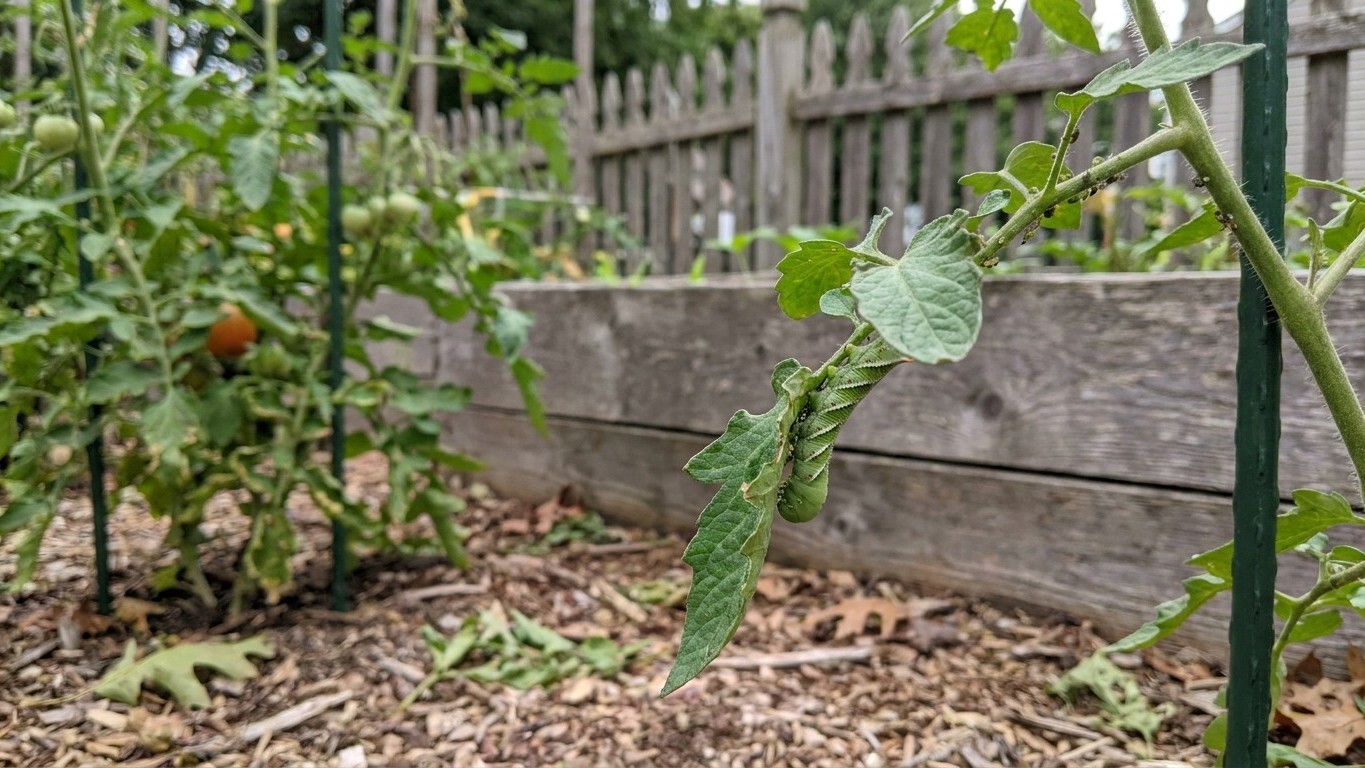
By mid to late summer this is the pest most gardeners actually see, because it’s large and its damage is dramatic: whole branches stripped of leaves almost overnight, with big dark droppings on the leaves below. Check the plant, not just the ground, since the caterpillar’s green color hides it against the foliage until it’s nearly full grown. Hand-picking is usually enough; a hornworm covered in small white cocoons is host to a parasitic wasp and should be left alone.
Brown Marmorated Stink Bug
This one turns up as fruit starts to ripen, from midsummer into fall, piercing tomatoes and leaving cloudy, discolored patches under the skin that show up when you slice the fruit. It’s established in the state and moves in from wooded edges and structures, so isolated garden beds tend to see less pressure than plots near a tree line. Netting over ripening trusses is the most reliable barrier once you’ve spotted the first bug.
Working it out for your own garden
Identifying which of these seven pests you’re dealing with comes down to three questions: when in the season it is, where on the plant the damage sits, and what shape the culprit is when you actually find it. A severed stem with no insect in sight, found within a few weeks of transplant, is almost always a cutworm working at night. Small round holes across many leaves on a young plant point to flea beetles, while curled, sticky new growth points to aphids.
A quick diagnostic routine
Once fruit is developing, the location of the damage narrows things fast. Scarred or lumpy fruit with no visible insect nearby usually means tarnished plant bug fed on it weeks earlier. Cloudy, discolored flesh just under the skin of a ripening tomato points to stink bug feeding. Stripped branches with dark droppings on the leaves below mean a hornworm is somewhere on that plant right now, even if you can’t see it yet.
- Stem cut clean at the soil line, plant otherwise undamaged: cutworm
- Shotgun-hole leaves on a young transplant: flea beetle
- Curled new growth, sticky residue: aphids
- Skeletonized leaves, striped beetle and spotted larva together: Colorado potato beetle
- Deformed, scarred fruit with no insect present: tarnished plant bug
- Stripped branches, large dark droppings: tomato hornworm
- Cloudy discoloration under the skin of ripe fruit: brown marmorated stink bug
If you’re still unsure after checking damage pattern and timing, take a photo and a sample to your county extension office, listed through the University of Rhode Island Cooperative Extension, before you spray anything. Misidentifying the pest is the most common reason a treatment does nothing.
What changes across the state
The Providence figures from NOAA’s 1991-2020 normals are a starting point, not a state-wide rule, and pest timing shifts with the same geography that shifts the frost dates. Coastal sections of Washington and Newport counties stay milder in spring and fall thanks to ocean moderation, which can push flea beetle and cutworm activity a little earlier and give stink bugs a longer stretch in fall to keep feeding on ripening fruit. Inland and northern parts of the state, including higher ground in Providence and Kent counties, cool off faster in the evenings, which tends to slow aphid buildup but does little to change when cutworms and Colorado potato beetle show up, since both work from soil temperature more than air temperature.
The USDA’s Plant Hardiness Zone Map puts the state across zones 6a to 7b, and that range itself tells you something: a garden at the cooler end of it will generally see a shorter overlap between pest activity and the growing season than a garden at the warmer end. Don’t assume a pest calendar built for Providence applies unchanged to a garden thirty miles away, especially one near woods or water, where both stink bug and hornworm populations tend to be heavier because of nearby overwintering habitat.
The mistakes this state punishes

The single most common mistake is skipping cutworm collars because the seedlings look sturdy at transplant. A stem that looks thick enough to survive still gets severed overnight by a cutworm working right at the soil line, and by the time you notice the damage the plant is already dead. Collars take thirty seconds per plant and cost nothing.
The second mistake is reaching for a broad-spectrum insecticide the moment aphids appear, which also kills the lady beetles and parasitic wasps that would otherwise keep both aphids and hornworms in check for the rest of the season. A pest problem that resolves itself in two weeks with natural predators is worse off after a spray that removes those predators along with the pest.
The third is waiting too long on hornworms because the caterpillar’s green color blends into the foliage. By the time the stripped branches are obvious, the caterpillar has often already done most of its damage for that week, since it feeds heavily right before pupating. Check the undersides of branches, not just the tops, once you notice any thinning of the leaf canopy in midsummer, and treat this as a companion problem to keeping your tomatoes on schedule generally, since a plant already stressed by a late transplant date has less foliage to spare.
Checking this against your county
These pest patterns are built around the Providence frost window from NOAA’s 1991-2020 normals, and a garden closer to the coast or further inland will see each pest arrive a little earlier or later than described here. Before you plan a spray schedule around any of these dates, check with the University of Rhode Island Cooperative Extension, reachable through its coopext.uri.edu office, for current pest alerts specific to your county. If you’re still choosing which cultivars to plant, cross that decision with the pest pressure described above by reviewing Tomato Varieties That Ripen in Time in Rhode Island, since some of the resistances listed there apply to diseases these same insects spread.
Common questions
Do I need to spray for hornworms every year?
Not necessarily. Hand-picking keeps most home gardens under control, and a hornworm carrying white cocoons on its back is already parasitized by a wasp and best left alone to let that wasp population build for next year.
What’s eating small round holes in my new transplants?
That pattern is almost always flea beetles rather than a caterpillar. Row cover put on right after transplant is the most reliable fix, since the beetles target tender young leaves and lose interest once the plant toughens up.
Are Japanese beetles a problem for tomatoes in Rhode Island?
They’re common in the state but rarely a serious tomato pest, preferring roses, grapes, and raspberries over tomato foliage. If you see beetle damage on tomato leaves alongside heavy feeding on nearby ornamentals, it’s worth confirming with a photo before assuming tomatoes are the target.
Will row covers keep pests off my plants for the whole season?
Only for the early pests. Row cover works well against flea beetles and cutworm moths right after transplant, but it has to come off once plants flower so pollinators can reach the blossoms, which means it does nothing against hornworms or stink bugs that arrive later in summer.