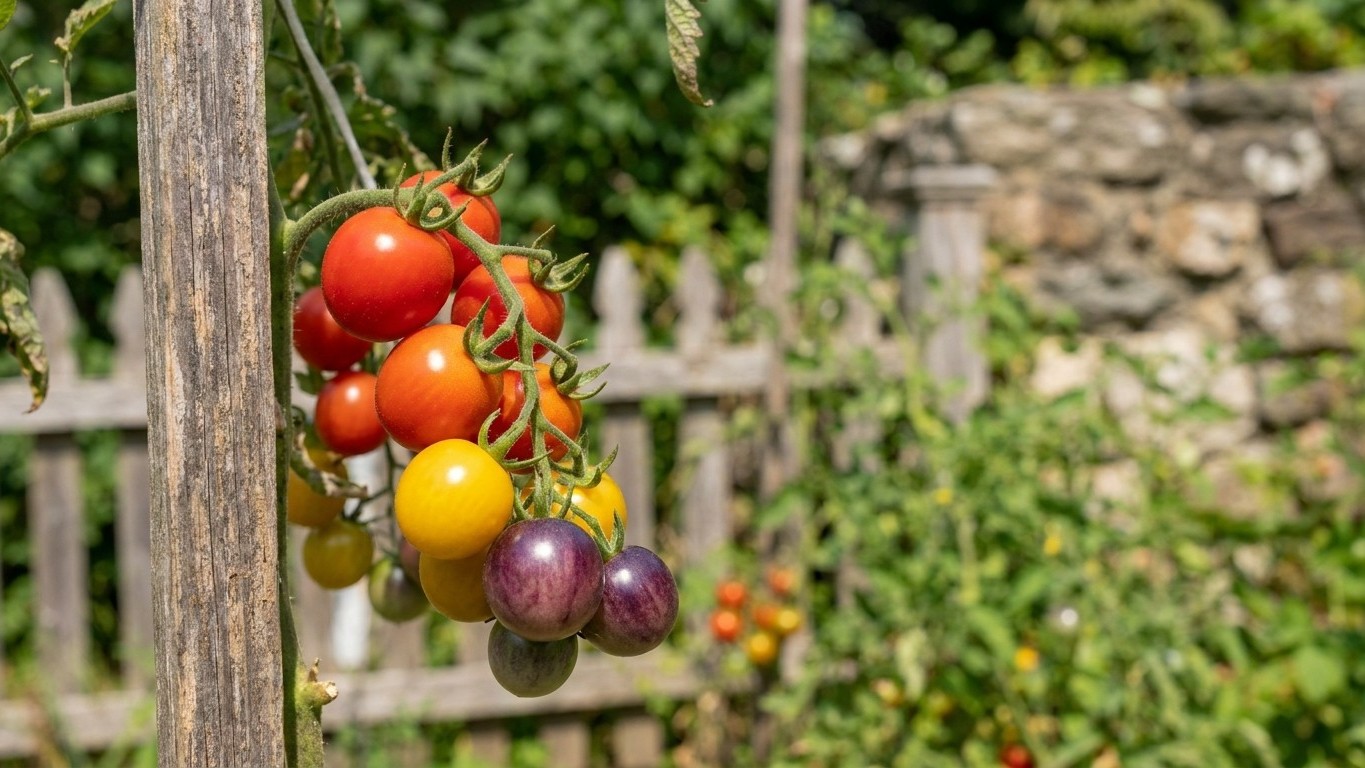

The Providence frost window is the whole game: last freeze April 7-17, first freeze October 24-November 3, and every days-to-maturity number on a seed packet has to fit inside that gap or it doesn’t matter how good the tomato tastes. That figure comes from the airport station, too, so inland and away from the coast the real window runs narrower. A slicer bred to finish in 55 days survives that math almost anywhere in the state; one bred for 85 doesn’t, no matter how the photo looks.
What this comes down to in Rhode Island

The Providence frost window from NOAA’s 1991-2020 normals, last freeze April 7-17 and first freeze October 24-November 3, is the yardstick every catalogue days-to-maturity figure has to clear. That figure is measured at the Providence airport station, and gardens elsewhere in the state, especially inland and away from the coast, tend to see frost arrive earlier in fall and linger later in spring. A short-season cultivar has more room for error everywhere in the state, which is why it’s worth naming names rather than reaching for whatever heirloom looked good in the catalogue photo.
The varieties below run from the earliest finishers to the slowest, so you can see roughly where your own risk tolerance and your garden’s microclimate should draw the line.
Fourth of July

‘Fourth of July’ matures in about 49 days from transplant, among the fastest slicers sold, and produces a smooth, medium-small red fruit good for salads and sandwiches rather than canning. In a Providence-length season it ripens with weeks to spare, which makes it a safe pick even in a cold, late spring.
Glacier

‘Glacier‘ reaches maturity in around 55 days and yields a small, deep red-orange fruit on a compact, cold-tolerant plant. Its short stature and quick finish make it a reasonable choice for a container or a spot that gets shaded out later in the summer.
Sun Gold

‘Sun Gold‘ cherry tomatoes mature in about 57 days and keep producing bright golden-orange fruit right up to frost, since the indeterminate vine never really stops setting new trusses. It is one of the more forgiving choices here because even a delayed transplant still leaves it plenty of runway.
Mountain Magic

‘Mountain Magic‘ runs 66 to 70 days to maturity and produces a firm, crack-resistant red fruit between a cherry and a small plum tomato. That crack resistance matters in a coastal, humid state where a heavy rain right before harvest can split a thinner-skinned fruit overnight.
Celebrity

‘Celebrity‘ finishes around 70 days and gives a medium-to-large, all-purpose red tomato on a determinate bush that doesn’t need heavy staking. Its published disease-resistance coding covers several of the common wilts, which is useful in a garden that has grown tomatoes in the same soil for several seasons.
Cherokee Purple

‘Cherokee Purple‘ needs 80 to 85 days, a dusky purple-pink beefsteak with green shoulders and the rich, low-acid flavor heirloom growers chase. That length puts it near the edge of what a cool or late Providence season comfortably supports, so it rewards a warm, sheltered bed and an on-time transplant more than most.
Brandywine
‘Brandywine‘ is the slowest of the common heirlooms, listed at 80 to 100 days depending on the strain, with a large ribbed pink-red fruit and distinctive potato-leaf foliage. In a Providence-length season the top of that range is genuinely tight, and in a cooler inland garden it can miss ripening its last fruit before frost altogether.
Working it out for your own garden
The method matters more than any single number, because a cold spring or a move across the state changes the arithmetic without changing how you should do it. Start from the Providence frost window, last freeze April 7-17 and first freeze October 24-November 3 per NOAA’s 1991-2020 normals, and treat both ends as ranges, never as a single date to circle on the calendar.
A cultivar that clears the season
Take ‘Fourth of July’ at 49 days. Transplants generally go into the ground once the spring frost window has closed and the soil has had a week or two to warm, so anywhere from mid to late April into early May depending on the year and the specific garden. Count 49 days forward from that range and harvest starts in early to mid June, which leaves four full months of slack before the Providence fall frost window of October 24 to November 3 even opens. That’s the kind of margin that survives a bad spring.
A cultivar that doesn’t
Now run the same transplant window through ‘Brandywine’ at 80 to 100 days. Counting forward lands the harvest window anywhere from mid-July at the fast end to early October at the slow end. The top of that range sits right up against the Providence fall frost window, and a cooler or later garden than the airport station used for these normals can push it past the frost line entirely, leaving green fruit on the vine when the first hard freeze hits.
The same subtraction works in reverse for choosing a planting date, which is worth doing carefully rather than guessing. Tomato Planting Dates in Rhode Island: Counting Back From Your Frost Window walks through that calculation cultivar by cultivar.
What changes across the state
Rhode Island is small, but it isn’t uniform, and the Providence figures above come from one weather station near the coast. The USDA Plant Hardiness Zone Map places the state across zones 6a to 7b, and that spread alone tells you the season length is not the same in Westerly as it is in the northwestern hill towns.
Narragansett Bay and the immediate coastline hold heat into fall and slow the spring warm-up, so towns close to the water often get a longer effective frost-free window than an inland garden the same distance from Providence. Move north and west toward the Connecticut border and the elevation climbs a little with it, both of which push the first fall frost earlier and the last spring frost later than the Providence normals suggest. A hollow or low-lying yard anywhere in the state collects cold air overnight and can see frost when a garden just up the slope stays clear.
None of this changes which cultivars exist or how many days they need. It changes how much margin you should build in when you pick one. A gardener in a cold inland pocket has every reason to lean toward the 49 to 70 day end of the list above, while a warm, sheltered coastal garden has more room to gamble on an 80 to 100 day heirloom.
The mistakes this state punishes

The most common one is planting into cold soil after a warm early stretch fools everyone into thinking spring has arrived. A run of 70-degree days in late March or early April doesn’t move the Providence frost window, and a transplant set out ahead of it can sit stalled in cold soil even if it survives the actual freeze. Wait for the frost window itself to close, not for a few warm afternoons.
The second is choosing a long-season heirloom as the only tomato in the garden. ‘Brandywine’ and ‘Cherokee Purple’ both reward the effort, but betting the whole harvest on an 80 to 100 day fruit in a state where the frost-free season runs on the order of six to seven months leaves almost no buffer for a cool, wet summer that slows ripening. Growing at least one 50 to 60 day cultivar alongside it means a bad year still ends with tomatoes.
The third is losing track of pest pressure late in the season, when growers are focused on ripening fruit rather than scouting leaves. The state’s tomato pests arrive on their own schedule, not on the calendar you’ve built around frost dates, and catching them early matters more for a slow-finishing heirloom than a fast one. Tomato Pests in Rhode Island: Which Ones Actually Show Up Here covers what to watch for and when.
None of these mistakes are exotic. They’re the same three things that show up every year in the same gardens, usually because the grower trusted a warm week, a favorite variety, or a busy August over the actual numbers.
Checking this against your county
The Providence figures in this guide are a starting point, not a guarantee for your specific yard, especially if you garden away from the coast or at any elevation. The University of Rhode Island’s Cooperative Extension, at web.uri.edu/coopext, is the right place to check county-level guidance and confirm how your area’s season compares to the reference-city figures used here. If your garden has a known history of late frosts or an early fall chill, weight your variety choice toward the shorter end of the list above rather than the longer one.
It’s also worth talking to gardeners a few streets over, since microclimate differences inside a single town can matter as much as the difference between two counties. A raised bed against a south-facing wall behaves nothing like an open, low-lying yard even in the same zip code.
Common questions
Can I grow Brandywine in Rhode Island at all?
Yes, but treat it as the higher-risk tomato in the bed rather than the reliable one. Set it out as soon as the spring frost window has passed and soil has warmed, and pair it with a faster cultivar so a slow, cool summer doesn’t leave you with no ripe fruit at all.
Do cherry tomatoes always beat frost here?
Most do, since varieties like ‘Sun Gold’ and ‘Mountain Magic’ finish well inside the Providence frost-free window even in a late spring. That said, an especially cold or wet season can still slow any tomato down, so don’t assume a cherry variety is immune to a bad year, just better cushioned against one.
What if my seed packet gives a range instead of one number?
Use the high end of the range for planning purposes, since that’s the number that determines whether you clear the fall frost window. Catalogue figures are also measured under favorable growing conditions and from transplant, not from seed, so a cool or shaded garden can run a bit slower than the packet suggests.
Is it worth starting seeds indoors instead of buying transplants?
Either works, but starting your own gives you more control over exactly when the plant goes outside relative to the frost window. If you buy transplants, check how long they’ve already been in their pots. A rootbound six-week-old transplant purchased in late May has effectively already used up part of its days-to-maturity clock before it ever goes in your ground, which matters more for the longer-season cultivars on this list than the short ones.