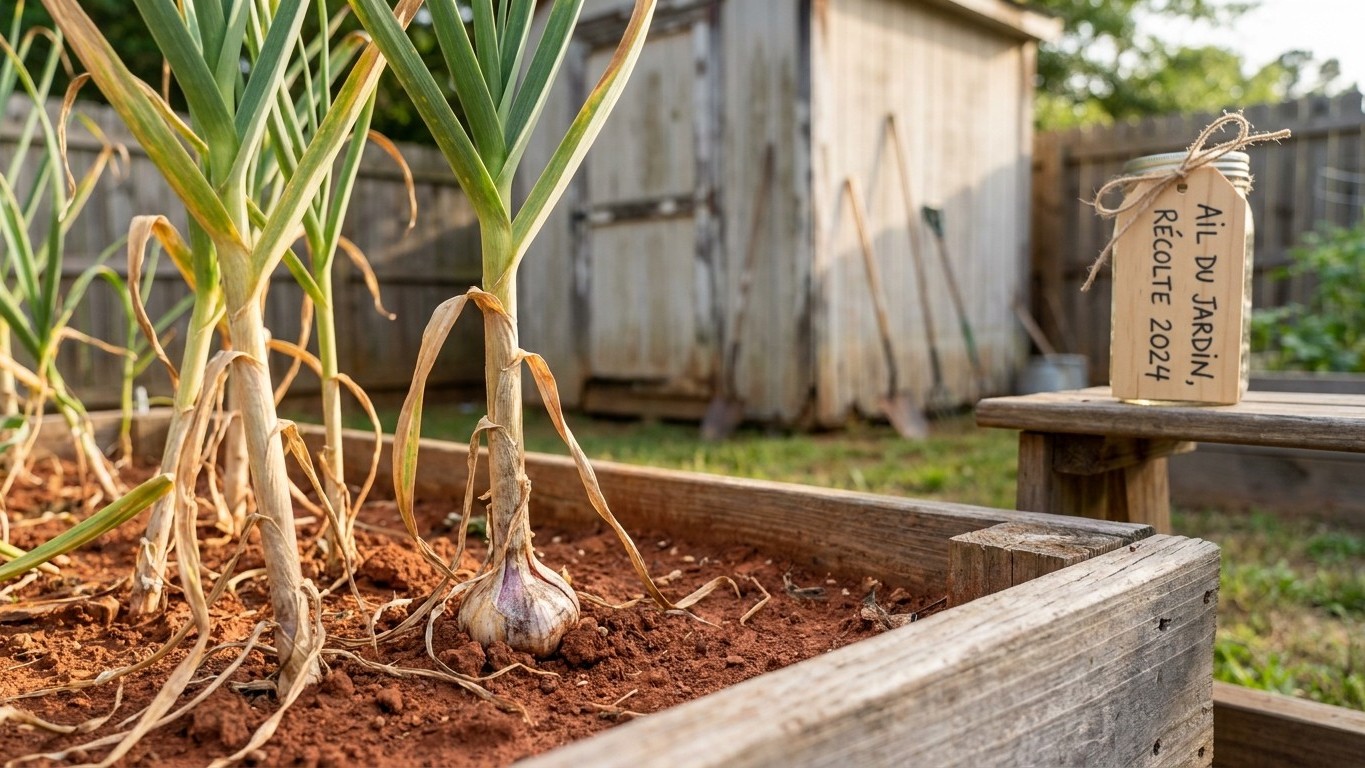

Cloves tucked into warm October soil out of eagerness push up green shoots weeks too soon, and a hard December freeze along the Charleston corridor burns that growth right back to the ground. Wait too long instead, chasing a mild forecast, and the opposite failure shows up: roots that never got the three to five weeks they needed before the first fall freeze locked the surface. Charleston’s station puts that freeze at November 20 to December 5, and everything about planting garlic here is really just counting backward from that number.
The short answer for South Carolina

Set garlic cloves out from late October to mid-November. That window comes straight from the closed list of cultivars sold for this region, and it holds for softnecks like Inchelium Red and hardnecks like Chesnok Red alike, since all of them are set out on the same calendar here regardless of type.
The window is anchored on one number: NOAA’s 1991-2020 Climate Normals, measured at station USW00013880 near Charleston, put the first fall freeze at November 20 to December 5. Planting late October to mid-November gets roots established roughly three to five weeks ahead of that range, enough time for cloves to anchor themselves in the soil before the ground turns cold, but not so early that top growth pushes up and gets caught by an early freeze.
That frost date is a midpoint, not a guarantee. In one year out of two, the first freeze at this station falls later than December 5, sometimes well into December along the coast. A gardener who plants right at the edge of the window in a mild year loses nothing. One who plants too late in a year the freeze arrives early risks cloves that haven’t rooted before cold weather locks up the soil surface. Before you settle on cultivars, it’s worth reading through Garlic Varieties That Suit South Carolina Winters, since not every softneck or hardneck on the market performs the same way once it’s in the ground here.
Working it out for your own garden
The arithmetic behind the late October to mid-November window is simple once you see it laid out. NOAA’s frost range for the Charleston-area station runs November 20 to December 5. Late October sits about four weeks ahead of the start of that range. Mid-November sits about three weeks ahead of the end of it. That three-to-five-week cushion is what lets a clove root without pushing green growth before winter.
Reworking the window for a different frost date
If your own area has a different first-frost date than the Charleston-area station, you can rebuild this window yourself. Take your local first-frost range, subtract roughly three weeks from the early end and roughly five weeks from the late end, and you’ll land on a planting window shaped the same way as the one above, just shifted to match your ground. This only works as a range calculation. Counting back from a single frost date gives you a single planting date that doesn’t actually exist as a known fact, since the frost date itself is a range to begin with.
Before doing this math, it helps to have your soil and beds ready, which is a step Growing Garlic in South Carolina walks through if you haven’t prepped a bed for garlic before. Loosened, well-drained soil matters more here than in a drier climate, since South Carolina’s fall rains can leave heavy clay soaked right when cloves need to start rooting.
What shifts the number besides frost
A state this size doesn’t sit at one elevation or one distance from open water, and both of those change how fast the ground cools in fall. Elevation gains in the Upstate cool the air faster than the Midlands or coast. A large body of water nearby, the kind that holds summer heat into fall, slows the cooling of the air right around it. Coastal proximity does the same thing on a bigger scale. Any of these factors can shift a safe planting window by roughly two weeks in either direction from what a single reference station suggests, which is exactly why one frost date can’t stand in for the whole state.
What changes across South Carolina
The NOAA figures above come from a station near the Charleston airport, and NOAA’s own data flags two things worth knowing before you use it for your own yard. First, peninsular Charleston runs milder than the airport station itself, which sits further from the moderating effect of the harbor. Second, Upstate South Carolina tightens the frost window at both ends by several weeks compared to the coast, meaning both an earlier first freeze in fall and a later last freeze in spring.
| Region | Frost pattern relative to the Charleston airport station | What it means for planting |
|---|---|---|
| Charleston peninsula | Milder than the airport figures suggest | Some room to plant later in the window without added risk |
| Charleston-area airport (reference station) | Matches NOAA’s November 20 to December 5 range | The baseline this whole window is built from |
| Upstate South Carolina | Several weeks earlier at both ends of the season | Plant toward the early end of late October to mid-November |
The Midlands sits between these two patterns without a station figure of its own in the data used here, so a gardener there is best served by treating the Charleston range as a starting point and checking it locally rather than assuming it applies directly. A gardener growing on a slope or in a low frost pocket anywhere in the state will see earlier cold regardless of which region they’re in, since cold air settles into low ground on still nights the same way everywhere.
The mistakes this climate punishes
South Carolina’s winters are mild enough to work against garlic in ways a colder-climate grower never runs into. The single biggest factor is cold itself falling short: winter here provides about 4.3 weeks below 40°F, well under the six to eight weeks many garlic cultivars need after planting to split into distinct cloves, according to University of Georgia Extension publication C854. Planting late, past mid-November, eats further into that already-thin cold budget and increases the odds of harvesting a round, unsplit Bulb Instead of a head divided into cloves.
Mistakes tied directly to this shortfall
- Planting too late in the window, which leaves even less of the state’s limited cold weeks for the clove to respond to
- Choosing only high-chill hardneck types like Duganski or Georgian Fire without accounting for the state’s short natural chill, and being surprised by weaker clove separation
- Planting too shallow, which lets cloves lose heat and moisture fast in a fall that can swing warm and dry between rain events
- Skipping mulch, which matters more here than in a harder winter climate, since bare soil in South Carolina’s fall sun and wind dries and warms unpredictably
Disease timing is the other trap. According to UC IPM’s Pest Management Guidelines for onion and garlic (UC ANR Publication 3453), white rot‘s causal organism, Sclerotium cepivorum, is active across a 50 to 85°F soil range, and South Carolina’s air temperatures fall inside that range in seven months of the growing season, including October and November, right when garlic goes into the ground. That doesn’t mean white rot will show up. It means planting into a field with a history of allium disease, or into soil that stays waterlogged after fall rain, is a real risk during exactly the months you’re planting. Southern blight‘s causal fungus, Sclerotium rolfsii, has an 86 to 95°F optimum that South Carolina’s air temperatures never reach during the growing season, but that only means the disease runs less active here, not that infected seed stock can’t carry it in regardless.
Checking this against your county
Every figure above comes from a single NOAA station near Charleston, and the state’s Upstate, Midlands, and coastal regions all diverge from it in different directions. Before you lock in a planting date, check with Clemson Cooperative Extension, which can point you to county-level frost data and planting guidance closer to your own soil and elevation. This matters most if you garden well inland or at higher elevation, where the Charleston figures used here understate how early cold arrives.
Common questions
Is late October to mid-November a hard deadline for planting garlic in South Carolina?
No, it’s a workable window built around a frost midpoint, not a cutoff. Since the first freeze falls later than NOAA’s stated range in about half of all years, cloves planted a little past mid-November often still root fine, especially near the coast where frost tends to arrive later than at the reference station.
Can I still Plant Garlic in South Carolina in December?
You can, particularly in milder coastal spots, but you’re cutting into the already short window cloves have to root before cold weather sets in. A December planting is a gamble worth taking only if you missed the window entirely, not a schedule to plan around on purpose.
Do I need to pre-chill garlic cloves before planting?
Some growers refrigerate hardneck seed stock for several weeks before planting to make up for the state’s naturally short cold season, since hardneck types generally need more chilling than softnecks to form well-divided bulbs. It’s an extra step, not a requirement, and softneck types like Lorz Italian or Italian Late are typically more forgiving without it.
Will an early cold snap in October hurt garlic I haven’t planted yet?
No, unplanted cloves are just seed stock and aren’t exposed to frost risk sitting in a cool, dry, dark spot indoors. Frost only becomes a concern once cloves are in the ground and pushing green shoots, which is exactly why the planting window is timed to happen a few weeks ahead of, not right up against, the first freeze.
The Moon calendar is a separate, older custom: see when to plant garlic by the moon, written as tradition rather than fact.