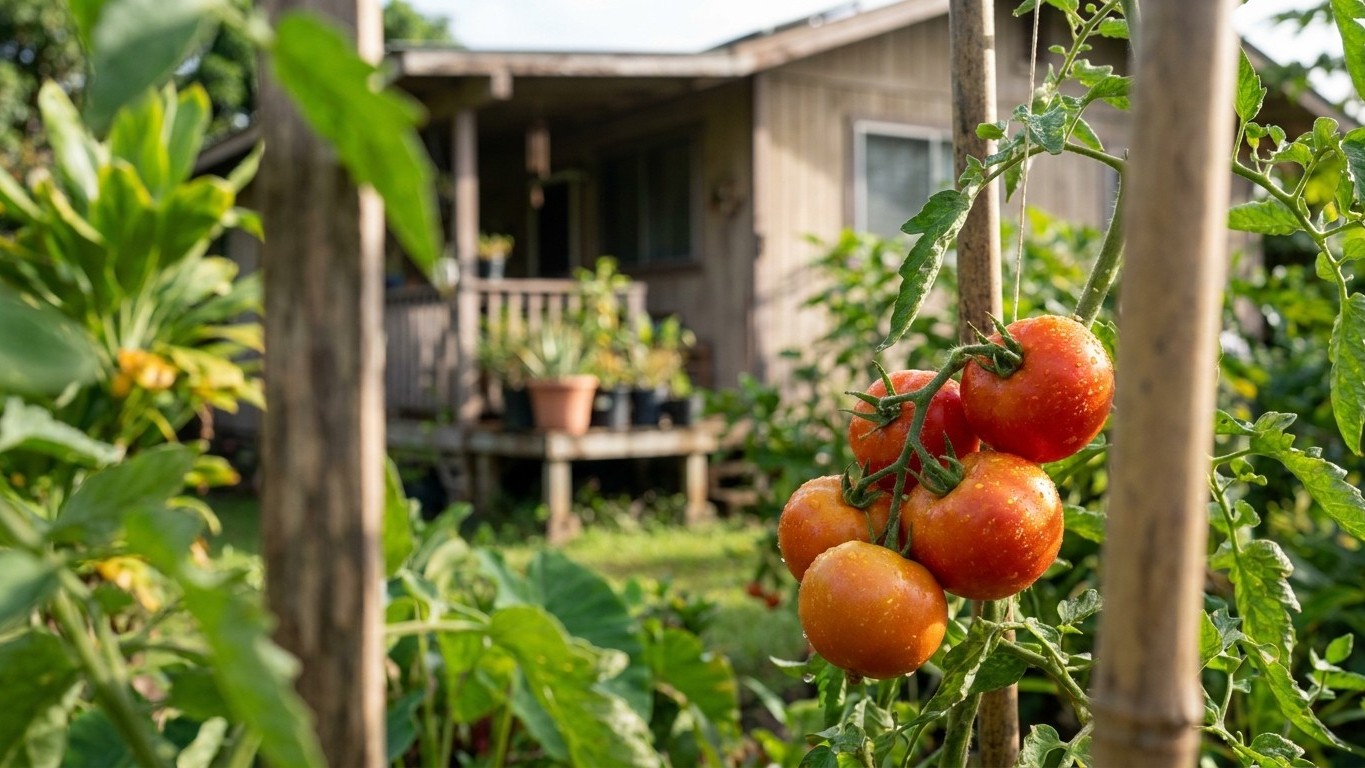

Zero. That’s how many days a typical Honolulu-area year sees at or below freezing, which is why the mainland’s spring-to-fall countdown simply doesn’t apply here. What decides your tomato calendar instead is geography underfoot: how much rain your side of the island pulls in, how high your yard sits, and whether you’re catching the wet windward breeze or sitting dry in a leeward rain shadow. That’s the real planting clock in Hawaii.
When to plant Tomatoes in Hawaii

Because freeze is off the table in populated areas, Hawaii doesn’t run on a spring-to-fall tomato calendar the way most of the mainland does. NOAA’s NCEI 1991-2020 normals for the station near Honolulu record zero days at or below 32°F in a typical year, and even the 36°F freeze-risk threshold couldn’t be computed because it essentially never happens. Frost shows up only on the summits of Mauna Kea, Mauna Loa and Haleakala, thousands of feet above any vegetable bed. Your planting calendar here is set by rainfall, elevation and whether your yard faces windward or leeward, not by a frost date.
Reading your own site before you set a date
Honolulu sits leeward and dry compared with windward towns like Hilo, which get far more rain across the year, and upcountry areas like Kula sit high enough that nights run noticeably cooler than at sea level. None of that shows up in a single number the way a frost date does, so treat these as directions to check on your own property rather than fixed rules. A yard that floods after every heavy rain needs raised beds regardless of what the calendar says, and a cool upcountry lot will simply grow tomatoes more slowly than a warm coastal one, even with an identical planting date.
Seed starting still works the same way it does everywhere else. Sow tomato seed indoors or in a shaded tray five to six weeks before you intend to transplant, and give seedlings their true leaves and a sturdy stem before they go outside. Harden off over seven to ten days by moving trays outdoors for a few hours at a time, increasing sun exposure daily, before planting them in their permanent bed.
Since there’s no frost cutoff forcing a single planting window, the more useful arithmetic is counting forward from seed to harvest for the variety you’ve chosen. A fast cherry tomato like Sun Gold needs 57 days from transplant to first ripe fruit; add the five to six weeks it spent as a seedling, and you’re looking at roughly 14 to 15 weeks from the day you sowed seed to the day you pick fruit. A slower paste tomato like Amish Paste, at 85 days from transplant, pushes that same math out to nearly five months. Work backward from when you want tomatoes on the table, not from a frost date that doesn’t exist here, and stagger two or three sowings a few weeks apart so you’re not harvesting everything at once. Gardeners in states with a real frost clock, like the readers following Growing Tomatoes in Idaho, have to compress their whole season into that window. In Hawaii the constraint is different: it’s disease and rain pressure building up over a long growing season, not a hard stop from cold.
Soil and site preparation
Tomatoes need six to eight hours of direct sun a day to fruit well, so pick the sunniest, most open spot on the property and keep an eye on how afternoon shade from trees or buildings shifts through the year. Hawaii’s volcanic soils vary enormously by island and even by neighborhood: younger soils on drier leeward coasts tend to be rocky and fast-draining but hold nutrients poorly, while older soils on wetter windward sides run heavier and can stay soggy after rain. Either extreme causes problems for tomatoes, which want soil that drains well but doesn’t dry out completely between waterings.
Work compost or well-rotted manure into the bed three to four weeks before you plan to transplant, giving it time to break down and start feeding soil biology rather than sitting as raw material at the roots. If your site holds water after a downpour, build a raised bed or mound the row six to eight inches above grade. That single step solves more root-rot and wilt problems in wet climates than any amount of fussing with fertilizer later in the season.
Space indeterminate varieties, which keep growing and vining all season, three to four feet apart to leave room for staking and airflow. Determinate varieties, which stop at a set height and ripen most of their fruit together, can go a little tighter at two to three feet. Tighter spacing than that traps humidity around the leaves, which in a warm, moist climate invites fungal and bacterial diseases.
Varieties that suit Hawaii
The two traits that matter most for a Hawaii garden are disease resistance and a growth habit that fits how long you’re willing to give a plant before pulling it for the next one. Warm, humid conditions favor fungal and viral disease pressure building up over a long season, so a resistance package on the seed packet is worth more here than in a drier, cooler climate. Fast-maturing cherry and paste types also let you get a harvest in and restart before problems accumulate, which matters more in a year-round growing climate than in a place with one short window.
Fast, disease-resistant options for succession planting
Sakura, at 55 days from transplant, carries intermediate resistance to nematodes plus high resistance to Tomato Mosaic Virus and two races of Fusarium Wilt, making it one of the quickest paths to a resistant harvest on this list. Sun Gold matures in 57 days with high resistance to Tobacco Mosaic Virus and Fusarium Wilt race 1, and Juliet and Jasper both finish in 60 days, the latter with high resistance to Late Blight, useful insurance during wetter stretches. Supersweet 100 rounds out the fast cherry group at 60 days with resistance to Verticillium and Fusarium wilts.
Slower, heavier producers for a longer commitment
Celebrity Plus and Big Beef Plus both need 72 to 78 days but carry a strong resistance package, nematodes, Gray Leaf Spot and Tomato Mosaic Virus, that pays off over a longer time in the ground. Amalfi, at 68 days, adds intermediate resistance to both early and late blight. San Marzano II, Amish Paste and heirlooms like Cherokee Purple and Brandywine carry no listed disease resistance at all, which doesn’t rule them out but means they need closer watching for wilt and leaf spot as the season stretches on.
| Variety | Days from transplant | Habit | Notable resistance |
|---|---|---|---|
| Sakura | 55 | Indeterminate | Nematodes, ToMV, Fusarium 1&2 |
| Sun Gold | 57 | Indeterminate | TMV, Fusarium 1 |
| Juliet | 60 | Indeterminate | Early/Late Blight (intermediate) |
| Jasper | 60 | Indeterminate | Late Blight (high) |
| Amalfi | 68 | Determinate | Nematodes, Early/Late Blight |
| Big Beef Plus | 72 | Indeterminate | Nematodes, Gray Leaf Spot, ToMV |
| Celebrity Plus | 78 | Determinate | Nematodes, Gray Leaf Spot, ToMV |
| Amish Paste | 85 | Indeterminate | None listed |
What to plant alongside
Basil is the pairing people ask about most, and while there’s no solid evidence it repels pests the way garden folklore claims, it doesn’t compete heavily for water or nutrients and gives you a kitchen-ready companion in the same bed. French marigolds have some genuine research behind them for suppressing root-knot nematode populations in soil when grown as a cover crop over a full season, though scattering a few marigold plants around your tomatoes for one season is a much weaker version of that effect. Borage and other bee-friendly flowers nearby are worth including for pollinator traffic, since better pollination directly improves fruit set.
Keep tomatoes away from potatoes and eggplant in your rotation and spacing, since all three belong to the nightshade family and share several of the same soil-borne diseases, including some of the same wilts the resistant varieties above are bred against. Corn is worth planting well clear of tomatoes too, not because of any nutrient conflict but because it hosts some of the same caterpillar pests that move onto tomato foliage once the corn is spent.
Skip the claim that planting dill or fennel near tomatoes helps them; both can cross-attract beneficial insects in general garden settings, but fennel in particular can suppress the growth of many neighboring plants and isn’t worth the risk next to a crop you’re counting on. If a companion planting claim can’t be traced to an actual mechanism, shade, pest confusion, a genuine nutrient relationship, treat it as garden folklore rather than a reason to change your layout.
Watering, feeding and support
Consistency matters more than volume. Tomatoes want even soil moisture from the day they’re transplanted through the end of harvest, and the swing between a heavy rain event and a dry stretch, common on many parts of the islands, is exactly what triggers blossom end rot and fruit cracking. Water deeply and less often rather than a light sprinkle daily, aiming to keep the top few inches of soil evenly moist without staying waterlogged.
Mulch is not optional in a climate this warm. A three-to-four-inch layer of straw, wood chips or dried grass clippings keeps soil temperature and moisture steadier between waterings and cuts down on the soil-splash that spreads early blight and other fungal spores onto lower leaves. Feed with a balanced fertilizer at transplanting, then side-dress again once the first fruit clusters set, since that’s when the plant’s nutrient demand jumps and a stalled feeding schedule shows up as pale leaves and small fruit.
Stake or cage indeterminate varieties like Sakura, Sun Gold, Big Beef Plus and San Marzano II from the day you transplant, before the plant sprawls and roots knock the cage over later. Determinate types such as Celebrity Plus and Amalfi need less support but still benefit from a simple cage to keep fruit off wet soil. Pinch out suckers, the small shoots that form in the joint between the main stem and a leaf branch, on indeterminate varieties to open up airflow through the plant. In a humid climate that airflow does real work reducing the fungal and bacterial pressure covered in the next section, more so than in a dry inland climate where the same pruning is mostly about fruit size.
Common problems

Most tomato failures announce themselves through the fruit or the leaves before the whole plant collapses, so learning to read the symptom saves a season.
Blossom end rot and cracking
A flat, dark, leathery patch on the blossom end of an otherwise healthy fruit is blossom end rot, caused by inconsistent water supply interrupting calcium uptake rather than a lack of calcium in the soil itself. Concentric rings cracking around the top of a ripening fruit come from the same root cause, usually a heavy rain right after a dry spell that swells the fruit faster than the skin can stretch. Even, mulched watering fixes both far more reliably than any calcium spray.
Wilting and yellowing
Leaves that yellow and wilt from the bottom of the plant upward, especially with brown streaking inside the stem when you slice it open, point to one of the vascular wilts, Fusarium or Verticillium, that live in the soil for years once established. This is exactly why the resistance codes on varieties like Tiren, Granadero and Sun Gold matter: once a wilt is in your soil, resistant genetics are a far more reliable fix than any soil treatment.
Poor fruit set and pests
Flowers that drop without setting fruit are usually a heat and humidity problem. Sustained warm nights interfere with pollen viability, and Hawaii’s lowland warmth can push that further than cooler mainland gardens see. Hornworms, aphids and whiteflies show up in home gardens in warm climates generally and are worth checking for weekly, looking for chewed leaf margins, sticky residue, or clusters of small insects on leaf undersides. Late blight, a fast-moving fungal disease that turns leaves and stems brown almost overnight in cool, wet weather, is a bigger recurring threat in damp, changeable climates like the one covered in Growing Tomatoes in Rhode Island than in Hawaii’s steadier warmth, but the intermediate and high blight resistance bred into Juliet, Jasper and Amalfi is still worth having during any prolonged wet stretch.
Pests that actually show up in Hawaii
Hawaii’s University of Hawaii CTAHR Extension keeps a statewide pest list for home vegetable gardens in its guide IP-13, Integrated Pest Management for Home Gardens, and most of the insects on it never touch a tomato plant. Diamondback moth and the other listed caterpillars work cabbage family crops, bean fly tunnels into young bean stems, and Chinese rose beetle prefers rose, grapes, beans, eggplant, corn, cucumber and ginger at night. If you grow those alongside your tomatoes, watch for them separately. Tomatoes draw a shorter, sharper list of their own.
The solanaceous fruit fly, one of the tephritid fruit flies CTAHR tracks statewide, is the one that costs you actual fruit. You will not see the fly first. You will see a small puncture scar on a green or ripening tomato, then a soft rotten patch developing around it as the larvae feed inside, and fruit dropping early before it ever colors up. It shows up once fruit starts sizing on the vine. Bagging individual fruit clusters in mesh or paper as they form, and picking up and destroying any dropped fruit immediately, does more than any spray to break the cycle.
Southern green stinkbug feeds by piercing the fruit wall directly, leaving a cloudy, slightly discolored patch under the skin that looks fine from outside but turns mealy when you cut into it. It builds up as fruit ripens in warm weather. Handpicking adults and nymphs off the plant in the early morning, when they move slowly, keeps numbers down better than trying to spray them once they scatter.
Mites and thrips, including the melon thrips and western flower thrips CTAHR lists for Hawaii gardens, cause a fine bronzed or silvery stippling on leaves rather than obvious holes, usually starting on older leaves during hot, dry spells. Thrips also carry plant viruses between tomato plants, so an early infestation matters more than the cosmetic damage suggests. A forceful water spray to knock populations off leaf undersides, repeated every few days, handles light infestations without reaching for a miticide.
Aphids and whiteflies, already worth checking for weekly on any Hawaii tomato planting, are on CTAHR’s same statewide list and are treated the same way here as anywhere else in the garden.
Harvest and end of season
Pick fruit once it has fully colored for its variety, whether that’s the deep red of Big Beef Plus, the near-black dusky red of Cherokee Purple, or the golden-orange of Sun Gold, and give it a gentle twist rather than pulling on the vine. Fruit that’s showing color but not fully ripe will finish ripening at room temperature on a counter out of direct sun, a useful trick if a plant is loaded right as a storm rolls in. Never refrigerate a tomato you plan to eat fresh, since cold temperatures dull both flavor and texture.
Because there is no fall frost anywhere near sea level in Hawaii either, per the same NOAA data showing no freeze days at the Honolulu-area station, a healthy tomato plant can keep producing for many months rather than being cut short by cold. In practice, most plants decline on their own timeline well before any frost would matter: leaf disease accumulates, nematode pressure builds in the root zone, and yields taper off as the plant ages. When a plant’s production drops off and its foliage looks tired and disease-marked, pull it, clear the debris rather than composting diseased material, and start the next succession sowing rather than nursing a spent plant along.
Rotate your tomato bed to a different spot, or at minimum swap in a non-nightshade crop for a season, before replanting tomatoes in the same soil. That single habit does more to keep soil-borne wilts and nematode populations in check over a long growing year than any product you can buy.
Local help
County-level planting advice, soil testing and pest identification for your specific island and elevation are worth getting from the people who actually track them locally. The state extension service, run through the University of Hawaii’s College of Tropical Agriculture and Human Resources, can point you to the office nearest your address for a soil test and current pest alerts. For more crops and seasonal tasks specific to the islands, the Hawaii guides hub is the place to start.
Where to Go Next
Once you’ve got a feel for what growing tomatoes in Hawaii actually involves, the details are worth digging into separately. Start with counting back from your frost window, which explains why the usual mainland advice about timing transplants six to eight weeks before a last frost simply doesn’t apply here, since Mauna Kea’s summit is the closest thing the islands have to a killing freeze, and no tomato patch sits anywhere near it. From there, it’s worth reading about which varieties actually ripen in time, because in Hawaii the real deadline isn’t frost at all, it’s the wet season and the fungal pressure that comes with it, so the number that matters is how fast a variety sets fruit before the rains settle in.
And because Hawaii’s growing season never breaks for winter, it’s worth knowing ahead of time which pests actually show up here — NOAA’s own climate data for Honolulu shows no measurable freeze in any month, so nothing like silverleaf whitefly or root-knot nematode ever gets knocked back the way it would on the mainland.
Common questions
Do I need to worry about frost if I garden upcountry in Kula or near Volcano?
Not in the way mainland gardeners do. NOAA’s climate normals for the Honolulu-area station show no measurable freeze risk at all, and the true frost events in Hawaii happen only on the high summits of Mauna Kea, Mauna Loa and Haleakala, far above any home garden. Higher, cooler upcountry sites will simply grow tomatoes more slowly than warm coastal ones, which is a pace issue, not a frost issue.
Can I really grow tomatoes year-round in Hawaii?
In most lowland locations, yes, since there’s no frost cutoff forcing a stop. The practical limit is usually disease and pest buildup in the soil and on the plant over time, not the calendar, so successive plantings on a rotated bed tend to outperform one plant left in the ground indefinitely.
Why are my tomato flowers dropping without setting fruit?
Sustained heat and humidity are the most common cause, since warm nights reduce pollen viability. Gently shaking or tapping flower clusters midday to help pollen release can improve set in still, humid air where natural movement is limited.
Which tomato disease should I actually watch for here?
Vascular wilts, Fusarium and Verticillium, are worth watching for since they persist in soil for years once established and show up as one-sided yellowing and wilting. Choosing a variety with resistance coded on the seed packet, such as Sakura, Tiren or Granadero, is a more reliable fix than trying to treat contaminated soil.
Can I save seed from my own Hawaii-grown tomatoes?
Only from open-pollinated or heirloom varieties like Brandywine, Cherokee Purple or Amish Paste, which grow true from saved seed. Hybrids such as Big Beef Plus, Celebrity Plus or Sun Gold won’t reliably reproduce their parent plant’s traits, so saved seed from those often disappoints.