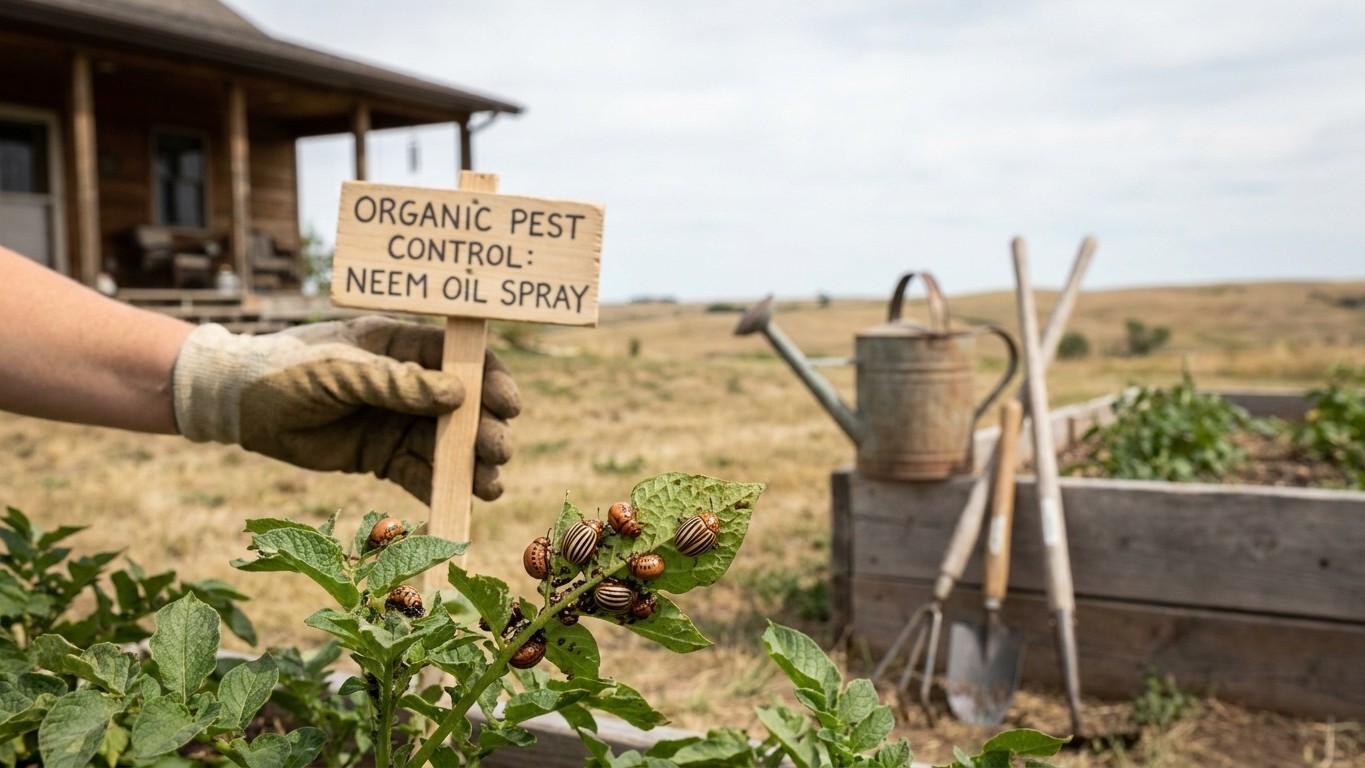

The fix depends on which pest you’re actually looking at, and most South Dakota gardens deal with the same dozen year after year, from asparagus beetles to the Colorado potato beetle in South Dakota that growers battle every summer, not to mention the Cabbage looper in South Dakota that gardeners find chewing through their brassica leaves, the Blister beetles in South Dakota that gardeners spot swarming on tomato and pepper foliage midsummer, the Cucumber beetles in South Dakota that growers watch for on young squash and melon vines, and Grasshoppers in South Dakota that fields often see arrive in waves once late summer heat sets in. Walk your rows now, while plants are still small, and check the undersides of leaves and the base of stems for the early signs — tiny shot-hole leaves, chewed tips, a beetle that doesn’t fly off when you touch the plant. That one habit, catching pests at their first and weakest stage, stops more damage than any spray applied later. Start today, before the next warm stretch pushes things along.
What South Dakota gardens actually deal with

Cold winters knock back some insect populations every year, but plenty of these species overwinter in soil, crop debris, or nearby field edges and come back on schedule once the ground warms. A short, intense growing season also means these pests have less time to build multiple generations than they would farther south, which is part of why timing matters more here than volume of spray. In Virginia, a longer season lets some of these same insect families run through extra generations before frost. In South Dakota, catching the first wave usually prevents the second.
Asparagus beetles

Adults are blue-black with cream-colored squares and red margins, about a quarter inch long. Larvae are gray-green, soft-bodied grubs that feed alongside them on new spears and fern growth. Both stages chew the tips ragged and leave grayish scarring that stunts the whole planting if left unchecked, a pattern Asparagus beetles in South Dakota growers see year after year. Hand picking adults in the early morning, when they move slowly, controls small plantings without a spray. Cutting and removing old fern growth in fall eliminates where they overwinter.
Flea beetles

Flea beetles in South Dakota that gardeners deal with are tiny, shiny black beetles that jump when disturbed, and they target new seedlings of brassicas, tomatoes and eggplant hardest. The damage looks like a shotgun blast of tiny round holes across young leaves, and heavy feeding can kill a transplant outright before it establishes. Row cover from the day of transplant until plants are past the seedling stage stops most of the damage.
Wireworms

Wireworms live in the soil and are rarely seen unless you’re digging, but their damage shows up as gaps in a row where seeds never germinated, or weak, yellowing seedlings with chewed roots. There’s no effective rescue treatment once they’re established in a bed. Avoiding planting into freshly broken sod and rotating annual beds each year keeps populations from building.
Colorado potato beetle

Adults are yellow-orange with five black stripes per wing cover, and the humped, reddish-orange larvae do most of the defoliating as they grow. Both stages strip potato foliage down to bare stems, moving plant to plant through a row. Hand picking adults and the bright orange egg clusters on leaf undersides works better here than reaching for a spray, since this species develops resistance to insecticides faster than most garden pests.
Imported cabbageworm

The adult is a common white butterfly with black spots, but it’s the velvety pale green caterpillar that does the damage, chewing irregular holes through cabbage-family leaves and leaving small greenish frass pellets behind. Row cover from transplant, hand picking, and Bt (Bacillus thuringiensis) sprayed while larvae are still small all work well together.
Cabbage looper

This caterpillar arches into a loop as it moves because it’s missing a set of middle legs, and it eats large, ragged holes starting on outer leaves before working toward the head. Bt sprays are most effective while the larvae are young and small.
Diamondback moth caterpillar
A small, pale green caterpillar that wriggles vigorously when touched, it leaves shallow feeding scars and small holes on the underside of brassica leaves, occasionally boring into the head itself. Bt sprays and rotating brassica beds away from the previous year’s crop debris both reduce pressure.
Striped and spotted cucumber beetles
The striped form is yellow with three black stripes, the spotted form yellow-green with black dots, and both chew holes in leaves and blossoms of squash, cucumber and melon. They can also spread bacterial wilt while feeding. Row cover until bloom, removed for pollination, limits exposure during the highest-risk window.
Squash bug
Adults are flat-backed, grayish-brown and shield-shaped, and nymphs are gray with black legs clustered on leaf undersides. Feeding causes yellow speckling that turns brown and crisp, and heavily fed leaves wilt outright. Checking leaf undersides weekly for the bronze egg clusters and crushing them cuts populations before they hatch.
Squash vine borer
The adult moth is orange and black and flies by day, resembling a wasp, but the damage comes from the cream-white larva boring inside the stem. A vine that wilts suddenly, with a small hole and sawdust-like frass at the base, has one inside. Slitting the stem open with a knife to remove the larva is the only fix once it’s in, since sprays never reach it there.
Grasshoppers
Large, yellow-brown to green jumping insects that build in number through summer, often worse near field edges and unmowed grass bordering the garden. They chew ragged holes across whole plants and can defoliate rows fast in heavy years. Row cover on the most vulnerable crops holds up better than sprays, which need constant reapplication as new hoppers move in from surrounding land.
Blister beetles
Long, narrow-bodied beetles, often black or gray with yellow stripes, that show up in clusters on tomato, potato and pepper foliage in mid to late summer and strip it fast. Handle them with gloves, since a crushed beetle releases a compound that blisters skin. Knocking them into a jar of soapy water works better than squashing them by hand.
Telling damage apart

The shape of the damage tells you more than the plant does. Chewed leaf edges and irregular holes point to a chewing insect like a cabbageworm, looper, or beetle. Fine stippling or a bronzed, dusty look on the leaf surface usually means something smaller is feeding by sucking rather than chewing, or that spider mites have moved in during a hot, dry stretch. Sudden wilting of a single healthy-looking vine, with no yellowing first, is the classic sign of a borer working inside the stem rather than a watering problem.
Sorting insect damage from disease and watering stress
- Ragged holes and missing leaf tissue: a chewing insect is present now or was recently.
- Yellow speckling that turns brown and papery: sap-feeding insects like squash bugs or mites.
- Sticky residue on leaves, sometimes with a black sooty coating: aphids or another sap feeder, not a fungus.
- Wilting that starts at the stem base with a visible hole or frass: a borer, not underwatering.
- Yellowing that spreads evenly across a whole plant with no chew marks: check soil moisture and drainage before assuming a pest.
- Spotting with defined rings or fuzzy margins and no insects visible: more likely a fungal or bacterial disease than an insect.
Watering faults and disease both tend to spread evenly or follow a pattern tied to drainage and airflow. Insect damage is usually patchy, worse on some plants than their neighbors, and tied to a visible culprit if you look closely enough, including on the underside of leaves and at the base of stems.
What actually works
Prevention comes first
Rotating where you plant brassicas, cucurbits and potatoes each year breaks the cycle for species that overwinter in soil or crop debris, including wireworms, cucumber beetles and diamondback moth caterpillars. Timing transplants to get seedlings past their most vulnerable stage quickly reduces the window flea beetles and cabbageworms have to do real damage. Row cover, put on at transplant and removed only when a crop needs pollinating, is the single most reliable physical barrier against flea beetles, cabbageworms, cucumber beetles and squash bugs alike. Leaving some flowering plants nearby brings in the predatory insects, ground beetles and birds that keep populations like aphids and small caterpillars from building unchecked, though it won’t stop an established grasshopper or beetle outbreak on its own.
Targeted intervention, once prevention isn’t enough
Hand picking works better than most gardeners expect for Colorado potato beetle, asparagus beetle and blister beetle, especially on plantings small enough to check twice a week. Bt (Bacillus thuringiensis) is effective against caterpillar pests like cabbageworm, cabbage looper and diamondback moth caterpillar, but it does nothing to beetles, bugs or grasshoppers, since it only works on caterpillars that ingest it. Insecticidal soap can knock back soft-bodied, sap-feeding insects but has little effect on hard-shelled adults like cucumber beetles or squash bugs. Garlic spray, companion planting alone, and ultrasonic pest devices are not effective controls for any pest on this list. This is one area where wasted effort feels like action but changes nothing in the garden.
What control costs
Cost here is mostly a trade between money and time, and the cheapest option for most home gardeners is also the most repetitive one.
| Method | Cost | Time required | Best against |
|---|---|---|---|
| Hand picking | Lowest, no materials needed | Two to three short checks a week through the season | Potato beetle, asparagus beetle, blister beetle |
| Row cover / barriers | One-time material cost, reusable for several seasons | Minimal once installed, removed only at bloom | Flea beetle, cabbageworm, cucumber beetle, squash bug |
| Biological controls (Bt) | Moderate, bought per application | Reapplied every one to two weeks while caterpillars are active | Cabbageworm, cabbage looper, diamondback moth caterpillar |
| Sprays (soap, other insecticides) | Moderate to higher over a season | Repeated frequently, especially after rain | Aphids, soft-bodied nymphs, spot treatment |
For a small home garden, hand picking and row cover together cost the least over a full season, since row cover is bought once and reused, and hand picking needs only attention, not a purchase. Sprays and biological controls both need repeat applications through the season to keep up with new generations, which adds up in time even when the per-application cost is modest. Gardeners further north in the Upper Midwest, including in Wisconsin gardens dealing with the same flea beetle and cucumber beetle pressure, generally find the same balance holds: barriers save money over a season, sprays save time in the moment.
Local help
SDSU Extension tracks pest activity across the state and identifies specimens gardeners send in when they aren’t sure what they’re looking at. Its garden and yard resources are the first stop for anything on this list that doesn’t match what’s described here, and county offices can confirm identification on something unfamiliar before it spreads further. For other seasonal tasks and planting decisions across the state, the South Dakota guides section covers what to do the rest of the year.
Pest-by-Pest Guides for South Dakota Gardens
Once you know a pest is active, it helps to read up on the specifics for your part of the state. If the butterflies are already patrolling your brassica beds, check the guide to the imported cabbageworm, which starts showing up in mid-to-late May in the east and a bit later farther west. Squash growers should watch soil temperatures in the 60s and read up on the squash bug, since it arrives on a similar schedule but survives the winters here in a way that shapes control timing. A few weeks later, once soil near the base of squash plants warms into the mid-60s, the squash vine borer moths begin to emerge, and South Dakota’s shorter season changes how you’d manage them compared to warmer states. And if you’re seeing damage down in the soil itself, especially early in spring once temperatures climb past 50°F, the page on wireworms covers how long they stay active and what that means for planting decisions.
Common questions
What is eating my squash leaves overnight in South Dakota?
Overnight leaf damage on squash is most often squash bugs or cucumber beetles feeding at dusk and dawn, since both tend to hide low in the plant or under mulch during the heat of the day. Check the underside of leaves near the base of the plant first, since that’s where nymphs and egg clusters cluster.
Do ladybugs actually help with garden pests here?
Yes, ladybugs and their larvae feed heavily on aphids and small soft-bodied insects, but they won’t touch established populations of squash bugs, cucumber beetles or grasshoppers. Encouraging them with flowering plants helps as one layer of control, not a replacement for row cover or hand picking on the pests they don’t eat.
Are grasshoppers going to be worse some years than others?
Grasshopper numbers do vary noticeably from year to year and from one part of a property to another, often tied to how much unmowed grass and weedy edge borders the garden. There’s no reliable way to predict a bad year in advance from a home garden, so the practical response is watching for early nymphs in nearby grass and getting row cover on vulnerable crops before numbers build.
Why do my potato plants get stripped every year no matter what I do?
Colorado potato beetle builds resistance to many insecticides faster than most garden pests, which is why spraying alone often stops working after a season or two. Hand picking adults and checking for the bright orange egg clusters on leaf undersides through the season, combined with rotating where potatoes go each year, works better long term than relying on a spray to solve it every time.