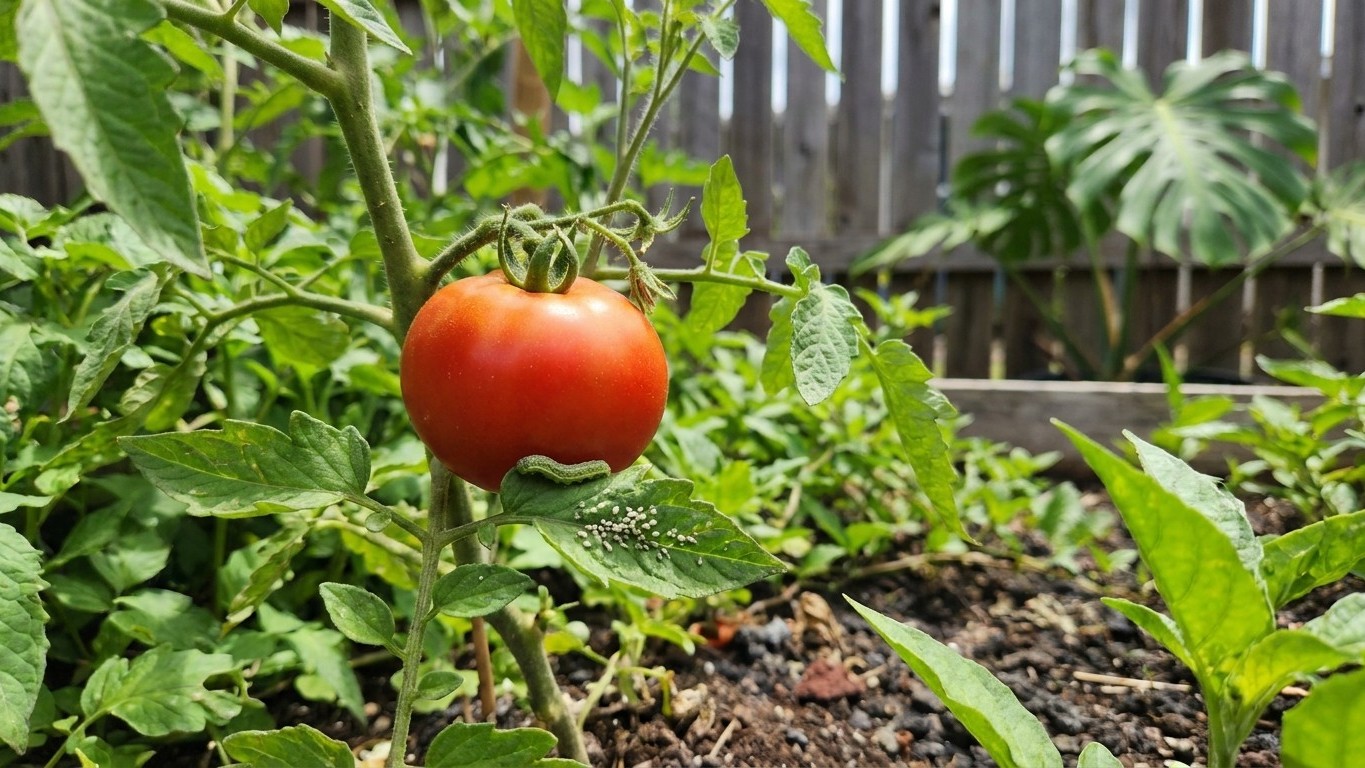

Hawaii’s tomato pests never get a winter to knock them back, because NOAA’s 1991-2020 climate normals for the Honolulu station show no measurable freeze in any month of the year. That means silverleaf whitefly, root-knot nematode, spider mites, broad mite, cutworms and fruit flies all keep breeding on a continuous cycle instead of dying off each fall. Check the undersides of your lowest leaves and the base of each stem once a week, before you ever look for symptoms higher up the plant.
What this comes down to in Hawaii

Leeward or windward decides more about your tomato pests than anything in a spray schedule. Dry, dusty leeward gardens push two-spotted spider mites, fine stippling and webbing on the undersides of leaves. Humid windward ones favor broad mites, whose damage mimics herbicide injury so closely growers spray for the wrong thing. Layer in cutworms at transplant and silverleaf whitefly spreading virus all season, and the real question isn’t which pest exists here — it’s which one your microclimate is already feeding.
Cutworm
Cutworms hit right after transplant, when stems are still thin. A single caterpillar can sever a seedling at the soil line overnight and be gone by morning, hidden an inch or two down in the surrounding soil. A cardboard or foil collar pushed into the soil around each new transplant stops it cold.
Silverleaf whitefly
This is the pest most likely to cost you a whole planting, not because it eats much but because it spreads Tomato Yellow Leaf Curl Virus as it feeds. Populations build on the undersides of leaves through the vegetative stage and leave behind sticky honeydew and black sooty mold. Yellow sticky traps and a hard look under every leaf, every week, catch it before virus symptoms appear.
Two-spotted spider mite
Spider mites favor dry, dusty conditions and show up as fine pale stippling on leaves, with webbing across the leaf undersides in a bad infestation. They’re worse in leeward gardens that go long stretches without rain. A strong hose-down of the foliage, done a few times a week, disrupts them enough to matter.
Broad mite
Broad mite damage looks like herbicide injury: new growth curls downward, hardens, and takes on a bronze color, and fruit develops a cracked, russeted skin. It thrives in humid, windward conditions and is easy to misdiagnose because the mite itself can’t be seen without magnification. Miticides labeled for broad mite are the only reliable fix once it’s established.
Root-knot nematode
Nematodes live in the soil and show no aboveground sign except a plant that wilts in the afternoon heat even when the soil is moist. Pull one up and the roots carry small, bead-like galls instead of a clean fibrous system. Warm soil that never cools below the nematode’s activity threshold means Hawaii’s ground stays hospitable to them all year.
Fruit fly (melon fly and oriental fruit fly)
Fruit flies sting ripening or nearly ripe fruit, laying eggs just under the skin. The first sign is often a tiny puncture mark, followed within days by soft, collapsing flesh full of small white maggots. Bagging fruit clusters as they turn color and picking promptly at first blush both cut the window a fly has to reach them.
Working it out for your own garden
The fastest way to identify what you actually have is to work from where the damage shows, not from the pest name that sounds most familiar. A severed stem at ground level within days of transplanting points to cutworm. A cloud of tiny white insects lifting off the leaves when you brush past is whitefly, not a fungus. Stippled, dusty-looking leaves in a dry corner of the garden point to spider mite, while curled, bronzed new growth in a damp, shaded spot points to broad mite instead.
A short checklist before you spray anything
- Wilting despite adequate water: pull one plant and check the roots for galls before assuming a watering problem.
- Sticky leaves with black mold: check the undersides for whitefly nymphs, not aphids, first.
- Punctured or soft fruit near ripening: check for a fly sting, not disease, especially near wild host plants.
- Damage only in one part of the garden: note whether that spot is drier, damper, or shadier than the rest, since several of these pests are exposure-specific.
This same diagnostic habit matters most in the weeks right after you’ve followed a Tomato Planting Dates in Hawaii: Counting Back From Your Frost Window schedule and set transplants out, since cutworm and early whitefly pressure both peak in that first stretch before the plant has hardened off.
What changes across the state
The Honolulu station is the only reference point NOAA’s normals give us here, and pest pressure away from Oahu’s south shore moves with elevation and rainfall, not with any single figure. Windward valleys with steady rain and humidity run harder on broad mite and whitefly, since both prefer damp, sheltered growth. Leeward gardens that go weeks between rain lean the other way, toward spider mite, which needs dust and dry leaves to build a population.
Root-knot nematode pressure tracks soil temperature and moisture more than rainfall directly, and it tends to be worst in warm, sandy or cinder-based lowland soils that never cool down. Higher-elevation gardens, the kind found upcountry on several islands, run cooler year-round even without a frost, and that slows the reproduction rate of every pest, though it does not stop any of them outright. Fruit fly pressure often runs higher near wild or abandoned host plants at lower elevations, since the flies breed in whatever ripening fruit is available nearby, cultivated or not.
None of this changes which pests show up statewide. It changes which one is worth watching first in your particular yard, and that’s worth more than a general warning about “pests in Hawaii” that doesn’t account for whether your garden sits in a wet gulch or a dry plain.
The mistakes this state punishes

The most common mistake is treating a pest problem as a one-time fix, the way a mainland gardener might after a hard frost clears the board each winter. Nothing here resets the population for you, so a whitefly or nematode problem left alone in one bed carries straight into the next planting in the same soil. Rotating tomatoes out of nematode-infested ground, or choosing a variety bred with resistance, matters more here than in a climate where cold winters do some of that work automatically.
Several cultivars on the market carry at least intermediate resistance to nematodes, including Sakura, Celebrity Plus, Big Beef Plus, Granadero and Amalfi, and picking one of those for a bed with a known nematode history is a cheaper fix than fumigating soil that will just get reinfested from the untreated bed next to it. The full rundown of which cultivars suit this climate and season length is worth reading on Tomato Varieties That Ripen in Time in Hawaii before you commit a whole bed to one.
The second mistake is ignoring fruit fly risk until fruit is already stung, since by the time damage is visible the maggots are already inside. Bag or pick fruit at first color change rather than waiting for full ripeness on the vine, especially in a yard with fruiting trees or wild guava nearby that host the same flies.
Checking this against your county
Everything above is anchored to the Honolulu station, and pest pressure on Kauai, Hawaii Island or Maui can run differently depending on rainfall and elevation in that specific spot. The University of Hawaii’s CTAHR extension service is the source to check for pest reports and current controls specific to your county, since a state-wide page like this one is a starting point, not a substitute for what’s actually active in your yard this season. If you haven’t yet worked through the basics of growing tomatoes in Hawaii, that’s worth doing before troubleshooting a specific pest.
Common questions
Do I need to worry about tomato hornworm in Hawaii?
Hornworm is present in Hawaii but tends to be a minor, occasional problem compared to whitefly, nematodes and the mites, and most gardeners here spend far more effort on the pests covered above. Hand-picking is usually enough if you do see one.
Why do my tomato leaves look curled but I can’t find any bugs?
Curled, bronzed new growth with no visible insect is the signature of broad mite, which is too small to see without magnification. Check for a hardened, cracked texture on nearby fruit as a second clue before assuming it’s a virus.
Will crop rotation actually get rid of root-knot nematodes here?
Rotation helps but rarely eliminates them outright, since Hawaii’s warm soil lets populations persist longer than they would in a climate with a real winter. Combining rotation with a nematode-resistant variety gives better odds than either one alone.
Is it worth spraying preventively before I see any pests?
Routine preventive spraying isn’t necessary for most of these pests if you’re checking leaves and stems weekly, since early hand-removal or a targeted treatment works better than a blanket schedule. Save chemical controls for a confirmed identification rather than a guess.