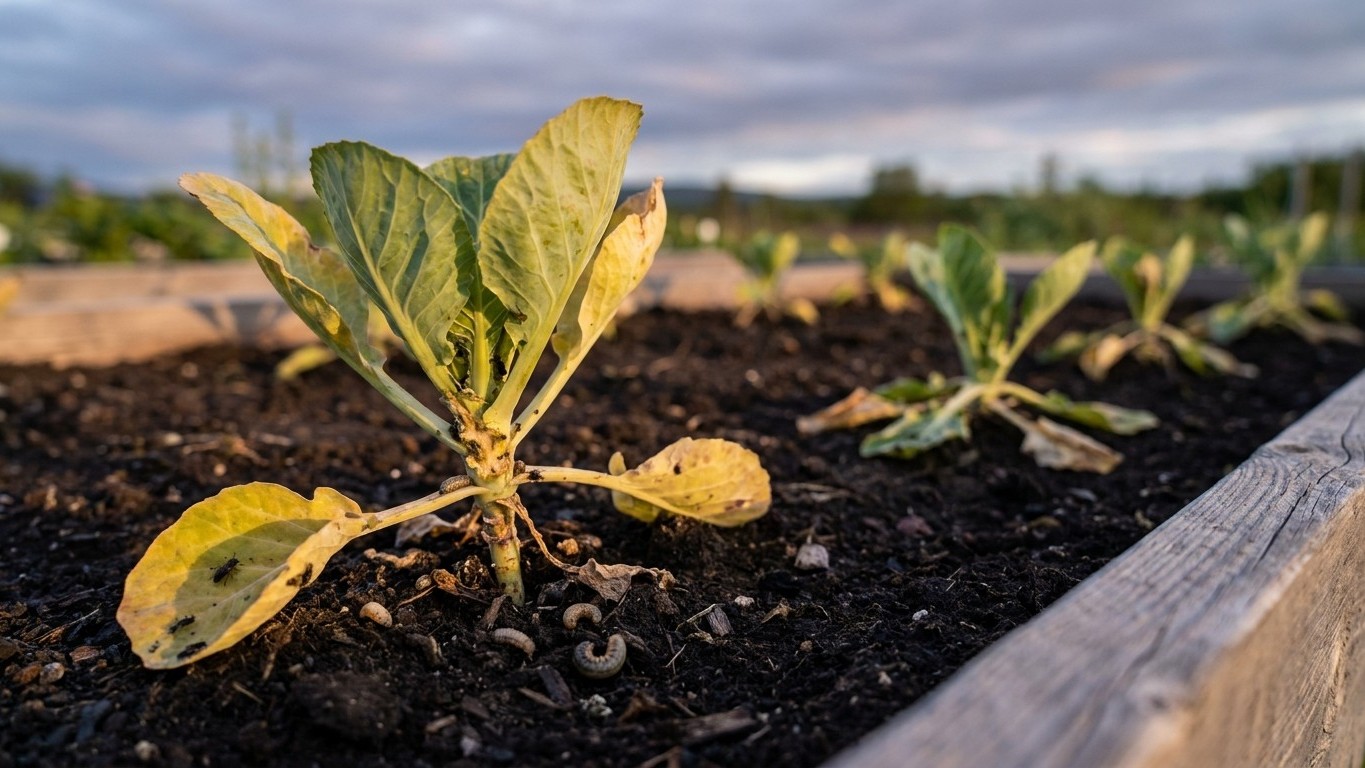

Cold soil, a short frost-free window, and permafrost that never fully thaws keep the pest list in the Northwest Territories shorter than almost anywhere else in Canada. But short doesn’t mean easy. Gardeners in Yellowknife, Hay River, Fort Smith, and Inuvik still lose cabbage to Root maggots in Northwest Territories that growers watch for every spring, watch cutworms flatten a whole row of seedlings overnight, find their strawberries stripped by hares before the fruit even turns red, and battle Slugs in Northwest Territories during damp spells. The pests that do show up tend to hit harder because plants have so little time to recover.
Why a Six-to-Fourteen-Week Growing Season Changes the Math

Most NWT communities get somewhere between 60 and 100 frost-free days. Inuvik and the Beaufort Delta sit at the short end of that range; Hay River and Fort Smith, further south and buffered by the Great Slave and Great Slave Lake region’s milder microclimate, stretch closer to 100 days. Compare that to a typical Midwestern garden with 150 to 180 frost-free days, and you start to see the problem. A cabbage maggot infestation that a longer season could shrug off becomes a total crop loss up north because there’s no time left to replant and mature a second round.
The flip side is nearly continuous daylight through June and July. Plants grow fast under 20-plus hours of light, and so do the insects feeding on them. Aphids in Northwest Territories colonies that might take three weeks to explode in a temperate garden can build a visible infestation in under two weeks when warmth and light both stay high around the solstice. Pest pressure in the NWT is lower overall than in southern Canada, but it’s compressed into a narrower, more intense window.
Permafrost and deep winter cold do the heavy lifting on the prevention side. Many soil-dwelling larvae and overwintering eggs simply don’t survive a winter where ground temperatures stay well below freezing for six or seven months. That’s one reason Japanese beetles, squash bugs, and several other pests common in the Lower 48 haven’t established themselves this far north. The insects that do make it are the ones tough enough, or fast enough, to complete a life cycle in the gap between spring thaw and the first hard frost, a resilience seen in the Spruce beetle in Northwest Territories, which forests have battled as warming winters let it push further north.
The Insects Most Likely to Show Up
A handful of species account for nearly every insect complaint from northern gardeners, and they cluster around a few plant families.
Cutworms and Root Maggots
Cutworms in Northwest Territories are the classic early-season culprit. They hide just below the soil surface during the day and chew through seedling stems at ground level overnight, often taking down a dozen transplants in a single pass. Cabbage root maggots follow close behind, laying eggs at the base of brassicas (cabbage, broccoli, radish, turnip) where the larvae tunnel into roots and stunt or kill the plant before it ever forms a head. Both pests time their activity to the first real warm-up of the season, usually late May into June depending on latitude.
Cardboard or paper collars pushed an inch into the soil around each transplant stop cutworms cold, since the larvae can’t climb over a barrier. For root maggots, a floating row cover laid down at planting and sealed at the edges with soil keeps the egg-laying flies from ever reaching the stems. Crop rotation matters too. Planting brassicas in the same bed year after year lets the maggot population build in the soil, so moving that family to a different corner of the garden each season breaks the cycle.
Aphids
Aphids show up on almost everything, but kale, cabbage, and other brassicas seem to draw the heaviest colonies in northern gardens, likely because those crops are grown so widely. Colonies cluster on the undersides of leaves and along new growth, sucking sap and leaving a sticky residue that can attract sooty mold. Because northern summers compress their reproductive window into a few intense weeks, an aphid problem left unchecked in early July can look unmanageable by late July.
A strong spray of water knocks a surprising number off the plant, and a insecticidal soap treatment handles the rest without harming pollinators if applied in the evening when bees aren’t active. Encouraging lady beetles and lacewings by leaving a few flowering plants (dill, yarrow, alyssum) in the garden gives natural predators a reason to stick around.
Flea Beetles and Leaf Miners
Flea beetles riddle potato and brassica leaves with tiny shot-hole punctures, and they’re active almost as soon as the soil warms. Leaf miners tunnel visibly through spinach and chard leaves, leaving pale winding trails that make the greens unappealing even when the plant itself survives. Both pests respond well to floating row covers put in place before the adults emerge, and both tend to prefer stressed or crowded plants, so consistent watering and reasonable spacing cut down on damage without any spraying at all.
Slugs and Moisture-Loving Pests in Wetter Communities
Slugs aren’t a universal problem across the territory, but they show up reliably in communities with more rainfall and heavier soil, particularly Hay River and Fort Smith, where summer humidity runs higher than in the drier, rockier Yellowknife area. They favor lettuce, seedlings, and anything soft and low to the ground, and they do their damage at night or during overcast, damp stretches.
A shallow dish of beer sunk to soil level draws and drowns them without chemicals. Diatomaceous earth sprinkled in a ring around vulnerable plants works as a physical barrier, though it needs reapplying after rain since it loses effectiveness once wet. Clearing away boards, mulch piles, or thick ground cover near vegetable beds removes the daytime hiding spots slugs depend on, which does more long-term good than any single trap.
Vertebrate Pests: Hares, Voles, and Squirrels
Insects get most of the attention, but four-legged pests cause some of the most frustrating losses in NWT gardens. Snowshoe hares graze young shoots down to nothing in early spring, sometimes clearing an entire row of lettuce or peas in a single night. Their populations run in cycles, roughly every eight to eleven years, so a garden that saw little hare damage last summer might face heavy pressure the next.
Voles tunnel under mulch and snow cover, girdling the bark of young shrubs and fruit canes over winter in a way gardeners often don’t discover until spring, when a plant that looked fine in October fails to leaf out. Red squirrels raid berry bushes just as fruit ripens, and ravens, common and bold across the territory, will pull up freshly planted seedlings out of curiosity as much as hunger.
A 2-to-3-foot fence of galvanized hardware cloth, buried a few inches into the ground, keeps both hares and voles out of most vegetable beds. Pulling mulch back from the base of shrubs and young trees before the first snowfall removes the cover voles use to work unseen. For ravens, a simple mesh cover over freshly seeded rows for the first two weeks solves most of the problem, since the birds lose interest once nothing’s left exposed to peck at.
A Rough Timeline of the Northern Growing Season
Late May into early June marks the real start. Soil temperatures climb enough for direct seeding, and cutworm moths lay eggs around this time, meaning collars and row covers need to go in at planting, not after damage appears. By mid-June, with daylight stretching past 20 hours in communities near or above the Arctic Circle, aphid colonies and flea beetle populations start building fast, and this is the window where a few days of inattention can turn a minor issue into a real infestation.
July brings peak hare activity on tender greens and the first generation of root maggots finishing their damage on brassicas. August is when a second generation of some pests, root maggots especially, can appear on later-planted crops, and it’s also when squirrels and hares start hitting ripening berries and root vegetables hard before the first frost cuts the season short. Once that frost arrives, usually anywhere from late August in Inuvik to mid-September in Hay River and Fort Smith, insect activity drops off fast, though voles and hares remain a concern right through winter for anything left unprotected.
Building a Pest Plan Around a Short Season
The single most effective habit for NWT gardeners isn’t a spray or a trap. It’s timing. Because the season is so tight, prevention has to go in at planting, not after the first sign of trouble, since there’s rarely enough calendar left to recover from a delayed response.
Row covers deployed the day seedlings go into the ground handle cutworms, root maggots, and flea beetles all at once, and they can come off once plants are large enough to tolerate some damage. Rotating brassicas and other heavy-feeding crops to a new bed each year keeps soil-dwelling pests from building a permanent population. Fencing with buried hardware cloth protects against hares and voles simultaneously, and it pays for itself within a season or two in a territory where a single hare visit can wipe out a row of transplants.
Clearing garden debris and cutting back mulch in the fall removes overwintering sites for both insects and rodents, which matters more in a climate where the “off season” runs eight or nine months. Anyone gardening in the NWT for the first time is often surprised that pest pressure, while real, is lighter than what they left behind in a southern climate. The tradeoff is that the margin for error is thin. A cutworm outbreak that a longer growing season could shrug off has a real chance of ending a crop for the year up north, simply because there’s no time left to start over.