
New Jersey’s tomato pests arrive on a schedule tied to the state’s frost window, not to a fixed calendar date. NOAA’s 1991-2020 climate normals put Newark’s last spring freeze at March 29 to April 6 and its first fall freeze at November 4 to November 16, which means the pest calendar runs across roughly seven months, starting the week transplants go in the ground and ending as the last fruit ripens. Check the undersides of leaves and the stem base weekly rather than waiting for obvious damage, since the worst offenders on this list do most of their harm before a plant looks sick from a distance.
What this comes down to in New Jersey

A handful of species cause nearly all the tomato damage reported around the state, and they show up in roughly the same order every year relative to the transplant date. Identify the pest before you treat it, since a broad-spectrum spray aimed at the wrong stage of the wrong insect wastes a trip to the garden center and kills the pollinators doing the plant a favor. The list below runs from the pests that hit seedlings right after transplant to the ones that show up as fruit ripens in mid to late summer.
Cutworms

Cutworms are the reason a healthy transplant can be found toppled over one morning with the stem chewed clean through at the soil line. The larva feeds at night and hides in the top inch of soil during the day, so you rarely see it unless you dig around the base of a damaged plant. A cardboard collar pushed an inch into the soil around each stem at transplant stops this pest cold.
Flea Beetles

Flea beetles show up within days of setting out transplants and stipple young leaves with tiny round holes that make the foliage look like it was hit with buckshot. A light dusting is cosmetic on an established plant, but a heavy attack can stunt or kill a seedling outright. Row cover kept on until the plants have a few true leaves keeps the adults off during the window when they do the most damage.
Aphids

Aphids build up through late spring as the plant puts on new growth, clustering on stem tips and the undersides of leaves where they suck sap and leave behind a sticky honeydew that attracts ants and grows sooty mold. Leaves curl and yellow under a heavy colony. A strong jet of water knocks most of them off, and insecticidal soap handles what’s left.
Colorado Potato Beetle

This one moves onto tomatoes from nearby potatoes or eggplant starting in late spring, and both the striped adult and the reddish, spotted larva chew ragged holes straight through the leaf rather than just the surface. A heavy infestation can strip a plant of foliage within a couple of weeks. Handpicking works on a home scale if you check the undersides of leaves for the orange egg clusters and crush them before they hatch.
Tomato Hornworm

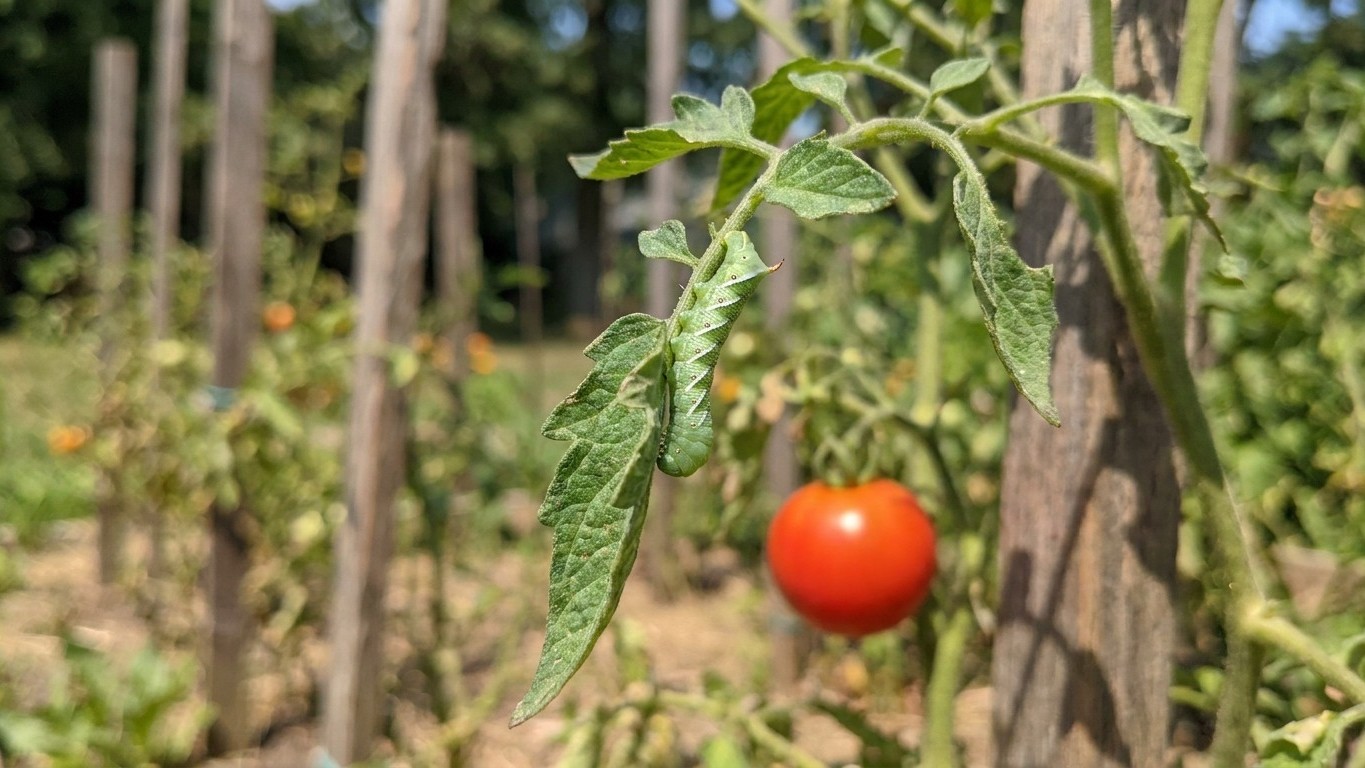
By mid to late summer, this is the pest most likely to strip an entire branch overnight. The caterpillar is large enough to see clearly once you know to look, but its green color and vertical posture make it blend in against the stem until you spot the dark, pellet-shaped droppings on the leaves or soil below. Handpicking at dusk, when the caterpillar is active and feeding, is still the most reliable control for a small planting.
Brown Marmorated Stink Bug

This insect pierces developing fruit to feed, leaving cloudy white or yellow blotches under the skin with no visible entry hole, a symptom growers often mistake for a disease. Damage peaks as fruit ripens in mid to late summer. It’s a strong flier and moves in from wooded edges and hedgerows, so pressure is often worse on tomatoes planted near a fence line or a stand of trees.
Tomato Fruitworm
Also known as the corn earworm, this caterpillar bores a single clean hole into the fruit near the stem end and hollows out the inside, usually appearing as the main tomato harvest gets underway in late summer. One caterpillar can ruin several fruit as it moves from one to the next. Picking off and destroying any fruit showing the entry hole keeps it from finishing its feeding cycle in your patch.
Working it out for your own garden
Most of the guesswork in pest identification disappears once you match the symptom to where it shows up on the plant and when in the season you’re seeing it. A stem severed at the soil line right after transplant is a different problem than a hole bored into a ripening fruit in August, even though a beginner might file both under “something’s eating my tomatoes.”
Match the symptom to the timing
| What you see | Likely pest | When it shows up |
|---|---|---|
| Stem severed at soil line, seedling toppled | Cutworm | Right after transplant, spring |
| Tiny round shot-holes across the leaf surface | Flea beetle | Spring, on young transplants |
| Curled, yellowing leaves with sticky residue | Aphid | Late spring through summer |
| Large ragged holes, striped or spotted insect present | Colorado potato beetle | Late spring to early summer |
| Whole branches stripped overnight, dark droppings below | Tomato hornworm | Mid to late summer |
| Cloudy blotches under fruit skin, no entry hole visible | Brown marmorated stink bug | Mid to late summer |
| Single clean hole bored into fruit near the stem end | Tomato fruitworm | Late summer, near harvest |
The transplant date itself sets the clock for everything on this list, since cutworm and flea beetle pressure is heaviest in the first few weeks a young plant is in the ground. If you haven’t nailed down when that is for your county, Tomato Planting Dates in New Jersey: Counting Back From Your Frost Window walks through counting back from the frost window using a given variety’s days to maturity. Scout the same day each week rather than only after you notice damage, since three of these pests do most of their harm in the two or three days before symptoms become obvious from a standing distance.
What changes across the state
The Newark figures above come from a single weather station, and NOAA notes that the reference measures freeze probability at that specific airport site, not the state as a whole. USDA’s hardiness zone map places New Jersey across zones 6a to 7b, and that spread matters more for pests than most gardeners assume, since insect activity tracks soil and air temperature closely.
North, south, and the coast
In the higher elevations of the northwest, around the Kittatinny Ridge and the Skylands region, cooler spring soil delays the first generation of flea beetles and cutworm activity by roughly a week or two compared with the reference station, and the growing season closes earlier in fall, which can cut off a second wave of tomato fruitworm before it fully develops. Along the shore and in the state’s southern counties, milder winters and a longer stretch of warm fall weather let pests like aphids and brown marmorated stink bug run an additional generation that a shorter northern season doesn’t allow. Sandy soils in the Pine Barrens region also warm and dry faster than the heavier clay loams found elsewhere, which tends to favor flea beetles, since they prefer dry conditions during their egg-laying stage.
None of this changes which pests are on the list, only how early they start and how many generations they get through before the first fall freeze arrives. Treat the Newark dates as a starting point and adjust a week or two in either direction based on where your garden sits relative to elevation, the coast, and local soil type.
The mistakes this state punishes

The single most common mistake is skipping the collar or row cover in the first two weeks after transplant because the plant looks healthy and the weather has turned warm. Cutworm and flea beetle pressure is heaviest in exactly that window, and a warm early spring that tempts gardeners to set plants out ahead of the frost window makes it worse, since pests are active before the plant has hardened off enough to shrug off feeding damage.
Waiting too long to act on fruit damage
The second mistake is treating fruit damage as a disease problem. Cloudy blotches from stink bug feeding and bore holes from fruitworm are both often mistaken for blossom end rot or a fungal issue, which sends gardeners reaching for a fungicide that does nothing for either insect. Confirm the cause before you spray by cutting open a damaged fruit. A clean tunnel means fruitworm, while internal white pithy tissue with no tunnel points to a stink bug.
The third is picking a long-season heirloom for a small city lot with poor air circulation, which lets aphid and stink bug populations build undisturbed over a longer stretch of ripening fruit. Matching a variety’s season length to your county’s frost window, covered in Tomato Varieties That Ripen in Time in New Jersey, also shortens the window a late-season pest has to work with.
Checking this against your county
The frost dates and pest timing in this article come from a single reference point near Newark, and NOAA is explicit that other parts of the state see their last spring freeze later and their first fall freeze earlier. Before you plan a spray schedule around these dates, check current pest reports and identification help through the Rutgers Cooperative Extension, which tracks pest activity by county and can confirm an identification from a photo if you’re not sure what you’re looking at. If you’re just getting your beds started, the basics are covered in growing tomatoes in New Jersey.
Common questions
Do I need to spray for hornworms even if I only see one or two?
No, handpicking is enough at that level. A tomato hornworm does most of its damage as it grows larger, so removing the one or two you spot before they reach full size usually prevents any real loss.
Are the little green caterpillars on my tomatoes hornworms or fruitworms?
Check where you found it. Hornworms feed on foliage and have a visible horn at the tail end, while fruitworms are found inside the fruit itself and lack that horn.
Why do my tomatoes have holes but I never see any bugs?
Cutworms and fruitworms both cause damage while staying mostly hidden, one in the soil and one inside the fruit. Check the soil at the base of the stem for cutworms, and cut open a damaged fruit to look for a fruitworm tunnel.
Will neem oil handle all of these pests at once?
Not reliably. Neem oil has some effect on soft-bodied pests like aphids but does little against a hornworm’s size or a stink bug’s piercing mouthparts, so identifying the pest first still matters more than picking one product to cover everything.