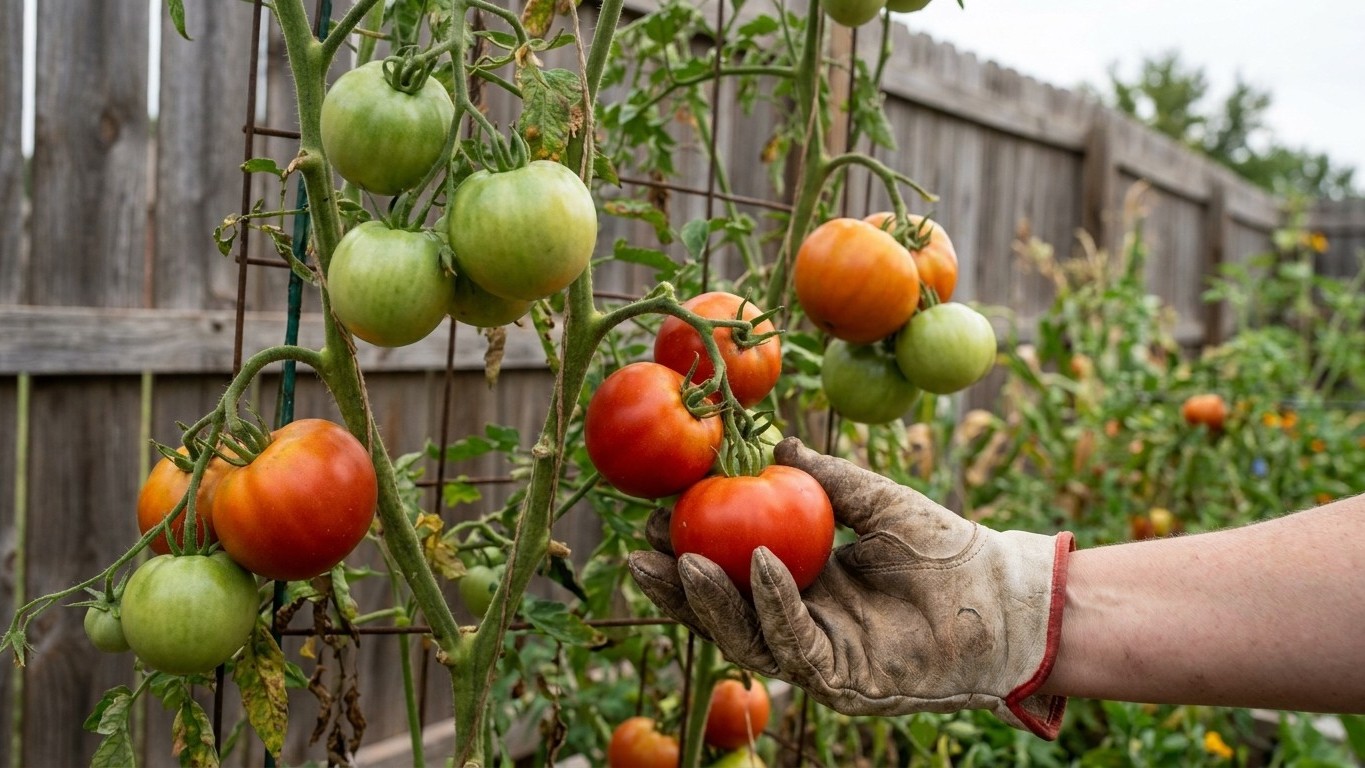

Most tomato varieties will Ripen in Time in Oklahoma if you plant them after the spring frost window and pick a days-to-maturity number that leaves room for a cool spring. NOAA’s 1991-2020 climate normals put Oklahoma City’s last spring freeze between March 28 and April 10, and the first fall freeze between October 29 and November 8, a season long enough for nearly everything in the catalogue to finish with margin to spare. Match the variety’s days-to-maturity to that window before you buy the transplant, not after.
What this comes down to in Oklahoma

Ready to figure out which tomatoes will actually finish before frost hits your patch of yard? Yes — nearly any variety will make it, because Oklahoma’s growing season runs roughly from late March to early November, wide enough that ripening isn’t really the question. What matters is how much slack a variety leaves you against that fall freeze. So before you buy transplants, check the days-to-maturity on the tag and count forward from your planting date to see where it lands.
The real question is how much margin a variety leaves you, not whether it can finish at all. A cherry tomato with 130 days of slack absorbs a bad month without a fight. A paste tomato with 110 days of slack does not, especially if your county’s frost dates run later in spring and earlier in fall than the airport station’s, which is common outside the city itself. If you haven’t settled on a transplant date yet, sort that out first with growing tomatoes in Oklahoma before working through the list below.
Counting forward from a mid-April to late-April transplant, here is where each named variety lands.
| Variety | Type | Days to maturity | First ripe (calculated) | Margin before fall frost |
|---|---|---|---|---|
| Sakura | Cherry, indeterminate | 55 | mid June | 133 days |
| Sun Gold | Cherry, indeterminate | 57 | mid June | 131 days |
| Juliet | Grape, indeterminate | 60 | late June | 128 days |
| Amalfi | Paste, determinate | 68 | early July | 120 days |
| Cherokee Purple | Beefsteak, indeterminate | 72 | early July | 116 days |
| Big Beef Plus | Beefsteak, indeterminate | 72 | early July | 116 days |
| San Marzano II | Paste, indeterminate | 78 | mid July | 110 days |
| Celebrity Plus | Slicer, determinate | 78 | mid July | 110 days |
Sakura

A 55-day cherry tomato, small and round, meant for snacking and salads rather than sauce. Set out mid April to late April and count 55 days forward, and it ripens by mid June, leaving roughly 133 days before Oklahoma City’s earliest fall freeze date. It carries resistance to nematodes, tomato mosaic virus, and Fusarium wilt races 1 and 2, which matters in soil that has grown tomatoes before.
Sun Gold

A 57-day cherry tomato with orange-gold fruit, sweeter than most reds, best eaten fresh off the vine. The same mid-April to late-April transplant window puts first fruit around mid June, with about 131 days of margin before frost. It resists tobacco mosaic virus and Fusarium wilt race 1, useful if your garden has run tomatoes in the same bed for several seasons.
Juliet

A 60-day grape tomato, oblong and small, good for roasting or tossing whole into a pan. It ripens by late June from an April transplant and carries about 128 days of margin. Juliet resists both late blight and early blight at an intermediate level, which helps through Oklahoma’s humid summer stretches when foliar disease pressure builds.
Amalfi

A 68-day paste tomato, oblong and dense-fleshed, built for sauce rather than the sandwich plate. Its determinate habit keeps the plant compact, a plus in a raised bed or container. First fruit lands in early July with roughly 120 days of margin, and it resists nematodes, late blight, and early blight at an intermediate level.
Cherokee Purple

A 72-day heirloom beefsteak with dusky pink-purple skin, prized for flavor over yield. It carries no listed disease resistance, so it needs closer scouting through the season, a good reason to keep an eye on Tomato Pests in Oklahoma: Which Ones Actually Show Up Here once the plant sets fruit. From an April transplant it ripens in early July with about 116 days of margin, comfortable but tighter than the cherry types above.
Big Beef Plus

Also 72 days, also a large red beefsteak, but built with a resistance package this heirloom lacks: nematodes, gray leaf spot, and tomato mosaic virus. Same early-July ripening, same 116 days of margin. If you want the beefsteak size without the extra disease-watching, this is the trade.
San Marzano II
A 78-day paste tomato, long and narrow, the classic canning type. It is the longest season on this list without a determinate habit to speed things along, ripening in mid July with about 110 days of margin, still comfortable at Oklahoma City but the tightest of the group if your county’s frost window runs later in spring than the reference station’s.
Celebrity Plus
Also 78 days, a mid-size determinate slicer with resistance to nematodes, gray leaf spot, and tomato mosaic virus. It matches San Marzano II’s mid-July ripening and 110-day margin, and the compact plant is easier to manage in a smaller garden.
Working it out for your own garden
The math is the same for any variety you find outside this list, and it works in two directions. Count forward from your transplant date using the catalogue’s days-to-maturity to find when fruit ripens, then check that date against your local fall frost window. Count backward from the fall frost window using the same number to find the latest transplant date you can get away with. For the full method on picking that transplant date, see Tomato Planting Dates in Oklahoma: Counting Back From Your Frost Window.
A cultivar that finishes with room to spare
Take Celebrity Plus at 78 days. Set out mid April to late April, per NOAA’s 1991-2020 normals for Oklahoma City, and 78 days forward lands you in mid July. The first fall freeze at that station runs October 29 to November 8, which leaves roughly 110 days between first ripe fruit and frost, comfortably enough margin to absorb a slow start or a stretch of poor pollination weather.
Where the same math stops working
Now run a second planting through the same variety. If you start seed indoors in mid June for a fall crop rather than setting out a spring transplant, you add another six to eight weeks of seed-to-transplant time before the 78-day maturity clock even starts. That pushes first ripe fruit into late September to mid October, close enough to Oklahoma City’s October 29 to November 8 fall freeze window that a single early cold snap, or the two-week lag rural gardens often see ahead of the reference station, can end the harvest before it really gets going. The line falls somewhere around 100 to 110 total days from seed to first fruit: below that, a fall planting is workable, above it, you are racing frost.
What changes across the state
Oklahoma is not one climate, and the USDA’s Plant Hardiness Zone Map puts the state anywhere from zone 6a to 8a depending on where you stand, a three-zone spread over one state line to line. The Oklahoma City figures used above come from a single airport station, and every other part of the state shifts those dates in one direction or another.
Elevation is the biggest mover. Higher ground in the western part of the state tends to see a later last spring frost and an earlier first fall frost than a lower-elevation station, which shortens the safe window on both ends. Areas near larger lakes or reservoirs often see the opposite effect: the water moderates temperature swings enough to soften a marginal frost night in spring or fall. Southern counties closer to the Texas border generally run warmer than the panhandle, which is part of why the USDA zone map spans as wide a range as it does within one state.
None of these shifts come with a single reliable number you can borrow from Oklahoma City’s figures. Treat the reference-city window as a starting point, then watch your own soil and sky for two or three seasons before you trust a date to the week.
The mistakes this state punishes

The most common mistake is trusting a warm stretch in March. Air temperature climbs faster than soil temperature, and a string of 70-degree days ahead of Oklahoma City’s typical last freeze window of March 28 to April 10 convinces a lot of gardeners to set out transplants into soil that is still too cold for root growth. The plant sits and sulks for two or three weeks even if it survives, which erases much of the margin a short-season variety was supposed to give you.
The second mistake is choosing a long-season variety without checking the arithmetic first. San Marzano II and Celebrity Plus both work at Oklahoma City with about 110 days of margin, but a rural garden with a later spring frost and an earlier fall frost than the reference station could see that margin shrink well below what the table above shows. Run the math for your own county before you commit a whole row to a 78-day paste tomato.
The third is missing the point in the season when a specific pest arrives and losing fruit set before you notice anything wrong. That timing is its own subject, covered in Tomato Pests in Oklahoma: Which Ones Actually Show Up Here, and it is worth reading before your plants are in the ground rather than after.
Checking this against your county
Every figure above comes from one weather station near Oklahoma City. Your county’s frost dates could run a week or two later in spring and earlier in fall, which changes the margin numbers in the table without changing the variety names or their catalogue days-to-maturity.
Oklahoma State University’s Cooperative Extension Service, at extension.okstate.edu, maintains a county office directory and a state tomato guide with local specifics. Call or visit your county office before you finalize a planting date, especially in a year that has run unusually warm or wet.
Common questions
Can I grow a 90-day heirloom tomato in Oklahoma?
Not from this list, since none of the named varieties run that long, but the arithmetic tells you what to expect if you find one elsewhere. The longest cultivars here, San Marzano II and Celebrity Plus at 78 days, leave about 110 days of margin at Oklahoma City. A 90-day variety would trim that down to roughly a month of slack, which leaves almost nothing for a late transplant or a cool June.
Do I really need disease-resistant varieties here?
Resistance codes are not mandatory, but Oklahoma’s humid summers and soils that have often grown tomatoes for years give diseases like Fusarium wilt and nematodes a foothold. Big Beef Plus and Celebrity Plus carry built-in resistance packages that reduce the scouting burden; Cherokee Purple and San Marzano II carry none, so they need closer attention through the season.
What if my county’s frost dates don’t match Oklahoma City’s?
Use your own dates for the calculation, not the reference station’s. NOAA’s figures for Oklahoma City are a starting point, and rural and suburban gardens elsewhere in the state commonly see a later last spring frost and an earlier first fall frost, sometimes by a week or two, which is exactly the gap a county extension office can fill in.
Can I plant a second tomato crop for fall?
Sometimes, but only with a short-season variety and only if you start early enough. Adding the seed-to-transplant weeks on top of a variety’s days-to-maturity often pushes first ripe fruit into late September or October, uncomfortably close to Oklahoma City’s October 29 to November 8 fall freeze window, so the shortest cultivars on this list give you the most room to work with.