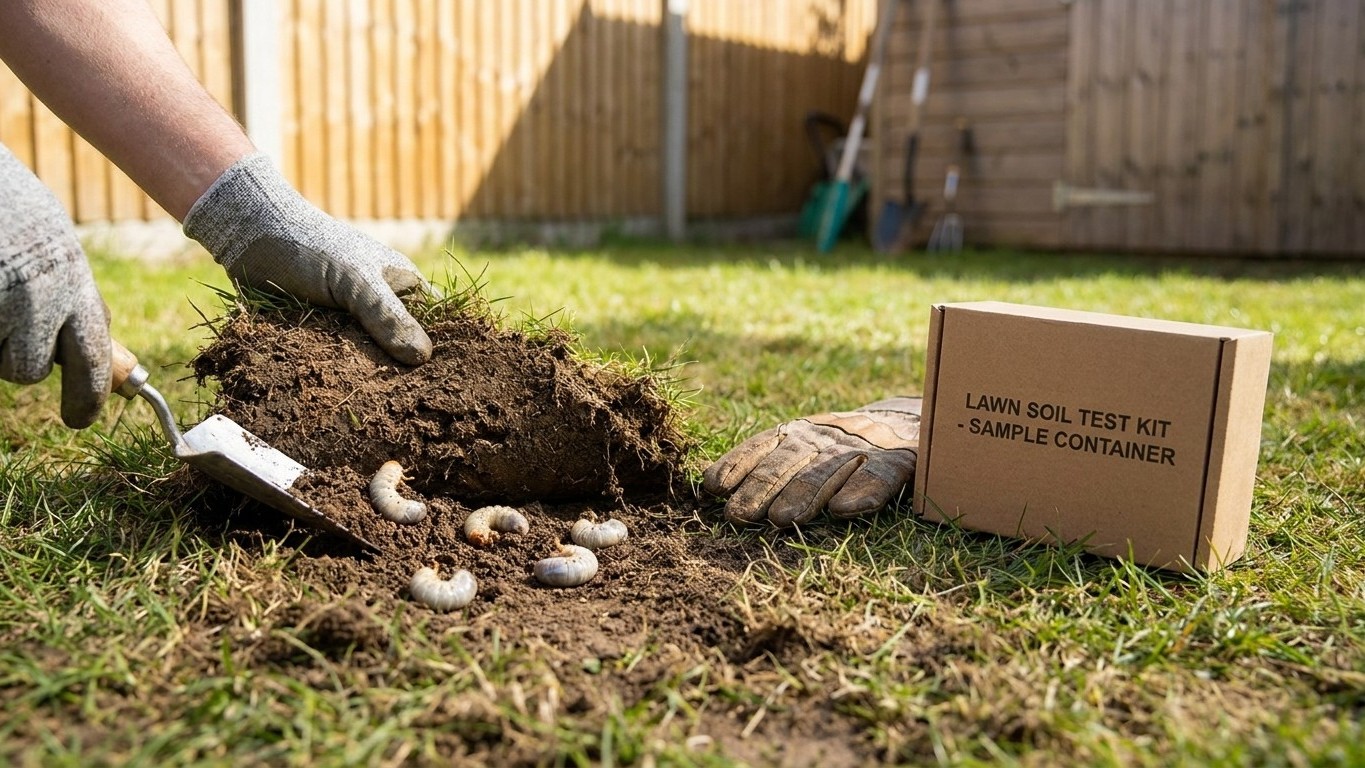

Every lawn pest leaves its own signature, and that signature shows up weeks after the insect has already done the damage. Grubs leave turf that lifts free like a loose rug, Chinch Bugs lawn damage leaves a yellow patch that irrigation won’t fix, Armyworms lawn damage leaves ragged chewed blades that spread outward almost overnight, Billbugs lawn damage leaves stems that snap off at the crown, and Sod Webworms lawn damage leaves thin, ragged patches dotted with silken tunnels near the soil surface. Insect damage isn’t the only thing that can mimic drought stress, either; tunneling wildlife like Moles lawn damage can produce similarly discolored, uneven turf. Before you buy anything to treat it, pull gently on the edge of a brown patch. If it lifts free in your hand, you’re dealing with a root or crown feeder, not drought.
Why this matters
A lawn shows pest damage only after the insect responsible has already finished feeding. White Grubs lawn chew through roots for weeks before the grass on top wilts, and by the time a brown patch is obvious from the driveway, the larvae that caused it have often already moved on to the next stage of their life cycle. Treat for the wrong pest, or treat too late, and the growing season the damage happened in is the one you lose, not just the patch itself.
The cost is not only cosmetic. A lawn rated fair or poor for wear, like Fine Fescue or Rough Bluegrass under Penn State Extension’s ratings, does not fill back in the way a Bermudagrass or Zoysiagrass lawn will once the pest is gone. Species with excellent wear tolerance recover from insect damage within weeks. Species rated poor can take most of a season, longer if the damage happens right before dormancy.
Misdiagnosis is the expensive mistake. Drought stress, dog urine spots, and pest damage all start out as the same dull yellow-green, and a lawn that’s otherwise getting good Lawn Care can still lose whole sections to an insect nobody looked for until the patch stopped responding to water. The tug test, pulling on the edge of a discolored patch to see if it lifts free of its roots, is the fastest way to rule pests in or out before spending money on the wrong product.
When to do it
Pest pressure follows the grass’s growing season, not the calendar, and that season runs in opposite directions depending on what’s in the yard. Cool-season grasses like Kentucky Bluegrass, Perennial Ryegrass, Tall Fescue and Fine Fescue put on most of their growth in spring and fall and slow down through summer heat, per Penn State Extension and Clemson Cooperative Extension’s HGIC 1214. Warm-season grasses like Bermudagrass, Zoysiagrass, St. Augustinegrass, Centipedegrass, Bahiagrass, Carpetgrass and Seashore Paspalum do the opposite, greening up and growing hardest through summer and going dormant in cold weather.
That split matters because most lawn pests key their life cycle to when the host grass is actively growing and easiest to feed on. A cool-season lawn is at its most vulnerable during its own spring or fall growth push. A warm-season lawn is at its most exposed through the peak of summer, exactly when the grass is putting its energy into new growth rather than defense.
Check the maintenance calendar for the actual species rather than a generic month. Clemson publishes one per warm-season grass it covers, including HGIC 1215 for Centipedegrass, HGIC 1216 for Bermudagrass, HGIC 1217 for Zoysiagrass, and HGIC 1218 for St. Augustinegrass, plus a separate one for Tall Fescue at HGIC 1219. Each ties scouting and treatment windows to that grass’s own growth pattern. A lawn still establishing from seed carries extra risk during that same window, since Starting a Lawn From Seed: Ground Preparation to First Mow covers how thin that turf stays before its first few mowings, and thin turf has little reserve to survive feeding damage.
How to do it

Identify the pest before buying a product for it. A grub killer does nothing for a chinch bug problem, and a product timed for adult billbugs misses the larvae already inside the stems. Look at the damage pattern first, then confirm it against the insect itself.
White grubs

C-shaped larvae, cream to grayish white with a brown head, curled just under the soil surface where they’ve been feeding on roots. Damage becomes visible in late summer or fall, once the root system underneath is mostly gone.
Chinch bugs

Adults are about the size of a grain of rice, black with white patches folded over the back. Nymphs are reddish with a pale band. Feeding happens at the base of the blade, and the turf yellows then browns in patches that keep expanding even after watering.
Sod webworms

Tan moths fly low in a zigzag pattern at dusk and rest with wings folded tight to the body. Their larvae, gray-green caterpillars with dark spots, chew blades to stubs overnight, leaving grass that looks unevenly mowed the next morning.
Fall armyworms

Caterpillars run green to brown with pale stripes down the body and a light, inverted Y mark on the head. A lawn can look fine one afternoon and be stripped to the crown within days once a population moves through.
Billbugs

Adults are grayish black weevils with a long curved snout. Larvae are legless, cream colored grubs that tunnel inside the stem before dropping to the roots. Pull on a dead patch and the stems snap off cleanly at the crown.
Mowing height affects how fast a lawn recovers once a pest is dealt with. HGIC 1205, Clemson’s mowing fact sheet, and Penn State Extension both tie recommended heights to the species: Kentucky Bluegrass and Perennial Ryegrass at 2 to 3 inches, Fine Fescue and Tall Fescue at 2.5 to 3.5 inches, Bermudagrass as low as 0.75 to 1.5 inches, St. Augustinegrass up to 4 inches. Mowing at the low end of that range strips away leaf tissue the plant needs to recover from root or crown feeding. For the mechanics of getting height and frequency right, see How to Mow a Lawn: Height, Frequency and the One-Third Rule.
Fertility works the same way. HGIC 1201, Clemson’s fertilizing fact sheet, lays out a nitrogen program by species rather than one flat rate, and both over- and under-feeding open the door to pests: soft, lush growth from too much nitrogen draws sod webworms and chinch bugs, while thin, underfed turf can’t outgrow feeding damage from grubs or billbugs.
What goes wrong
The most common mistake is treating a symptom instead of a pest. Watering a chinch bug patch harder makes the grass wetter without touching the insect feeding at the crown, so the patch keeps spreading through the driest, hottest weeks of summer. The tell that catches this in time is simple: if a discolored patch keeps growing after a week of consistent watering, water was never the problem.
Mowing too low compounds every pest problem on this list. Scalping a lawn below the low end of its range, taking Zoysiagrass under 0.75 inches or Tall Fescue under 2.5 inches, removes the leaf area the plant needs to rebuild after root or crown feeding. The lawn looks fine on the day it’s mowed and shows the real damage a week or two later, once there’s no reserve left to recover with.
Skipping identification wastes money twice. A grub product applied for a chinch bug problem never touches the insect actually feeding, and by the time the mistake is obvious, the window for treating the real pest at its most vulnerable stage has usually closed. The fastest correction is going back to the tug test and a close look at the blades themselves, rather than layering a second product on top of the first.
Dormancy gets misread as death more often than pest damage does. A warm-season lawn gone brown from cold, or a cool-season lawn gone brown from summer heat, looks almost identical to pest damage from a distance. The tug test still tells the difference: dormant turf holds its roots, pest-killed turf does not.
How this changes across the country
A cool-season grower and a warm-season grower are watching for different pests at different times of year, because they’re watching different grasses grow. In Pennsylvania and other states where Kentucky Bluegrass, Perennial Ryegrass, Fine Fescue and Tall Fescue dominate, per Penn State Extension, grubs and billbugs are the pests to scout for during spring and fall green-up. Further south, where Clemson Cooperative Extension’s HGIC 1214 lists Bermudagrass, Zoysiagrass, St. Augustinegrass, Centipedegrass, Bahiagrass, Carpetgrass and Seashore Paspalum as standard lawn choices, chinch bugs and armyworms tend to hit hardest at the peak of summer heat, right when those grasses are growing fastest.
South Carolina itself sits across that line. Clemson’s own selection guide lists Tall Fescue, a cool-season grass, alongside the full run of warm-season options in the same fact sheet, because the state’s upstate counties support cool-season lawns while the coastal plain runs almost entirely warm-season. A transition-zone lawn can carry pest pressure from both directions in a single year, cool-season pests in spring and fall on a Tall Fescue lawn, warm-season pests through summer on a Bermudagrass or Zoysiagrass one.
The species itself decides how much margin there is for error. A lawn with excellent drought and wear tolerance, like Bermudagrass or Zoysiagrass, shrugs off a pest population that would flatten a Carpetgrass lawn, rated very poor for drought and poor for wear under the same Clemson guide.
| Species | Season | Mow height (in) | Drought tolerance | Wear tolerance |
|---|---|---|---|---|
| Kentucky Bluegrass | Cool | 2 to 3 | Fair | Good |
| Perennial Ryegrass | Cool | 2 to 3 | Fair | Good |
| Fine Fescue | Cool | 2.5 to 3.5 | Good | Poor |
| Rough Bluegrass | Cool | 2 to 3 | Poor | Poor |
| Tall Fescue | Cool | 2.5 to 3.5 | Fair | Fair |
| Bermudagrass | Warm | 0.75 to 1.5 | Excellent | Excellent |
| Zoysiagrass | Warm | 0.75 to 2 | Good | Very good |
| St. Augustinegrass | Warm | 2.5 to 4 | Good | Fair |
| Centipedegrass | Warm | 1.5 to 2 | Fair | Poor |
| Bahiagrass | Warm | 3 to 4 | Excellent | Good |
| Carpetgrass | Warm | 1 to 2 | Very poor | Poor |
| Seashore Paspalum | Warm | 1 to 1.5 | Fair to good | Good |
Figures for Kentucky Bluegrass, Perennial Ryegrass, Fine Fescue and Rough Bluegrass come from Penn State Extension’s lawn establishment guidance. All other species come from Clemson Cooperative Extension’s HGIC 1214.
Common questions
My lawn is brown in patches but the grass pulls up easily, is that always grubs?
Not always. Billbugs and some sod webworm infestations also leave turf that separates from its roots, since both feed at or below the crown. Dig a small section and look at the larvae itself, C-shaped and pale for grubs, legless and cream colored for billbugs, before treating for one over the other.
Can I just water more to help the lawn recover from pest damage?
Watering helps a lawn recover once a pest has been dealt with, but it does nothing for the insect itself and can mask the early stages of chinch bug or grub damage by keeping the surface green a little longer. If a patch keeps spreading despite regular watering, treat that as a sign to check for pests rather than water more.
Do warm-season lawns get grub damage too?
Yes, warm-season lawns can host white grubs, though chinch bugs and armyworms tend to do more visible damage there because they attack during the same summer months the grass is trying to grow fastest. A Bermudagrass or Zoysiagrass lawn with good wear tolerance, per Clemson Cooperative Extension’s HGIC 1214, generally recovers faster from grub feeding than a Carpetgrass lawn rated poor for wear under the same guide.
Is it worth reseeding a patch right after pest damage, or should I wait?
Wait until the pest is confirmed gone, since seed or new sod dropped into an active infestation just becomes the next meal. Once the insect’s active feeding window has passed for the season, bare patches on either a cool-season or warm-season lawn can be overseeded or patched following the same ground prep as any new lawn area.