
New Brunswick gardens see early-season maggots working cabbage and corn beds, foliage-eating beetles on lilies and Colorado potato beetle New Brunswick populations on potatoes by late spring, Striped cucumber beetle New Brunswick populations attacking young cucurbit seedlings as vines get established, Squash vine borer in New Brunswick boring into stems as those same vines mature, and Spotted wing drosophila New Brunswick populations moving into softening berries by midsummer. No Canadian province publishes its own home-garden pest survey, so this rundown leans on University of Maine Cooperative Extension, whose territory sits right across the border and shares New Brunswick’s climate, if not always its exact calendar.
What New Brunswick gardens actually deal with

New Brunswick doesn’t have a dedicated home-garden pest list of its own. The closest documented source is University of Maine Cooperative Extension, which tracks ten species common to the border region as the season moves from thaw to first frost. What follows is ordered by when each one typically starts doing damage, though a couple weeks of shift is normal depending on how far north or how close to the Bay of Fundy a garden sits.
Winter moth
Pale green inchworm caterpillars, up to an inch long, hatch as tree buds swell in April and chew ragged holes in new leaves on fruit trees and shrubs before dropping into the soil to pupate, and Winter moth New Brunswick damage is often the first sign of trouble gardeners notice on fruit trees each spring. Adults are small tan moths that fly in late fall. Sticky bands wrapped around trunks stop females from climbing up to lay eggs.
Seedcorn maggot
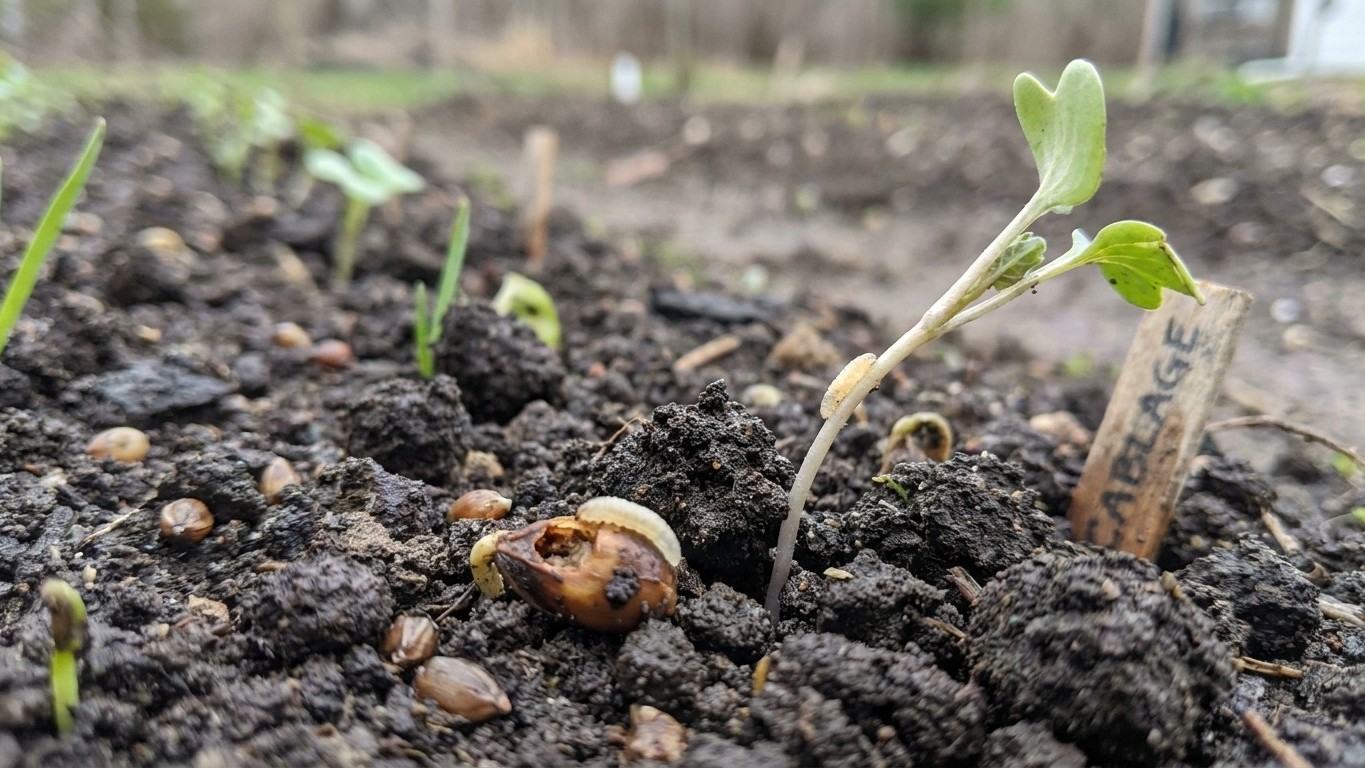
Cream-white legless larvae, roughly a quarter inch long, tunnel into germinating seeds and seedling stems in cool, wet spring soil, killing corn, beans, and cabbage-family transplants before they even break ground, and Seedcorn maggot New Brunswick damage often shows up before gardeners even realize seeds failed to sprout. Waiting to plant until soil has warmed does more than any spray applied afterward.
Cabbage maggot
Similar white larvae attack the roots of cabbage, broccoli, and radish seedlings through May and June, leaving wilted plants that pull free with rotted roots, and Cabbage maggot New Brunswick damage is among the earliest signs gardeners spot in cool spring soil. Floating row cover installed at transplanting keeps the adult fly from ever reaching the soil to lay eggs.
Lily leaf beetle
Bright red adults, about a third of an inch long, show up on lily shoots as soon as they break ground in April. Their slimy larvae, coated in their own excrement as camouflage, strip foliage down to bare stems by June, and Lily leaf beetle New Brunswick reports tend to peak right around this point in the season. Hand-picking adults early, before eggs go down, works better than anything else.
Browntail moth
Hairy caterpillars marked with a broken white stripe and two orange dots near the tail feed on oak and fruit tree leaves from April through June. Their shed hairs cause a rash similar to poison ivy in anyone nearby, and the Browntail moth New Brunswick populations have made this reaction a recurring seasonal concern in some communities. Winter webs visible at branch tips, clipped and destroyed before April, are the main line of defense.
Striped cucumber beetle
Yellow beetles with three black stripes, about a fifth of an inch long, arrive as cucumber and squash seedlings emerge in late May. They chew leaves and spread bacterial wilt that can collapse an entire vine within weeks. Row cover kept in place until flowering limits how much exposure plants get.
Colorado potato beetle
Hard-shelled adults with black-and-yellow stripes lay bright orange egg clusters on potato and eggplant leaves in late May. The reddish, humpbacked larvae that hatch do most of the real damage, skeletonizing leaves through June. Crop rotation combined with hand-picking eggs and larvae remains the most dependable home approach.
Squash vine borer
A clearwing moth that resembles a wasp lays eggs at the base of squash and pumpkin stems in late June. The white larvae that hatch bore into the stem, causing sudden wilting in a vine that looked fine the day before. Slitting the stem to remove the larva, then mounding soil over the wound, sometimes saves the plant.
Emerald ash borer
This metallic green beetle, about half an inch long, targets ash trees rather than vegetable beds. In yards with ash trees, adults feed on foliage from June into August while larvae tunnel under bark, eventually killing the tree. Reporting a sighting to local authorities matters more than trying to treat one tree at home.
Spotted wing drosophila
Unlike ordinary fruit flies, males of this species carry a dark spot near each wing tip, and females have a saw-edged egg-laying organ that lets them cut into still-firm, ripening berries and stone fruit from July through September. Fruit collapses into mush within days of being stung. Picking fruit the moment it ripens, rather than letting it sit on the plant, is the most practical home defense.
Telling damage apart
A chewed leaf doesn’t automatically mean an insect problem. Ragged holes with torn edges point to something with mouthparts built for chewing, a beetle or a caterpillar. Fine stippling, tiny pale or yellow flecks with no actual holes, usually means something sucking sap rather than biting tissue, and that changes what treatment makes sense. Clean, round holes punched through a leaf like a paper punch often mean adult beetle feeding rather than larvae, which tend to leave messier trails.
Wilting is the symptom that trips up the most gardeners, because it can mean three completely different things. A plant wilting in soil that’s still moist points toward a vascular disease, a root maggot, or a borer working inside the stem, none of which respond to more water. A plant wilting because the soil underneath is actually dry just needs a hose. Sticky, shiny residue on leaves, especially with a black sooty coating underneath, usually traces back to aphids or scale insects excreting honeydew, not to any fungus on its own.
| Symptom | Most likely cause | What to check next |
|---|---|---|
| Ragged holes, chewed edges | Chewing insect (beetle or caterpillar) | Look for the insect itself, often feeding at night or hiding under leaves |
| Fine stippling, no holes | Sucking insect (mites, thrips) or sun scorch | Check leaf undersides with a hand lens for tiny moving dots |
| Clean, uniform round holes | Adult beetle feeding rather than larvae | Check nearby leaves for the same repeated pattern |
| Wilting, soil still moist | Vascular disease, root maggot, or borer | Check the stem base and roots for tunnels or discoloration |
| Wilting, soil dry | Underwatering | Check soil moisture a couple inches down before treating for pests |
| Sticky residue, black coating | Aphids or scale, followed by sooty mold | Look for clustered insects on new growth and stem joints |
Getting this diagnosis wrong wastes an entire growing season. Spraying an insecticide on a fungal disease does nothing but kill the beneficial insects that would have helped elsewhere in the garden, and dousing a wilting plant with extra water when the real problem is a borer inside the stem only speeds up the collapse.
What actually works
Prevention first
Rotating vegetable families to a different bed each year breaks the life cycle of soil-dwelling maggots and beetles that overwinter close to where they fed. Timing planting to avoid a pest’s active window, waiting on corn and beans until soil has warmed past the cool, wet conditions seedcorn maggots need, prevents damage without a single spray. Physical barriers, floating row cover laid at planting and removed only when flowers need pollinators, keep cucumber beetles and cabbage maggot flies from ever reaching a plant. Encouraging ground beetles, lacewings, and birds by leaving some bare soil and a water source nearby gives a garden its own built-in pest patrol.
Targeted intervention
Once a pest is established, hand-picking adults and eggs, especially for Colorado potato beetle and lily leaf beetle, remains the fastest fix for a small home plot. Biological sprays containing Bacillus thuringiensis target caterpillar larvae without harming bees or other beneficial insects, but only work while larvae are actively feeding. Slitting an infested squash stem to remove a vine borer, or clipping and destroying browntail moth webs in winter before caterpillars emerge, deals with problems that sprays can’t reach.
Some popular remedies do essentially nothing. Ultrasonic pest repellers have no documented effect on insects. Marigolds planted as a border don’t repel the pests listed here, whatever the folklore says. Coffee grounds scattered around plants don’t deter beetles or maggots, and beer traps only work on slugs, not on any insect in this list. Mothballs scattered in garden soil aren’t labeled for that use and pose a real risk to pets and children.
What control costs
Hand-picking costs nothing but time, and for a small backyard bed, that time adds up to a few minutes each morning through the weeks a pest is active, which for something like Colorado potato beetle can stretch across most of June. Row cover and other barriers ask for an upfront purchase but get reused for several seasons if stored properly, and the only ongoing cost is remembering to lift the cover once flowers need pollinating and reinstall it for the next crop. Biological controls like Bacillus thuringiensis spray sit in the middle: a bottle covers multiple applications, but it has to be reapplied roughly every one to two weeks while larvae are actively feeding, since it breaks down in sunlight and washes off in rain. Chemical sprays carry the same repeat cost, often needing reapplication on a similar schedule, with the added expense of buying more product through the season.
For a typical home garden, hand-picking combined with row cover ends up the cheapest path by a wide margin, trading a little daily attention for money that would otherwise go toward sprays that need repeating anyway. Biological and chemical sprays make more sense on a bigger planting, where the sheer number of plants makes hand-picking impractical.
Local help
For pest identification, outbreak tracking, and current advisories specific to New Brunswick, contact the provincial agriculture office directly. Canada’s federal agriculture department also maintains resources and connects gardeners to provincial services: agriculture.canada.ca. Bringing a clear photo or an actual specimen speeds up identification more than a written description ever will.
Pest-by-Pest Guides for New Brunswick Gardens
Once you know something’s chewing, boring, or hovering in your yard, it helps to get specific. If your trees are losing leaves in spring bursts, check browntail moth, which feeds in two distinct waves each year. Brassica growers should watch for the cabbage maggot, whose flies start laying eggs as soon as soil warms past 50°F. Potato patches get hit by the Colorado potato beetle starting in late May, while ash trees anywhere near Madawaska County should be checked for the emerald ash borer, confirmed in the province since 2018. Lily growers need to know the lily leaf beetle, active from mid-April on, and anyone planting into cold, wet spring soil should read up on the seedcorn maggot. Soft fruit growers can track the spotted wing drosophila, which builds fast through midsummer, and squash growers should get ahead of the squash vine borer and the striped cucumber beetle before seedlings even emerge. Late-season tree damage often traces back to the winter moth, active from late October through December.
Common questions
Are these pests confirmed to be present in New Brunswick?
The list above comes from University of Maine Cooperative Extension, a US service just across the border, because no Canadian province publishes an equivalent home-garden pest list. The biology of these insects crosses the border freely, but that doesn’t confirm local presence for every species; check with the provincial agriculture office for confirmed local activity.
Do the timings listed here shift for a New Brunswick garden versus Maine?
Likely, though not documented precisely. Coastal areas near the Bay of Fundy tend to warm more slowly in spring than inland Maine locations, which can push emergence dates for beetles and maggots back by a week or two.
Is it worth spraying preventively before any damage shows up?
Not for most of these pests. Row cover and timed planting prevent damage without any spray at all, and applying an insecticide before a pest is even present just kills beneficial insects that would otherwise help.
What single piece of equipment helps most across all these pests?
Floating row cover. It blocks cabbage maggot flies, cucumber beetles, and squash vine borer moths from ever reaching a plant, and it costs far less over a season than repeated spray applications.