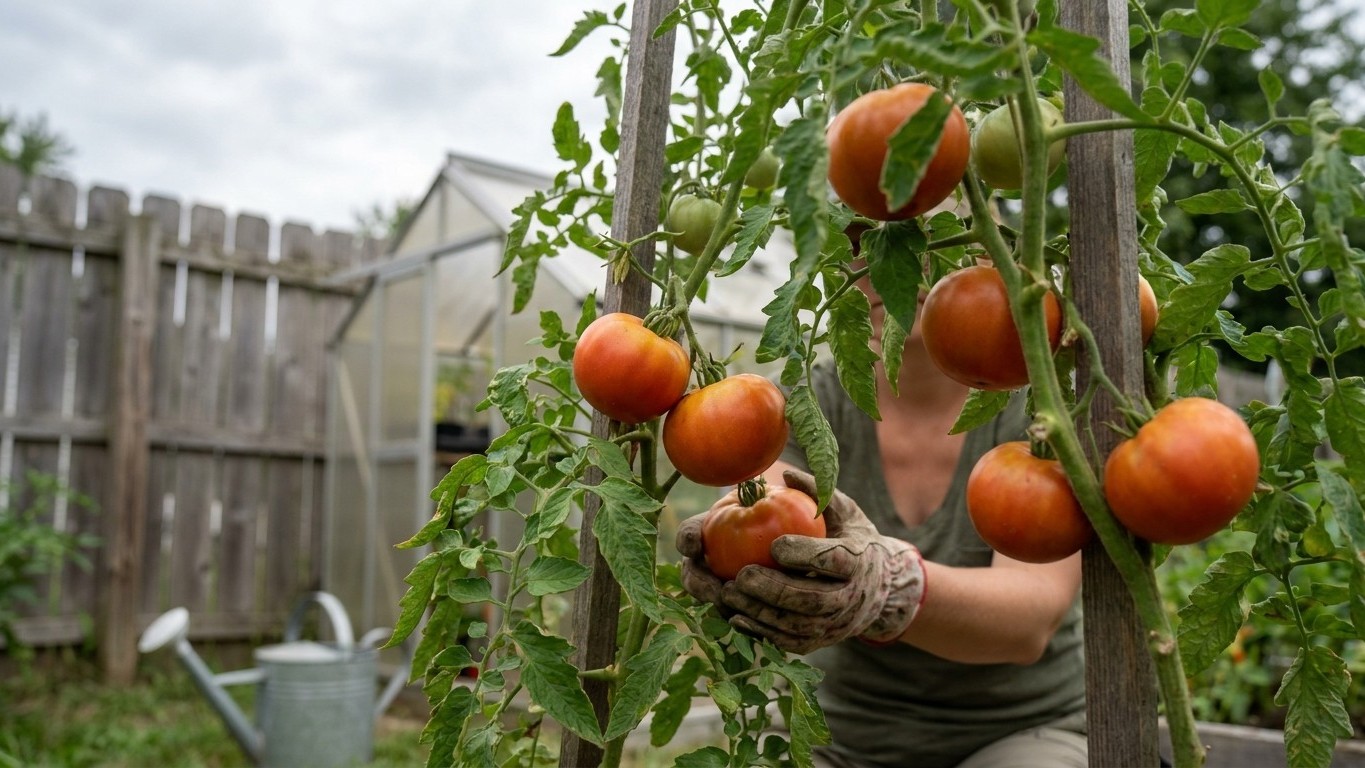

Detroit’s April 30 frost-free date gets treated like a Michigan-wide starting gun, and that’s where a lot of transplants end up in cold soil. Ann Arbor and Lansing sit close enough to borrow that figure, but push north into the rest of the Lower Peninsula or up to the U.P., and frost risk lingers into mid-May or later. One date, applied statewide, is the mistake. Your county’s own frost data is the fix.
When to plant Tomatoes in Michigan

MSU Extension’s frost-free date data puts the last spring freeze at around April 30 for the Detroit area, with most of the Lower Peninsula clearing frost risk in early to mid May. That’s a meaningful spread, not a typo. A garden in Ann Arbor or Lansing sits close enough to the Detroit figure to use it directly, but a garden farther north or at higher elevation, including much of the northern Lower Peninsula and the Upper Peninsula, runs later still. MSU Extension does not publish a single statewide date because none exists. Check your county’s frost data through Michigan State University Extension before locking in a transplant date.
Starting seed indoors
Count backward six to eight weeks from your expected transplant date to find your seed-starting window. If you’re transplanting in the early-to-mid-May range that covers most of the Lower Peninsula, that puts indoor seed starting at early to mid March. If you’re in the Detroit area working from the April 30 figure, you can start a week or so earlier. Don’t start seed any earlier than eight weeks out: tomato seedlings that sit too long in small pots get root-bound and stall, and they rarely outperform a seedling started on schedule.
Use a seed-starting mix, not garden soil, and keep it consistently moist until germination, which typically takes five to ten days at room temperature. Once true leaves appear, move seedlings under strong light for 14 to 16 hours a day. Weak, leggy stems are almost always a light problem, not a variety problem.
Hardening off and transplanting
Seedlings raised indoors need a transition period before they go into open ground, commonly called hardening off. Set them outside in a sheltered, shaded spot for an hour or two the first day, then gradually increase sun exposure and time outdoors over seven to ten days. Skip this step and a healthy-looking seedling can scorch or stall within a day of transplanting.
Transplant only after your local frost date has passed and overnight lows are reliably staying above the mid-40s. Soil temperature matters as much as air temperature. Cold soil slows root growth even if the seedling survives the air temperature, so a warm stretch a week after your frost date is often more useful than rushing the calendar date itself.
Soil and site preparation
Tomatoes need a full-sun spot, six to eight hours of direct light at minimum, and they perform noticeably worse in anything less. Pick the site now, before the soil is workable, so you have time to prep it properly rather than rushing amendments in the same week you transplant.
Working the bed
Tomatoes want soil that drains well but holds moisture between waterings. If water pools on the surface an hour after a heavy rain, or the soil cracks into hard plates when it dries, work in several inches of compost or well-rotted manure before planting. Do this a few weeks ahead if you can, so the amendment has time to integrate rather than sitting as a raw layer around the transplant’s roots. Raised beds solve a drainage problem faster than any soil amendment, and they warm up earlier in spring, which matters in a state where the growing season is already on the short side for long-maturing varieties.
Skip heavy nitrogen fertilizer at planting time. High nitrogen early pushes lush foliage at the expense of flowering and fruit set, which is the opposite of what you want from a plant that needs to produce before fall frost. A balanced starter fertilizer worked into the planting hole is enough for now. Save the heavier feeding for after the first fruit sets.
Spacing and layout
Indeterminate varieties, which keep growing and producing until frost, need 24 to 36 inches between plants and a support structure tall enough to match. Determinate varieties, which grow to a set size and ripen most of their fruit in a shorter window, can be spaced a bit closer, around 24 inches, since they don’t sprawl as long into the season. Crowded plants stay wetter longer after rain or dew, which is exactly the condition that lets foliar disease take hold, so don’t be tempted to squeeze in an extra plant at the end of a row.
Varieties that suit Michigan
The main constraint in Michigan is season length, not heat. A variety with a long days-to-maturity count needs to go in the ground as early as your frost window allows and still ripen fruit before the season turns in fall. Since MSU Extension’s frost data only fixes the spring end of that window, the safest approach is to count forward from your transplant date using the variety’s catalogue days-to-maturity figure, remembering that figure is measured from transplant, not from seed, and can shift by a week or two either direction depending on the season’s weather.
Short-season options
Sakura (55 days from transplant), Sun Gold (57 days), Jasper and Juliet (60 days each), and Supersweet 100 (60 days) all reach harvest fastest. If you transplant in the early-to-mid-May range that covers most of the Lower Peninsula, a 55-to-60-day variety puts first ripe fruit in early to mid July, which leaves a wide safety margin before fall weather turns. These are also good choices for a garden that got a late start, or for a northern county running a week or two behind the Detroit-area figure.
Mid and long-season options
Longer varieties need that early transplant date and steady conditions to finish reliably. The table below lays out days to maturity, growth habit, and disease resistance for the varieties available in most seed catalogues, so you can weigh season length against the disease pressure your garden has actually dealt with in past years.
| Variety | Days to maturity | Habit | Notable resistance |
|---|---|---|---|
| Sakura | 55 | Indeterminate | Nematodes, Tomato Mosaic Virus, Fusarium Wilt 1 & 2 |
| Sun Gold | 57 | Indeterminate | Tobacco Mosaic Virus, Fusarium Wilt 1 |
| Jasper | 60 | Indeterminate | Late Blight (High), Early Blight |
| Juliet | 60 | Indeterminate | Late Blight, Early Blight |
| Amalfi | 68 | Determinate | Nematodes, Late Blight, Early Blight |
| Cherokee Purple | 72 | Indeterminate | None listed |
| Big Beef Plus | 72 | Indeterminate | Nematodes, Gray Leaf Spot (High), Tomato Mosaic Virus |
| Tiren | 75 | Indeterminate | Verticillium Wilt (High), Tomato Mosaic Virus, Fusarium Wilt 1 |
| Granadero | 75 | Indeterminate | Nematodes, Verticillium Wilt (High), Tomato Mosaic Virus |
| San Marzano II | 78 | Indeterminate | None listed |
| Celebrity Plus | 78 | Determinate | Nematodes, Gray Leaf Spot (High), Tomato Mosaic Virus |
| Brandywine | 78 | Indeterminate | None listed |
| Amish Paste | 85 | Indeterminate | None listed |
A variety like Amish Paste at 85 days needs the earliest possible transplant date your local frost window allows, and even then it’s cutting things closer than a grower farther south would experience. Gardeners just across the border facing the same squeeze can compare notes in Growing Tomatoes in Minnesota, where the season runs even shorter. If your garden has a history of verticillium or fusarium wilt, Tiren or Granadero carry high resistance to those races and are worth the extra week or two of season they demand over a Sakura or Sun Gold.
What to plant alongside
Basil is the classic tomato companion, and while the flavor-improvement claim is folklore rather than tested science, basil’s dense low growth does shade the soil around tomato roots and can crowd out weeds that would otherwise compete for water. Marigolds have real evidence behind them for suppressing certain root-knot nematode populations in soil, which matters if you’ve grown tomatoes or peppers in the same bed for several years running.
Good and bad neighbors
- Borage: draws in pollinators and beneficial predatory insects without competing heavily for nutrients.
- Alliums (onions, garlic, chives): take up little space, and gardeners commonly interplant them with no reported downside, though the pest-repelling claims are largely anecdotal.
- Carrots: work as a low ground cover between tomato plants but slow down noticeably if the tomato canopy shades them out later in the season.
- Corn: avoid planting nearby. Corn earworm and tomato fruitworm are the same insect, and a corn patch nearby gives it a second host to build up on.
- Potatoes, peppers and eggplant: keep these at a distance. All are nightshades that share susceptibility to verticillium and fusarium wilt and early and late blight, so planting them together concentrates disease risk in one part of the garden.
- Fennel: keep well away. It’s allelopathic to a wide range of vegetables, tomatoes included, and reliably stunts nearby growth.
Skip anything sold as a tomato-specific “companion planting mix” without checking what’s actually in it. A lot of these blends pair plants for aesthetic reasons rather than any documented benefit, and a few include species from the avoid list above.
Watering, feeding and support
Tomatoes want deep, infrequent watering rather than a light daily sprinkle. Shallow watering trains roots to stay near the surface, which makes the plant more vulnerable during a hot dry stretch. Water at the base of the plant, not overhead, since wet foliage sitting overnight is a major driver of the fungal diseases covered below.
Mulch and feeding
A three-inch layer of straw or shredded leaf mulch, applied once the soil has warmed, keeps moisture more even between waterings and stops soil-borne fungal spores from splashing onto lower leaves during rain. Skip mulching too early, since a thick mulch layer over cold spring soil slows warming and can set root growth back by a week or more.
Feed at planting with a balanced fertilizer worked into the hole, then hold off on additional feeding until the first fruit clusters set. Heavy nitrogen before that point produces a tall, leafy plant with little to show for it. Once fruit is forming, a fertilizer higher in phosphorus and potassium relative to nitrogen supports fruit development without pushing more foliage than the plant needs.
Staking, caging and suckering
Indeterminate varieties need a support structure five to six feet tall at minimum, since they keep growing until frost. A sturdy cage or a stake-and-tie system both work, but whichever you choose, put it in at transplant time. Driving a stake in after the root system has developed damages roots and sets the plant back. Determinate varieties top out at a set height and generally do fine in a shorter, standard tomato cage.
Suckering, removing the small shoots that form in the joint between the main stem and a branch, is worth doing on indeterminate varieties below the first flower cluster. It channels the plant’s energy into fewer, sturdier stems rather than a tangle of growth that’s harder to support and slower to dry out after rain. Determinate varieties should not be heavily suckered. They set a fixed number of fruiting branches, and removing them cuts your total harvest for no benefit.
Common problems

Most tomato trouble in a home garden traces back to watering inconsistency or airflow, not a single dramatic disease. Learning to read the symptom saves a season of guessing.
Reading the symptoms
- Blossom end rot: a flat, dark, leathery patch on the bottom of the fruit. Usually caused by uneven watering interrupting calcium uptake, not a lack of calcium in the soil itself. Water on a consistent schedule rather than adding calcium products.
- Fruit cracking: circular splits around the top of the fruit, typically after a heavy rain follows a dry spell. Mulching to even out soil moisture is the main fix.
- Leaf curl: upward curling leaves, often from heat stress or wind, though persistent curl paired with mottled color can signal aphid feeding or herbicide drift from a nearby lawn treatment.
- Wilt diseases: fusarium and verticillium wilt cause yellowing and wilting that often starts on one side of the plant. Both are soil-borne and persist for years in the same bed, which is why the resistance codes in the variety table above matter for a garden with a history of either.
- Poor fruit set: flowers drop without forming fruit, most often during a stretch of unusually hot nights, which affects pollen viability. This resolves once temperatures moderate.
Pests
Tomato hornworms are the most visually alarming pest, a large green caterpillar that strips foliage overnight, and hand-picking is usually enough to control a small infestation. Aphids and whiteflies cluster on the undersides of leaves and are worth a hard spray of water or insecticidal soap before they build up. Flea beetles chew small round holes in young leaves early in the season and are mostly a nuisance rather than a serious threat to an established plant. None of these is unique to Michigan. The disease pressure that dominates in a warm, humid climate like Louisiana’s, covered in Growing Tomatoes in Louisiana, is generally lighter here thanks to cooler summer nights.
Pests that actually show up in Michigan
Michigan State University Extension’s Bulletin E3276, written for cucurbits, lists ten pests tracked across the state’s vegetable gardens. Most of that list has nothing to do with tomatoes. Squash vine borer, squash bug, striped and spotted cucumber beetle, seedcorn maggot and Asiatic garden beetle all target squash, cucumbers, melons and beans. Emerald ash borer is on Michigan’s pest radar too, but it kills ash trees, not tomato plants. If you grow a mixed vegetable garden, keep those names in mind for the other beds. For tomatoes specifically, only two from that list matter, plus flea beetles, which the section above already covers.
Cutworms are the one to watch for at transplant time. You will not see the worm. You will see a young seedling snapped clean off at the soil line overnight, as if someone cut it with scissors. The culprit curls in the soil an inch or two down during the day and feeds after dark. A cardboard collar pushed into the soil around each stem, extending an inch below and a couple inches above ground, stops it cold. This is a spring problem only. Once a stem thickens past pencil width, cutworms lose interest.
Slugs show up as ragged holes in lower leaves and slime trails on the soil surface, worst on wet mornings in spring and again in fall when nights turn cool and damp. They favor transplants and low-hanging fruit touching mulch. Diatomaceous earth scattered around the base of each plant, reapplied after rain, is the most reliable home fix. Beer traps sunk to soil level work too, though they need emptying every few days.
Flea beetles belong on this same statewide list, but the damage and the fix are already laid out above under pests: small round holes in young leaves, a nuisance rather than a threat once the plant is established. Nothing on E3276’s list beyond cutworms and slugs is worth watching for on tomatoes specifically, which is shorter than most gardeners expect given how long the full pest list runs.
Harvest and end of season
Pick tomatoes when they’ve reached full color for the variety, whether that’s the deep red of Brandywine, the near-black-purple blush of Cherokee Purple, or the orange of Sun Gold. Fruit gives slightly under gentle pressure when ripe. Pulling it a day or two early and letting it finish on the counter costs almost nothing in flavor and protects the fruit from cracking, splitting, or getting to a raccoon first.
Ripening and storage
Fruit that’s started to turn color but hasn’t fully ripened will finish indoors at room temperature, out of direct sun. A paper bag speeds this along by trapping the ethylene gas the fruit gives off. Never refrigerate a tomato you plan to eat fresh. Cold temperatures break down the compounds responsible for flavor and give the fruit a mealy texture that doesn’t reverse once it’s back at room temperature.
As frost approaches
Watch nighttime forecasts as fall approaches, since a frost warning can arrive with only a day or two of notice. When one’s forecast, pick everything showing any color change, including fully green fruit with a slight sheen, since mature green tomatoes will still ripen indoors even though immature green ones won’t. Row cover or an old sheet thrown over plants overnight can buy a few extra days of harvest if only a light frost is expected, but a hard freeze will end the season regardless of covering.
Local help
County-level frost dates, soil testing, and disease diagnosis are all available through Michigan State University Extension, and a soil test before planting is the only reliable way to know what your specific bed needs rather than guessing from statewide averages. For other crops and planting schedules across the state, our Michigan guides cover the same county-by-county variation that applies here.
Where to Go Next
Everything here comes down to timing, and the timing starts with your frost date. If you haven’t nailed that down yet, work through the tomato planting dates page first — it counts backward from the April 30 average last frost near Detroit and shows how that shifts across the rest of the Lower Peninsula, so you know when to actually set transplants out.
Once you’ve got a planting window, the next question is which varieties can finish inside it. The days-to-maturity number on the tag only means anything once you know your frost date, and the piece on tomato varieties that ripen in time walks through why that number — counted from transplant, not from seed — is the one that decides whether a variety is worth growing here.
And once plants are in the ground, the threat isn’t the hornworm everyone photographs — by the time it shows up, the riskiest stretch of the season is already behind you. For what’s actually causing damage in Michigan gardens, and when, see the rundown of tomato pests in Michigan.
Common questions
Can I plant tomatoes in Michigan in early April?
Not as transplants outdoors. MSU Extension’s frost data puts the last spring freeze at around April 30 near Detroit and later across most of the Lower Peninsula, and a tomato seedling won’t survive a freeze. Early April is well within the seed-starting window indoors, though, not the transplant window.
Do I need to cover tomatoes if a late frost is forecast after I’ve already transplanted?
Yes. A frost warning any time after transplanting means covering plants overnight with row cover, buckets, or an old sheet, removed again the next morning once temperatures rise. A single freeze can kill an otherwise healthy transplant that’s only been in the ground a week or two.
Why are my tomato leaves curling but the plant still looks healthy otherwise?
Mild curling with no other symptoms is usually heat or wind stress and isn’t a sign of disease. Check the undersides of the leaves for aphids and look for mottled or yellowed patches alongside the curl, since that combination points to a pest or virus issue rather than weather.
Can I grow tomatoes in containers in Michigan instead of in the ground?
Yes, and it’s a good option for a small yard or a site without full sun in the ground. Choose a determinate or compact variety for a container, use a pot of at least five gallons, and expect to water more often than an in-ground planting since containers dry out faster.
Is it too late to plant tomatoes if I missed the early transplant window?
Not necessarily. A short-season variety like Sakura or Sun Gold, at 55 to 57 days from transplant, can still be planted several weeks after your local frost date and reach harvest before fall. A long-season variety like Amish Paste at 85 days is the one to skip if you’re starting late.