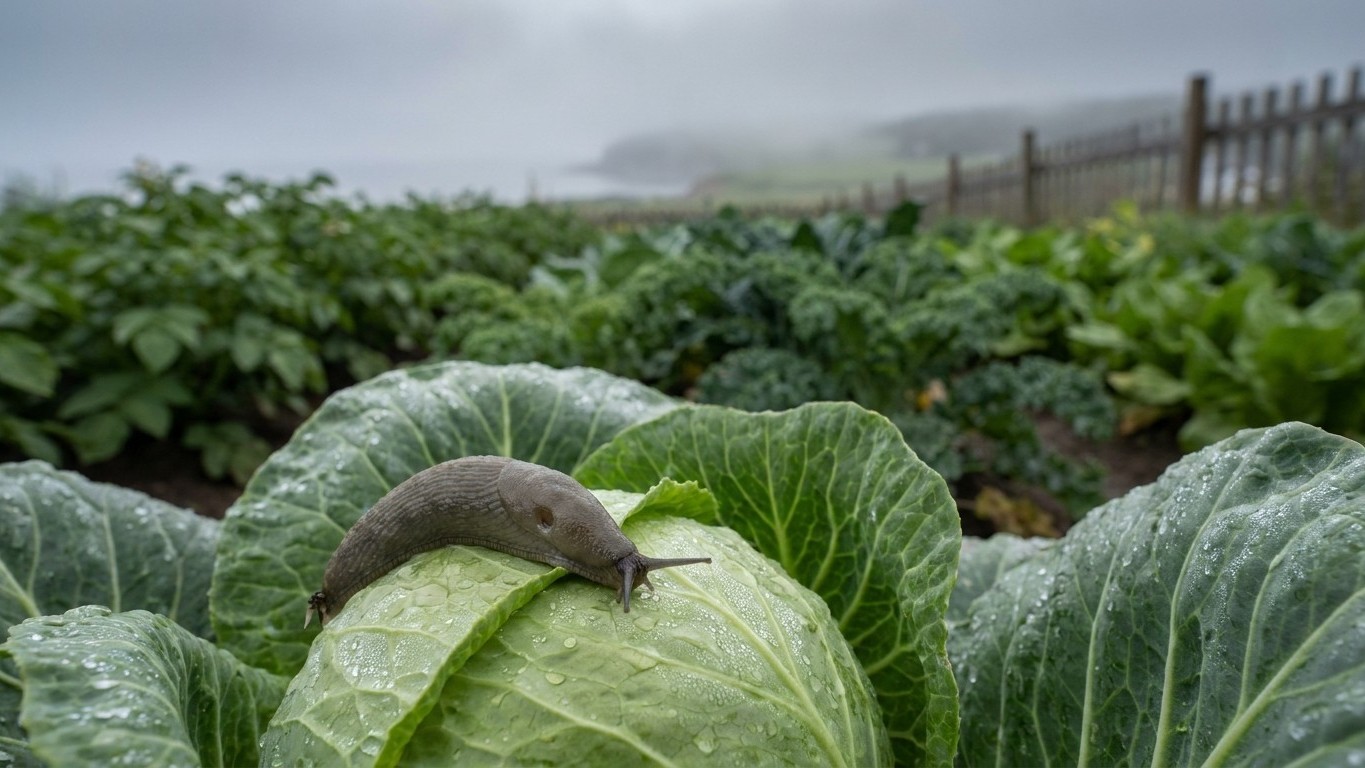

Slugs top the list for most Nova Scotia gardeners, followed closely by lily leaf beetles, Colorado potato beetles, and cabbage maggot infestations, with Seedcorn maggot Nova Scotia populations causing similar early-season damage to germinating seeds. What makes the province distinct isn’t just which pests show up, but when: the cool, damp Maritime climate delays some insects by weeks compared to Ontario or the northeastern United States, while it gives slugs and fungal-loving pests a much longer window to do damage.
Why Nova Scotia’s climate creates its own pest calendar

Halifax averages around 55 inches of precipitation a year, spread fairly evenly across the seasons rather than concentrated in a few summer storms. That steady moisture, combined with foggy coastal mornings and soil that rarely dries out completely, is exactly what slugs and slug-adjacent problems need to thrive. Compare that to a place like Ohio, where a hot, dry July can knock slug populations back on its own, in Nova Scotia, no such natural check exists most years.
Temperature works the other way. Most of the territory sits in Canadian plant hardiness zones 2b to 3b, with soil that warms slowly into June. Insects that depend on accumulated heat units, like Colorado potato beetle populations, corn earworm, striped cucumber beetle populations, or the squash vine borer life cycle in Nova Scotia, arrive later and often produce only one generation instead of two or three. The same slow warm-up delays caterpillar pests too, with browntail moth outbreaks typically emerging later in the season than in warmer regions further south, a pattern also seen with winter moth populations, whose caterpillars hatch weeks behind their counterparts in milder climates. That’s a real advantage for gardeners: fewer generations means fewer total insects to manage across a season, even if the ones that do show up are persistent.
Coastal exposure adds another layer. Gardens within a few miles of the Atlantic or the Bay of Fundy deal with salt spray, wind, and fog that stress plants and make them more attractive to opportunistic feeders like aphids and four-lined plant bugs. Inland valleys, the Annapolis Valley being the clearest example, run warmer and drier by comparison, which shifts the pest mix toward more classic vegetable-garden problems and away from the mollusk issues that dominate along the South Shore, though these same warmer valley woodlands are where Emerald ash borer infestations have become a growing concern for tree owners.
What shows up, season by season
Spring in Nova Scotia arrives in fits and starts, and so do its pests. Late April through May is when overwintering adults wake up first: slugs emerging from mulch and leaf litter, cutworms cutting seedlings at the soil line, and cabbage maggot flies laying eggs at the base of newly transplanted brassicas. Anyone who’s set out broccoli or cabbage starts in mid-May and watched them wilt within a week has likely met cabbage maggot firsthand, the larvae tunnel into roots before symptoms even appear above ground.
By June, Lily leaf beetle populations in Nova Scotia become hard to miss for anyone growing true lilies or fritillaria. This bright red beetle, first confirmed in the Montreal area decades ago, spread through the Maritimes and is now considered fully established across most of Nova Scotia. Adults chew ragged holes in leaves, but it’s the larvae, which camouflage themselves under their own excrement, that do the real structural damage to the plant. Later in the season, fruit growers should also watch for Spotted wing drosophila, a pest that targets soft-skinned berries just as they ripen.
Midsummer to fall: the second wave
July and August bring the pests most gardeners associate with a “normal” growing season: aphids clustering on new growth, Colorado potato beetle larvae stripping potato and tomato foliage, and four-lined plant bugs leaving their signature dark speckled spots on mint, basil, and other tender herbs. Tent caterpillars, both the eastern and forest species, tend to peak in cyclical outbreak years rather than every summer, but when they do appear they’re visible from the road, with silky webs draped over cherry and apple branches.
September doesn’t mean the end of pest pressure. Slugs remain active well into fall as long as nights stay above freezing, and root maggot flies often produce a second generation that targets fall crops like radishes, turnips, and late-planted carrots. Gardeners who assume the season is winding down sometimes lose an entire fall carrot crop to rust fly larvae before they even notice the wilting tops.
The pests worth knowing by name
A handful of species account for most of the calls Nova Scotia extension offices and garden centers field each year. Knowing what you’re looking at cuts down guesswork and wasted treatments.
- Slugs — ragged holes in leaves, silvery slime trails, worst on hostas, lettuce, and strawberries in damp, shaded beds.
- Lily leaf beetle — bright red adults about a third of an inch long, orange-brown larvae hidden under fecal shields on lily foliage.
- Colorado potato beetle — yellow-and-black striped adults, red humpbacked larvae, defoliation concentrated on potatoes, eggplant, and tomatoes.
- Cabbage maggot — no visible adult damage above ground, but wilting transplants and tunneled roots on broccoli, cabbage, and radish.
- Four-lined plant bug — small sunken brown-black spots on mint, basil, and other soft-leaved herbs, most active in June and early July.
Winter moth deserves a separate mention, particularly for gardeners with fruit trees or ornamental maples along the South Shore and Halifax Regional Municipality. This invasive species, native to Europe, has established populations in parts of Nova Scotia and its caterpillars can strip blossoms and young leaves in spring before most native pests are even active. Because the adult males fly on mild nights in late fall and early winter, monitoring for them looks different from tracking a summer pest, sticky bands on tree trunks in November catch far more winter moth than any midsummer inspection would.
Control strategies that actually work in Maritime conditions
Slug control in Nova Scotia has to account for the fact that the ground rarely dries out for long. Diatomaceous earth and similar barrier products lose effectiveness within a day or two after rain, which is most days from May through October in many parts of the province. Iron phosphate baits hold up better in damp conditions and break down into soil nutrients rather than persisting as a chemical residue, making them a more realistic option for a climate this wet. Beer traps still work, but they need emptying and refilling every couple of days to stay effective, which is more maintenance than most gardeners want to commit to for an entire season.
For lily leaf beetle, hand-picking adults in early morning when they’re sluggish from the cool overnight temperatures remains one of the most effective non-chemical controls, since the beetles drop to the ground and play dead the moment they sense movement. Checking the undersides of leaves for the early larval stages, before the fecal shield builds up, makes squashing them far less unpleasant and more effective than waiting until later in the season.
Row covers installed at transplant time, before adult flies find the plants, remain the single most reliable defense against cabbage maggot in this climate. Once the cover goes on, it needs to stay sealed at the edges with soil or landscape staples, since Nova Scotia’s coastal winds will lift a loosely anchored cover within days. The same covers double as protection against four-lined plant bug on herbs, provided they’re removed briefly during flowering for pollinator access on crops that need it.
Crop rotation matters more here than in drier climates, simply because pest populations that build up in damp soil, like wireworms and root maggots, don’t get knocked back by a hot, dry stretch the way they might further south or west. Moving brassicas, potatoes, and carrots to different beds each year, ideally on a three-year cycle, interrupts the life cycle of soil-dwelling larvae that would otherwise overwinter right where next year’s transplants are headed. For provincial guidance on invasive species monitoring and reporting, the Government of Canada’s invasive species program tracks several pests, including winter moth and lily leaf beetle, that have expanded their range into Atlantic Canada in recent years.
Timing sprays and traps around the province’s cooler soil temperatures also changes the math on beneficial insects. Ladybugs and lacewings that would normally show up to control aphid outbreaks by early June in warmer regions often don’t establish in noticeable numbers until closer to late June or July in Nova Scotia, which means a few weeks of aphid buildup that a gardener further south might not see. Planting a few early-blooming flowers, like alyssum or dill, gives those predators a reason to stick around once they do arrive, rather than passing through and moving on.
Look Closer at One Early-Season Pest
Everything above is the wide view — what to expect across a Nova Scotia gardening year, pest by pest and month by month. If one of those pests deserves a closer look before you start digging, it’s the one that moves fastest once the soil thaws. The seedcorn maggot page picks up right where this hub leaves off, focusing on the window that matters most: mid-April through late May, when the ground first turns workable and gardeners rush to get seed in. That’s precisely the timing this pest is built for, and precisely why the damage lands in the fields gardeners have just spent the weekend preparing. Reading that page before your first planting day means you’re not guessing about when the risk actually starts — you’ll know the exact stretch of spring to watch, and why waiting a little longer, or checking the soil first, can make the difference between a clean stand of seedlings and a patchy one.