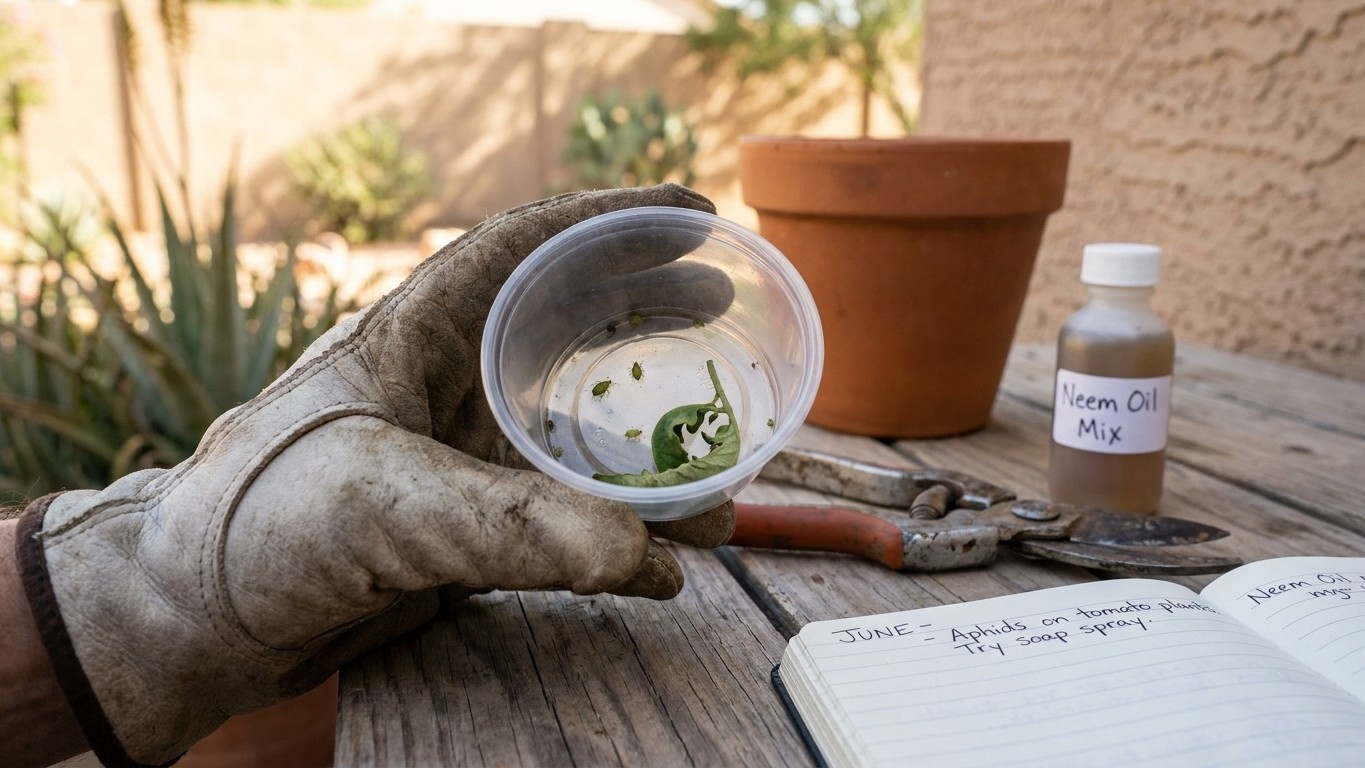

Arizona Extension names ten pests that account for most of the damage reported in home vegetable gardens across the state: aphids, whiteflies, thrips, spider mites, Beet leafhopper Arizona populations, grasshoppers, tomato hornworm populations, squash bugs, false chinch bugs and green fruit beetles. Near Phoenix, the University of Arizona Cooperative Extension notes that thrips and false chinch bugs build up through spring and fall off once summer heat pushes past the 90s in June, while squash bugs keep laying eggs from early spring into midsummer. Start checking the undersides of leaves as soon as seedlings put out their first true leaves, since most of these pests do their worst damage before a gardener notices anything is wrong.
What Arizona gardens actually deal with

Arizona’s combination of intense heat, low humidity and irrigated gardens sitting inside otherwise dry landscapes creates conditions that favor a specific mix of insects. Sap-sucking pests like aphids, whiteflies, thrips and spider mites thrive on the tender, well-watered growth that a home garden offers in an otherwise arid landscape, while chewing pests like grasshoppers and green fruit beetles move in from surrounding desert and rangeland vegetation as it dries out, and squash bugs keep laying eggs on squash and pumpkin vines well into midsummer. A gardener who moved from a humid state notices the shift fast. Our Garden Pests in Connecticut guide deals mostly with slugs and fungal disease driven by damp soil, a set of problems that barely exists here.
Thrips

Thrips in Arizona that gardeners spot rasp at flower petals and leaf surfaces, leaving silvery streaks, black flecks of excrement and papery, distorted new growth. Both the pale yellow nymphs and the slightly darker winged adults cause damage, so treating only the adults you can see misses the population doing the harm. Reflective mulch and blue sticky traps catch adults, and insecticidal soap applied while nymphs are still soft-bodied knocks back numbers before bloom distortion sets in.
False chinch bug

False chinch bugs mass by the hundreds on weeds and move en masse into vegetable beds once that vegetation dries out, piercing stems and leaves in a way that mimics sudden drought stress on seedlings. Keeping weeds mowed and green longer, rather than letting them dry and die off around the garden, removes the trigger that sends the swarm looking for a new food source.
Aphids

Aphids cluster on stem tips and the undersides of new leaves, sucking sap and excreting sticky honeydew that draws ants and grows sooty mold on the leaf surface below. A strong jet of water knocks light infestations off without chemicals, and insecticidal soap handles heavier ones without wiping out the ladybugs and lacewings that would otherwise keep numbers down on their own.
Grasshoppers

Grasshopper nymphs hatch as small wingless versions of the adult and grow into insects up to two inches long that chew ragged holes straight through leaves, sometimes stripping young plants to bare stems in a single visit. Row cover over seedlings blocks them physically, which holds up better across a season than most sprays once a hopper population has already built up in the surrounding area.
Squash bug

Squash bug eggs are bronze, football-shaped and laid in tidy rows on the undersides of squash and pumpkin leaves, and the gray nymphs that hatch feed in groups, causing leaves to blacken at the edges and collapse. Checking leaf undersides weekly and scraping off egg clusters before they hatch does more than any spray applied after nymphs are already established.
Whiteflies

Whiteflies lift off leaf undersides in a small pale cloud when disturbed, and both the nymph and adult stages feed there, leaving speckled yellowing along with the same sticky honeydew aphids produce. Yellow sticky traps track how bad an infestation is getting, and insecticidal soap sprayed directly onto leaf undersides is the most reliable home treatment.
Spider mites
Spider mites are hard to see without a hand lens, but the fine webbing they spin across leaf undersides in hot, dry weather gives them away, along with a fine bronze or white stippling across the leaf surface. Repeated forceful sprays of plain water, applied a few times a week, disrupt their webs and eggs better than most miticides sold for home use.
Beet leafhopper
Beet leafhoppers jump or fly the instant a leaf is disturbed and do little direct feeding damage on their own, but they carry curly top virus, which twists, yellows and can kill an infected plant outright. There is no cure once a plant shows symptoms, so pulling and discarding infected plants promptly is the only real response available.
Tomato hornworm
Tomato hornworms grow up to four inches long, pale green with diagonal white stripes and a curved horn at the tail end, and a single caterpillar can strip a tomato branch bare overnight. The coloring hides the caterpillar so well against foliage that dark frass droppings on the leaves below are often the first clue. Hand-picking at dusk, when hornworms are most active and easiest to spot, remains the most effective control for a home garden.
Green fruit beetle
Green fruit beetle adults emerge in summer as large, metallic green beetles with bronze-edged wing covers, flying clumsily with an audible buzz. They feed on ripening, overripe or already-damaged fruit, opening wounds that invite rot to set in. Picking up fallen and overripe fruit promptly removes the food source that draws them into the garden in the first place.
Telling damage apart

Reading the pattern before you reach for anything
The shape of the damage tells you more than the pest ever will, especially since you often see the damage before you see the insect responsible. Ragged holes and chewed leaf edges point to a chewing insect like a grasshopper, hornworm or beetle, something with mandibles working through tissue. Fine stippling or a bronzed, dusty look across the leaf surface points to a sap-sucker like a spider mite or thrips scraping at cells from the surface rather than biting through them. Sudden wilting on an otherwise healthy-looking plant is different again, and it is where gardeners most often guess wrong.
Sudden wilting can mean a false chinch bug swarm piercing stems, a root or vascular disease, or simply a watering fault, and telling those three apart matters because the fix for each is completely different. Wilting that starts at the growing tip and spreads downward over a day or two, with no insects visible on close inspection, usually points to a watering or root problem rather than a pest. Wilting that appears suddenly across a whole planting, especially near dried weeds or field edges, is more consistent with an insect swarm moving in. Sticky residue on leaves and the sooty black mold that grows on it almost always means aphids, whiteflies or a related sap-sucker rather than disease, since honeydew is the insect’s own waste product rather than a fungal symptom.
| Symptom | Most likely cause | What to check first |
|---|---|---|
| Ragged holes, chewed edges | Grasshopper, hornworm, beetle | Look for the insect itself, often on the underside or nearby soil |
| Fine stippling, bronzed look | Spider mites, thrips | Check for webbing or silvery streaking under magnification |
| Sudden whole-plant wilting | False chinch bug swarm or watering fault | Check soil moisture at root depth before assuming pest |
| Sticky leaves, black sooty coating | Aphids, whiteflies | Check leaf undersides and stem tips for clusters |
| Twisted, yellowed leaves, stunted plant | Curly top virus via beet leafhopper | Look for wedge-shaped jumping insects nearby, then remove plant if confirmed |
When each one shows up
Cool season into early summer
Thrips and false chinch bugs both build up through the cool, mild stretch of spring, and near Phoenix the University of Arizona Cooperative Extension notes both decline once summer heat climbs past the 90s in June, so the highest-risk window for these two runs from early spring through late spring in that area. Grasshoppers hatch from overwintered eggs in spring as well, starting small and easy to control with row cover before they grow large enough to strip whole plants. Squash bugs begin laying eggs early in spring and keep laying into midsummer, which means one early check misses most of the risk. Aphids and whiteflies tend to build wherever a garden is putting out the most tender new growth, so seedlings and transplants are the highest-risk stage regardless of the calendar date.
Summer heat
Spider mites tend to become most visible once conditions turn hot and dry, since that is when their webbing and the stippled damage they cause show up fastest on stressed foliage. Green fruit beetle adults emerge in summer and go straight for ripening or already-damaged fruit, so this is the point in the season when picking up fallen fruit promptly starts to matter most. Tomato hornworms usually show up as fruit is setting and continue through the rest of the fruiting season, which is why an evening check under leaves is worth keeping up even once early-season pests have quieted down.
Beet leafhoppers and the curly top virus they carry can turn up at any point a host plant is present, since the insect itself is highly mobile and moves in from surrounding wild hosts rather than following a fixed local schedule. Watching leaf undersides and new growth weekly, rather than waiting for obvious damage, is the single habit that catches the most problems early across every stage of the season. Gardeners along the New Mexico border see a similar rhythm, and our Garden Pests in New Mexico guide covers how squash bugs and grasshoppers behave under a comparable high desert climate just across the state line.
What actually works
Prevention comes first
Rotating where squash, tomatoes and other heavily targeted crops go each year makes it harder for squash bugs and hornworms to find the same host plants in the same spot season after season. Timing transplants so seedlings are past their most tender stage before the peak weeks for thrips and false chinch bugs reduces exposure without any spray at all. Physical barriers do more real work than most gardeners expect: row cover kept on until flowering starts blocks grasshoppers, squash bugs and hornworm moths from ever reaching the plant, and it costs nothing to reapply once it is in place. Encouraging ladybugs, lacewings and predatory wasps by planting a few flowering herbs nearby, and by avoiding broad-spectrum insecticides that kill them alongside the pest, keeps aphid and whitefly numbers down without ongoing effort.
Targeted intervention
Once a pest is established, hand-picking works for anything large enough to see and slow enough to catch, which covers hornworms, grasshoppers and green fruit beetles. Insecticidal soap is effective against soft-bodied sap-suckers like aphids, whiteflies and thrips nymphs, but it does nothing against chewing insects with tougher exoskeletons, and it needs direct contact with the insect to work at all. A strong water spray disrupts spider mite webbing and knocks off light aphid infestations, and it is worth trying before anything else since it costs nothing and does no harm to beneficial insects.
Some popular home remedies do little in practice. Diatomaceous earth washes away with the first irrigation or monsoon rain and needs constant reapplication to matter. Garlic or pepper sprays repel some insects briefly but wash off just as fast and have no effect on an infestation already established inside curled leaves or under egg clusters. Ultrasonic pest repellers marketed for garden use have no demonstrated effect on any of the insects covered here.
What control costs
Comparing the real cost across a season
Hand-picking costs nothing but time, and that time adds up fastest with hornworms and grasshoppers, since both need repeat checks every few days through their active weeks rather than a single treatment. Row cover and other barriers cost more upfront in materials but need almost no repeat effort once installed, which makes them the cheapest option over a full season for anything that stays covered until flowering, like squash bugs and grasshoppers on young plants. Biological control, mainly encouraging the predatory insects already present rather than buying and releasing new ones, costs the least of all in ongoing effort, though it takes longer to show results and does not stop a fast-moving swarm like false chinch bugs on its own.
- Hand-picking: no material cost, repeated every few days during active feeding
- Row cover and barriers: one-time material cost, minimal repeat effort once installed
- Encouraging predators: low ongoing cost, slow to establish, best for aphids and whiteflies
- Insecticidal soap and similar sprays: recurring material cost, needs reapplication after rain or irrigation and repeat contact with new generations
Sprays sit at the other end of the scale. Insecticidal soap and similar targeted treatments need to be reapplied every time a new generation hatches or after water washes residue off the leaf, which over a full season adds up to far more repeat purchases and application time than a barrier put up once in spring. For a typical home garden, row cover paired with regular hand-picking is the cheapest combination overall, since it front-loads the cost into one purchase and a few minutes of setup rather than a recurring bill for the rest of the season.
Local help
The University of Arizona Cooperative Extension tracks pest outbreaks around the state and will identify a specimen a gardener brings or photographs, which matters most when a symptom does not match anything described here clearly. Since pest pressure varies by elevation and region across Arizona, a county office reading is worth more than a guess based on a photo online. For planting calendars and other state-specific advice beyond pests, our other Arizona guides cover the rest of the growing season.
One Pest Worth a Closer Look
Most of what lands in an Arizona garden gives itself away — chewed leaves, sticky honeydew, a cloud of insects when you brush a plant. The beet leafhopper doesn’t play by those rules. It isn’t a chewing pest at all, and by the time you notice anything wrong, the damage is already done. This one feeds for only a few minutes, moves on, and leaves curly top virus behind — a disease that has no cure once a plant is infected. It shows up quietly in spring, which is exactly why it catches gardeners off guard: there’s no slow buildup to watch for, no early warning stage. If you garden in Arizona and haven’t dealt with this one before, it’s worth reading up on before spring arrives, because the window to actually do anything about it is short. Knowing what it looks like and when it moves through is the only real head start you get.
Common questions
Do I need to spray something even if I don’t see any damage yet?
No, spraying before damage appears usually does more harm than good, since it kills off the predatory insects that would otherwise keep pest numbers in check on their own. Checking leaf undersides weekly is enough to catch most problems before they need any spray at all.
Will neem oil handle all of these pests?
Neem oil has some effect on soft-bodied sap-suckers like aphids and whitefly nymphs, but it does little against chewing insects like grasshoppers or hornworms and does not stop curly top virus once a beet leafhopper has already fed on a plant. Treat it as one tool for one category of pest rather than a general fix.
Why did my squash plant wilt overnight with no bugs visible?
Squash bug nymphs feed in tight clusters low on the plant and under leaves, so a light infestation can be easy to miss until the damage is already severe. Turn every leaf over and check the base of the stem before assuming the cause is disease or a watering problem.
Is it worth buying ladybugs to release in the garden?
Store-bought ladybugs usually fly off within a day or two of release rather than staying to feed, so the money rarely pays off compared to encouraging the ladybugs and lacewings already living nearby. Planting a few flowering herbs and skipping broad-spectrum sprays does more to keep predator numbers up over time.