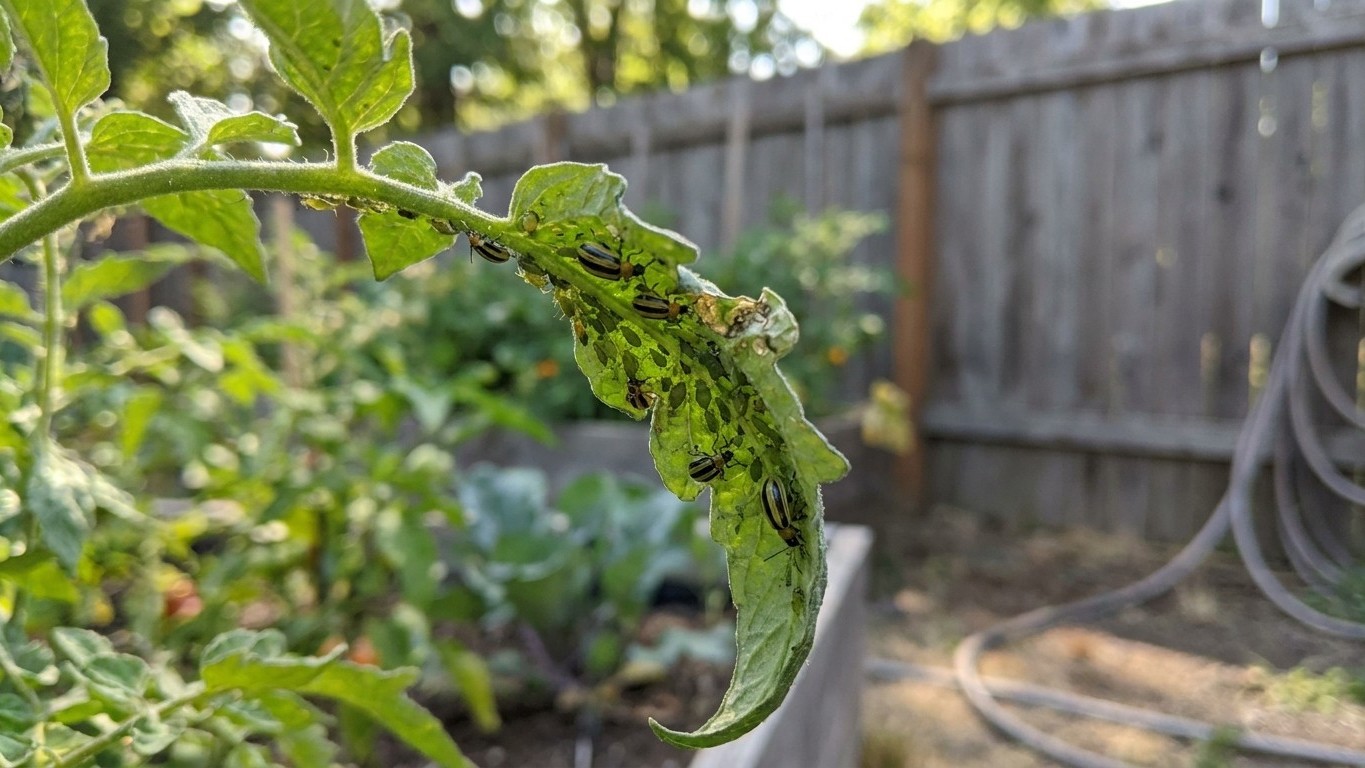

Oregon tomato growers deal with a short, repeatable list: cutworms, flea beetles, aphids, twospotted spider mites, tomato hornworms, and the brown marmorated stink bug, which has spread through the Willamette Valley in recent years. Which ones you actually meet has more to do with how your transplant date sits against NOAA’s 1991-2020 climate normals for Portland, a last spring freeze between March 6 and March 21, than with luck. Start checking the undersides of your lower leaves the week you transplant, since most of these pests show themselves there long before they touch a fruit.
What this comes down to in Oregon

A cutworm-severed transplant doesn’t wilt or yellow first — it’s just gone, toppled at the soil line overnight, and by the time you notice, the caterpillar that did it is already curled an inch under the dirt waiting for the next one. That’s the cost of missing the window: Oregon’s cold, damp spring weeks when seedlings are small enough to lose in a single bite. Flea beetles work the same stretch of vulnerability, just slower and from the leaves down.
If you’ve already worked through growing tomatoes in Oregon and have plants in the soil, the pest pressure that follows depends on how exposed your seedlings were during their first few cold, damp weeks. That’s when cutworms and flea beetles do the most damage, before plants have the size to outgrow them.
Cutworms

Cutworms are gray to black caterpillars, thick-bodied and about an inch long, that curl into a tight C when you disturb them. They hide in the top inch of soil during the day and come out at night to chew through a young transplant’s stem right at the soil line, killing the whole plant in one bite. A cardboard collar pushed an inch into the ground around each stem stops them for free, and it only needs to stay in place for the first few weeks.
Flea beetles

Flea beetles are tiny, shiny black or bronze beetles, barely a sixteenth of an inch long, that jump like fleas the moment you touch the leaf. Adults chew small round holes clean through young leaves, giving seedlings a shotgun-blast look, and the damage is worst in the first few weeks after transplant. Floating row cover over new plants keeps the first wave off until the tomato has enough leaf area to shrug off the feeding.
Aphids

Aphids are small, soft-bodied, pear-shaped insects, usually pale green but sometimes pink or black, that cluster on the undersides of leaves and on new growth tips. They pierce the plant to feed on sap, which curls and yellows leaves, and their sticky honeydew invites sooty mold on top of that. A hard jet of water from the hose knocks most colonies off, and insecticidal soap handles what’s left without harming bees working the blossoms.
Twospotted spider mites

Twospotted spider mites are barely visible without a hand lens, pale yellow to green with two dark spots on the back, and they spin fine webbing across leaf undersides in hot, dry stretches. Their feeding stipples leaves with tiny pale dots that spread into a dusty, bronzed look, usually starting once summer heat sets in. They build up fastest on drought-stressed plants, so steady watering prevents more mite trouble than any spray does.
Tomato hornworm

The tomato hornworm is the one you won’t miss once it’s grown: a green caterpillar up to four inches long, with white diagonal stripes and a curved horn at the tail end. It strips foliage fast and will chew into green fruit, usually showing up in mid to late summer once it’s had a generation or two to build. Handpicking works fine at that size, and Bacillus thuringiensis sprayed on foliage kills the small early-stage caterpillars before they do the visible damage.
Brown marmorated stink bug

The brown marmorated stink bug is shield-shaped, mottled brown, about five-eighths of an inch long, with pale bands on its antennae and alternating light and dark marks along the edge of its abdomen. It has spread through the Willamette Valley over the past several seasons and feeds by piercing nearly ripe fruit, leaving cloudy, corky spots under the skin that only show up once you slice into it. Netting fruit clusters as they start to color works better than spraying, since adults fly in from outside the garden all season long.
Working it out for your own garden
The fastest way to identify a tomato pest in Oregon is to match the symptom to where on the plant it shows up and when in the season you’re seeing it, rather than guessing from the insect alone, since several of these are easy to miss at their damaging life stage.
| What you’re seeing | Likely pest | When it shows up |
|---|---|---|
| Stem severed at soil line, whole seedling toppled | Cutworm | At transplant, into early spring |
| Small round holes shot through young leaves | Flea beetle | First few weeks after transplant |
| Curled, yellowing leaves, sticky residue | Aphid | Anytime, worse in cool damp weather |
| Fine webbing, stippled bronze leaves | Twospotted spider mite | Hot, dry stretches, mid to late summer |
| Large caterpillar, stripped leaves, chewed green fruit | Tomato hornworm | Mid to late summer |
| Cloudy, corky spots under the skin of ripening fruit | Brown marmorated stink bug | Late summer into fall |
Once you’ve narrowed it down by timing, confirm it by turning over a few leaves and looking closely, since flea beetle holes can be mistaken for early slug damage and aphid curling can look like herbicide drift from a distance. Don’t spray before you’ve confirmed the pest, because a broad insecticide applied for the wrong problem kills the predatory insects, like lady beetles and lacewings, that would otherwise keep aphids and mites in check on their own.
If you’re trying to figure out why a pest arrived earlier or later than expected, check your transplant date against the frost window rather than the pest. A plant set out right at the edge of Portland’s March 6 to March 21 last-freeze range, per NOAA’s normals, sits exposed to cutworms and flea beetles for longer than one set out a few weeks later into warmer soil, which is one more reason the Tomato Planting Dates in Oregon: Counting Back From Your Frost Window guide is worth working through before you fix a date.
What changes across the state
Oregon’s tomato pest pressure shifts with elevation and distance from the coast more than with latitude. West of the Cascades, in the Willamette Valley around Portland, the growing season NOAA’s normals describe (last freeze March 6 to March 21, first fall freeze November 11 to November 27) gives pests like aphids and spider mites a long, mild run, and it’s the part of the state where the brown marmorated stink bug has become established. Coastal gardens run cooler and damper through summer, which favors aphids over spider mites, since mites need heat and dryness to build up fast.
East of the Cascades, in the high desert around Bend and through the Columbia Basin, the season compresses hard. Frosts arrive earlier in fall and linger later in spring than the Portland window suggests, which shortens the whole pest calendar to match: cutworms and flea beetles still show up at transplant, but there often isn’t enough season left for a heavy hornworm generation or for stink bugs to build the numbers they reach on the west side. Higher elevation gardens anywhere in the state see fewer pest generations per year, simply because the growing season itself is shorter, not because the pests are different.
Southern Oregon’s interior valleys run hotter and drier in summer than Portland does, which tips the balance toward spider mites and away from aphids. None of this changes which six pests you’re watching for. It changes how much of each you’ll see and how early in the season it starts, which is exactly why a single statewide pest calendar is less useful than watching your own plants.
The mistakes this state punishes

The costliest mistake in Oregon is transplanting into cold, wet soil after a warm stretch that fools you into thinking spring has arrived. Soil that’s still cold slows root growth, and a slow-growing seedling sits exposed to cutworms and flea beetles for weeks longer than a vigorous one, turning a minor pest into a dead plant. Wait until the soil itself has warmed, not just the air.
The second is choosing a long-season cultivar without checking whether it finishes before Portland’s first fall freeze arrives, per NOAA’s November 11 to November 27 window. A plant still carrying green fruit into that window is a plant stink bugs have extra weeks to feed on, which is one more reason to work through Tomato Varieties That Ripen in Time in Oregon before you order seed, rather than after the pests have found an unripe crop still hanging in October.
The third is spraying broadly the first week you spot damage. Broad insecticides knock out the lady beetles and parasitic wasps that would otherwise handle an aphid or mite outbreak without your help, and once they’re gone the pest population often rebounds worse than before. Identify the pest first, then choose the narrowest control that works, whether that’s a cardboard collar, a soap spray, or simply picking hornworms off by hand.
Checking this against your county
Every figure here is anchored to Portland, and Oregon’s coast, valleys, and high desert don’t share a pest calendar even though they share a state line. Before you commit to a control plan, check with your county’s Oregon State University Extension office, since local agents track which pests are actually active in a given season and can confirm an identification from a photo or a sample. The extension’s tomato pest publications go into more detail on chemical controls, including product names and rates, than a statewide overview like this one can responsibly cover.
Common questions
Do I need to worry about tomato hornworms if I’ve never seen one before?
Not until mid to late summer, and even then only if you’re growing tomatoes near tobacco-family relatives like petunias or peppers, which host the same moth. Check the undersides of upper leaves for the caterpillar’s dark droppings, which are often easier to spot than the caterpillar itself.
Are ladybugs actually going to control my aphids?
Lady beetles and their larvae eat aphids in real numbers if you let a population build up naturally rather than spraying it flat every time you see one. Buying and releasing lady beetles rarely works, since most fly off within a day or two of release.
Why do I keep getting stink bug damage even though I never see the bug on the plant?
Brown marmorated stink bugs feed and often move on before you spot them, and the damage, a cloudy corky spot under the skin, only becomes visible once you cut into the fruit. Netting fruit clusters as they ripen catches the problem before it starts rather than after.
Is it too late to do anything once I see spider mite webbing?
No, but the plant is already stressed, so start with a strong water spray to knock down numbers and improve your watering schedule at the same time. Mites rarely take over a plant that’s getting consistent moisture, so the webbing is often a symptom of drought stress as much as it is a pest problem on its own.