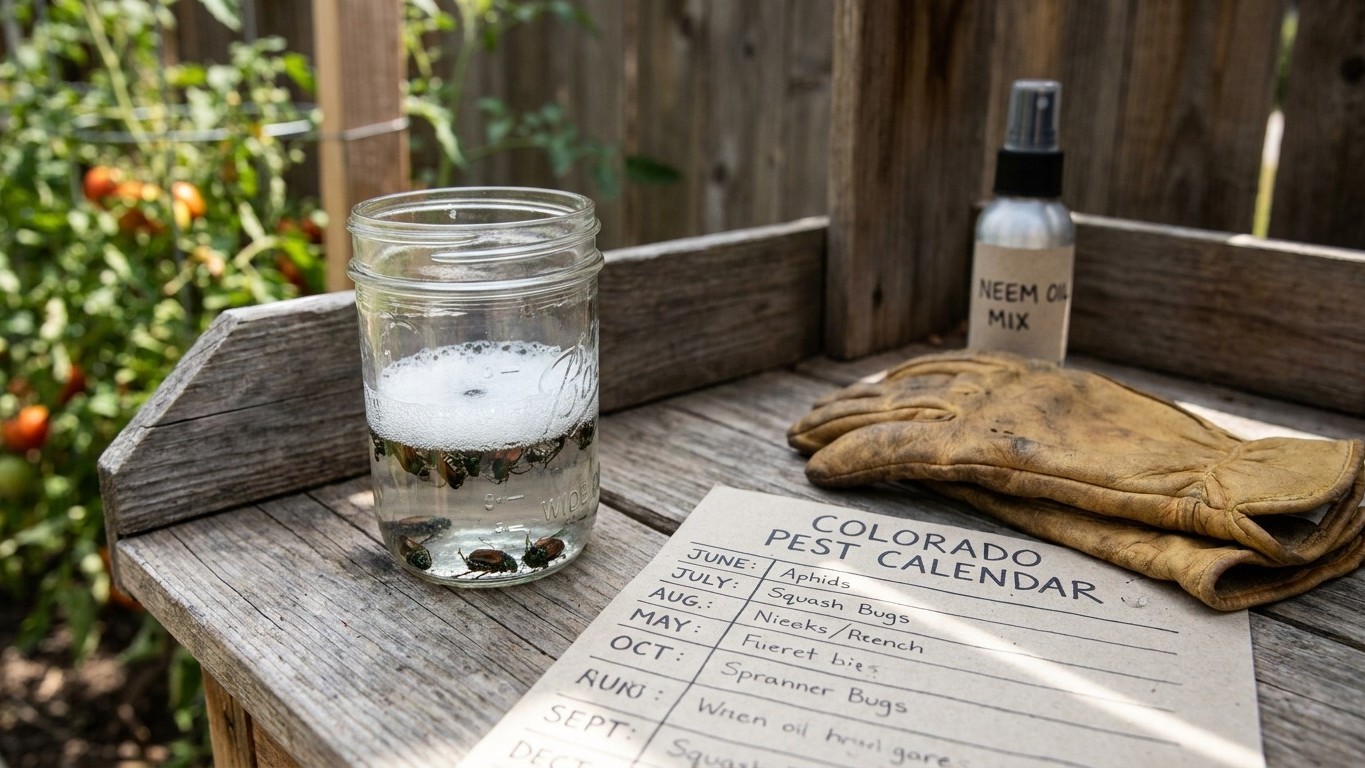

Your plants are being eaten, and the fix is figuring out which of Colorado’s usual suspects is doing it. Ten pests cause almost all the damage in Front Range and Colorado gardens, and each one leaves its own calling card, whether that’s a toppled seedling, a shredded leaf, or a slime trail under the mulch. Start by walking your rows every few days, beginning the week seedlings go in, and look closely at the soil line, the leaf undersides, and the stems before you decide what you’re dealing with.
What Colorado gardens actually deal with

The state’s dry air and intense sun set the pattern here more than any single insect does. The spider mites Colorado gardeners battle thrive in exactly the conditions a Front Range summer delivers: hot, dry, dusty. Grasshopper populations in Colorado move in from surrounding rangeland once native forage dries out, and a bad grasshopper year can strip a vegetable bed in days. Irrigated beds and mulch, meanwhile, create the one damp, sheltered pocket that slugs need, so a well-watered raised bed can carry slug pressure even in an otherwise arid yard, and those same squash and pumpkin plantings are exactly where growers watch most closely for the squash bug once vines start to sprawl, with the Spotted cucumber beetle Colorado gardeners also see on those cucurbit leaves and blossoms right alongside it, while the brassica and asparagus beds nearby are where a harlequin bug infestation tends to show up first. CSU Extension’s PlantTalk Colorado database and fact sheets 5.592, 5.507 and 5.609 are the reference for every pest named below, and they’re a good bookmark before you assume a bug on your plant is one of these ten.
Cutworms and seedcorn maggots

Cutworms feed at night and sever young stems right at the soil line, so a seedling that was fine yesterday is toppled flat this morning with no chewing visible on the leaves. Seedcorn maggots work underground, tunneling into planted seed and the base of emerging seedlings, causing poor germination and weak, yellowing sprouts. Both do their damage before the plant is established, which is why a collar of cardboard or a paper cup pushed into the soil around each transplant stem stops cutworms cold, and why delaying seeding until soil has warmed reduces seedcorn maggot losses.
Flea beetles

Look for a scatter of tiny round holes, like the leaf was hit with fine shot, especially on eggplant, radish and other brassica seedlings, a classic sign that Flea beetles in Colorado have moved in, a pest gardeners battle every spring. The adults are what you see and what does the damage; larvae feed underground on roots and are rarely noticed. Floating row cover over young transplants keeps adults off until plants outgrow the vulnerable stage.
Slugs

Slugs rasp irregular holes in leaves, often low on the plant, and leave a telltale silvery slime trail that’s visible even after the slug itself has retreated to its daytime hiding spot under mulch or boards. Hand removal at dusk, and reducing damp hiding places, does more than most commercial baits.
Squash bugs

Adults and the gray, black-legged nymphs cluster on squash and pumpkin leaves, sucking sap until leaves wilt, blacken and die from the point of feeding outward. Bronze-colored egg clusters on the underside of leaves are the easiest early sign, and crushing them before they hatch is the single most effective non-chemical step for this pest.
Harlequin bug

This one is hard to miss: a shield-shaped bug in bold black and red-orange feeding on cabbage-family plants, puncturing leaves and leaving pale blotchy patches that spread and dry out. Hand-picking works well because the color makes them so visible against green foliage.
Spotted cucumber beetle

The eleven-spotted yellow-green beetle chews irregular holes in leaves and blossoms of cucurbits and can also transmit bacterial wilt, so a light chewing injury can turn into a wilted, collapsed vine within days if the beetle was carrying disease.
Tomato / potato psyllid
Nymphs and adults feed on the underside of tomato and potato leaves, and heavy feeding causes a distinctive yellowing and curling known as psyllid yellows, along with stunted, misshapen fruit. The insect itself is easy to miss at that size, so the leaf symptoms are usually what a gardener notices first.
Grasshoppers
Grasshoppers chew ragged notches from leaf edges inward and, in high numbers, can defoliate a plant entirely. They move in from dry surrounding vegetation, so garden damage often spikes right after nearby fields or rangeland dry out for the season.
Spider mites
Look for a fine stippling or bronzing across leaf surfaces and, in advanced cases, delicate webbing on the undersides. A sheet of white paper held under a branch and tapped will dislodge mites you can see moving as tiny specks. Dry, dusty conditions favor them, so a hard spray of water on leaf undersides every few days is a legitimate control, not just a stopgap.
Corn earworm
The caterpillar tunnels down into the tip of the ear and feeds on developing kernels, leaving behind chewed kernels and dark frass. It doesn’t overwinter in Colorado, so every generation you see arrived as moths that flew in that season, according to CSU Extension.
Telling damage apart

The shape of the damage narrows the cause faster than trying to spot the insect itself, especially with anything nocturnal or small enough to miss.
Chewed edges versus stippled leaves
Ragged notches chewed from the leaf margin inward point to a chewing insect large enough to leave a visible bite mark: grasshoppers, harlequin bugs, cucumber beetles, or caterpillars. Fine speckling or a dusty, bronzed look across the whole leaf surface, without any missing tissue, is the signature of sucking pests like spider mites. The leaf tissue is still there in a stippled leaf; it’s just been drained, which is why chewing damage and mite damage need completely different responses.
Wilting, sticky residue, and small round holes
Sudden wilting of one section of a vine, especially in squash or cucumbers, with no obvious chewing, suggests either squash bug feeding at the stem base or a vascular disease like bacterial wilt carried in by a cucumber beetle. Sticky, shiny residue on leaves or fruit usually means an aphid or psyllid population is present even if you can’t see the insects, since that residue is their excreted honeydew. Small, perfectly round shot-holes scattered evenly across many leaves, without wilting, are flea beetle work rather than disease.
Ruling out watering and disease
Overwatering produces yellowing that starts at the lower leaves and moves up evenly, with no holes, no stippling and no sticky residue anywhere on the plant. Underwatering shows as uniform wilting that recovers overnight once the plant is watered, which insect damage never does. If the damage doesn’t match a pattern above and the plant looks sick rather than eaten, treat it as a watering or disease question first, not a pest one.
When each one shows up
Colorado’s pest calendar tracks plant growth stage and temperature more than it tracks the date on the wall, so watch the plant, not the month.
Early season: seedlings in the ground
Cutworms and seedcorn maggots are the first threat, active the moment seed goes into the soil or transplants are set out, and their damage window closes once stems toughen and roots establish. Flea beetles arrive right behind them on brassica and eggplant seedlings, with CSU Extension noting they’re most damaging on cabbage-family plants in June near Denver, though the window shifts with elevation and can run earlier or later elsewhere in the state.
Midseason: vines and fruiting crops
Squash bugs begin laying eggs by mid-June near Denver per CSU Extension, with a first generation building through summer and a second wave of adults appearing in late summer. Harlequin bugs, spotted cucumber beetles and tomato/potato psyllid show up as their host crops mature and put on the tender new growth these pests prefer. Grasshoppers build steadily as summer dries out surrounding vegetation and push them toward irrigated gardens.
Late season: heat and dryness
Spider mites peak during the hottest, driest stretch of the season, since dry conditions favor them directly, according to CSU Extension. Corn earworm moths move into the state through summer since the insect doesn’t overwinter here, so a corn planting can go from clean to infested within a single moth flight. Watch corn silk and ear tips closely from the point silks appear through harvest.
What actually works
Prevention beats reaction on every pest in this list, and most of it costs nothing but attention.
Rotation, timing and barriers
Rotate squash-family and cabbage-family crops to a different bed each year, since squash bugs and harlequin bugs overwinter near where they fed and reinfest the same spot fastest. Delaying transplant dates until soil has warmed reduces cutworm and seedcorn maggot losses, since both prefer cool, soft soil. Floating row cover physically blocks flea beetles, squash bug adults and cucumber beetles from ever reaching the plant, though it has to come off once flowers need pollinating. Row cover is the one tool that stops several of these pests at once, which makes it worth the extra step for cucurbits and brassicas both.
Encouraging predators and hand controls
Ladybugs, lacewings and predatory mites already present in most yards will hold spider mites and small soft-bodied pests in check if you avoid broad-spectrum insecticides that kill them along with the target pest. Hand-picking harlequin bugs and squash bug egg clusters is slow but genuinely effective, since both are large enough and slow enough to catch by hand. A hard water spray on the underside of leaves knocks spider mite populations down and is worth trying before reaching for a miticide.
What doesn’t work
Ultrasonic pest repellers and most “companion planting repels pests” claims have no real pest-control effect, and relying on them while skipping row cover or rotation just buys the pest more time. Broad insecticidal sprays used preventively, before any pest is actually present, tend to do more harm to the beneficial insects you’d rather keep around. Gardeners in wetter states deal with a different balance. A Pennsylvania grower fighting slugs and fungal disease under near-constant summer humidity, as described in this guide to garden pests in Pennsylvania, has almost the opposite problem from a Front Range gardener fighting spider mites in dry heat.
What control costs
The cheapest options for a home garden are also the most time-consuming, and the fastest options cost the most in materials.
Comparing the main approaches
| Method | Money cost | Time cost | Repeat frequency |
|---|---|---|---|
| Hand-picking / egg crushing | Lowest, no materials needed | Highest, requires regular close inspection | Every few days through the growing season |
| Row cover and physical barriers | Moderate upfront, reusable for years | Low once installed | Remove and reinstall around bloom time only |
| Biological controls (predatory insects, encouraging natives) | Low to moderate | Low, mostly a matter of not disrupting them | One-time habitat setup, ongoing benefit |
| Targeted sprays (insecticidal soap, horticultural oil) | Moderate, repeat purchase | Moderate, application plus reapplication | Every 5 to 10 days while pest is active |
Which one to choose
For a small home garden, hand-picking and row cover together are the cheapest route and cost nothing but the time to walk the rows every few days. Sprays make sense when a pest has already built up past what hand control can manage, but they need to be reapplied through the season as new eggs hatch, which adds up in both cost and effort compared to catching the problem at the egg stage. Biological control is close to free once it’s established, since it mostly means leaving flowering plants around the garden for predatory insects and not spraying them away.
Local help
Colorado State University Extension is the reference point for identifying anything on this list, and its county offices will look at a specimen or a clear photo and tell you what you’re actually dealing with. The Colorado State University Extension directory, credited by USDA NIFA as the state’s land-grant extension service, lists county offices that track local outbreaks and answer identification questions directly. For a broader look at what else the state’s growing conditions affect beyond pests, the Colorado guides hub covers frost dates, soil and other regional basics. A misidentified pest wastes both money and a growing season, so a five-minute call before you spray is rarely wasted.
Two More Pests Worth Watching
Not every Colorado pest problem sits still long enough to overwinter here, and that’s exactly what makes a couple of summer arrivals tricky to plan for. If you grow sweet corn, tomatoes, or peppers, keep an eye out for the corn earworm, a moth that doesn’t survive Colorado’s frozen winters at all but instead rides storm winds up from Texas and Oklahoma most years, typically showing up between late June and early August. Because it has to migrate in fresh each season, the timing of its arrival shifts with the weather patterns further south, so watching for it becomes as much about tracking storms as tracking calendars.
Cucurbit growers face a similar out-of-state visitor in the spotted cucumber beetle, which starts appearing in gardens at lower elevations by late May and can stick around into September. The heaviest pressure on cucumbers, squash, and melons tends to hit during July and August, so that stretch of midsummer is when vigilance matters most. Both pages walk through exactly when to start checking plants and what actually stops each pest once it shows up.
Common questions
Why do I keep finding squash bugs even after I picked off the eggs?
You likely missed a cluster, since eggs are laid in small groups on the underside of several leaves, not just one. CSU Extension notes a second generation lays eggs again in late summer, so a garden clear in July can still see new activity later in the season.
Are the bugs I’m seeing on my tomatoes the same psyllid CSU talks about?
Check the leaf symptoms first, since the insect itself is too small to identify confidently by eye in most cases. Yellowing and curling leaves with stunted, oddly shaped fruit point toward psyllid feeding, but a county extension office can confirm it from a sample.
Do I need to worry about corn earworm if I don’t grow sweet corn?
It’s mainly a corn pest, tunneling into the ear tip, but the same species also feeds on tomato fruit in some regions, so keep an eye on ripening tomatoes near any corn planting.
Is it worse to garden somewhere humid instead of Colorado’s dry climate?
It’s just a different balance rather than simply worse. Humid states deal with heavier slug and fungal pressure, similar to what’s described for garden pests in Hawaii, while Colorado’s dry heat favors spider mites and grasshoppers instead.