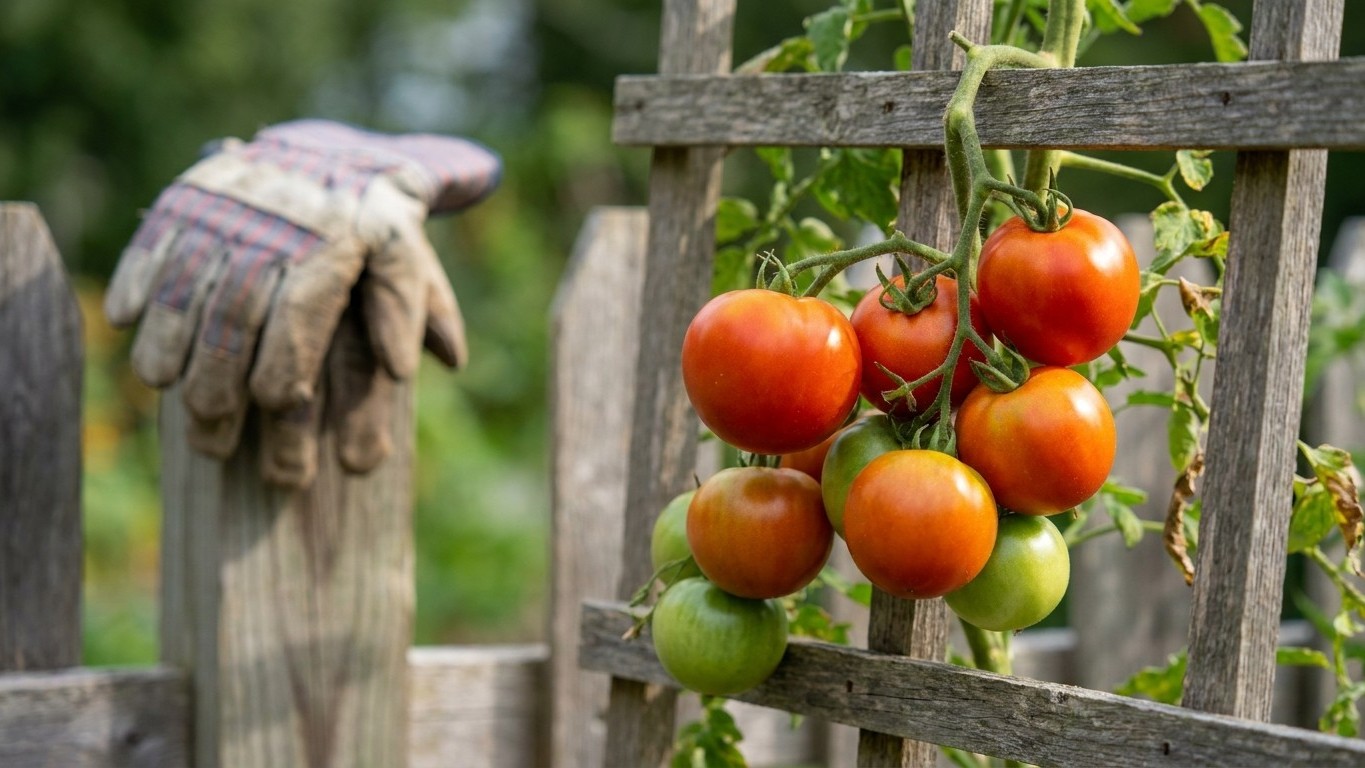

Tomatoes go into the ground in Massachusetts once the danger of frost has genuinely passed. For the Boston area, NOAA’s 1991-2020 climate normals put the last spring freeze between April 1 and April 8, though that window still carries a real chance of frost rather than a guarantee. Check that range against your own town’s typical pattern before you set out a single transplant, and build in extra time if you garden inland or at higher elevation.
When to plant Tomatoes in Massachusetts

April 1 to April 8 is the window Boston gardeners work from, and it’s earlier than most New England frost advice assumes — inland Massachusetts runs weeks behind, not days. That gap is why counting backward from a national planting chart gets people into trouble here: six to eight weeks of indoor growing counted from the wrong frost date lands seedlings outside too soon or leaves them leggy and waiting. The real starting point is local, not generic, and it shifts everything after it.
Starting seed indoors
Tomato seed wants six to eight weeks of indoor growing before it goes outside as a transplant. Counting back from the April 1 to April 8 window puts seed-starting in the Boston area somewhere in mid-February to late February, a range rather than a fixed date because both the frost window and the six-to-eight-week rule are themselves ranges. Gardeners further inland, working from a later expected frost, should shift their own seed-starting date later by roughly the same amount their frost date runs behind Boston’s. A sunny south-facing window rarely supplies enough light for stocky seedlings this early in the year, so a shop light or grow light run for 14 to 16 hours a day makes a real difference in stem strength.
Hardening off
Seedlings raised indoors need seven to ten days outside in gradually increasing sun and wind before they go into open ground permanently. Start with an hour or two in dappled shade, add time and direct sun each day, and bring plants in if a cold night threatens. Skipping this step is the most common reason a batch of healthy-looking seedlings turns pale and stunted within days of transplanting.
Transplanting outdoors
Wait until soil has warmed and the frost risk in your specific location has genuinely dropped before setting plants in the ground. Because the Boston normals still show a meaningful chance of frost through early April, many gardeners in that area, and especially those further inland, add a buffer of a week or more past the stated window before committing tender transplants to open soil. Keep a stash of row cover, old sheets, or plastic buckets on hand through that stretch. A single unexpected cold night can set a young tomato plant back for weeks even if it survives.
Soil and site preparation
Tomatoes want at least six to eight hours of direct sun a day, and fruit set and disease resistance both suffer in partial shade. Pick the sunniest, most open spot in the yard, away from the shadow line of a house or fence line as the sun tracks lower earlier and later in the season.
Soil texture and amendments
Tomatoes need soil that drains well but holds enough moisture between waterings, since waterlogged roots invite rot and drought-stressed plants set less fruit and crack more of what they do produce. Work several inches of finished compost into the bed a few weeks before planting rather than the day of, so it has time to integrate rather than sitting as a raw layer on top. If your ground stays wet and heavy after a rain, a raised bed solves more drainage problems than any amount of amending flat ground ever will. Get an actual soil test done rather than guessing at pH or fertility. Your county’s UMass Extension office runs this service and will tell you exactly what your specific soil needs rather than a generic recommendation.
Bed layout and spacing
Space indeterminate varieties on stakes or a trellis about 24 to 36 inches apart, and give sprawling, unstaked plants closer to 4 feet of room in each direction. Crowded plants dry more slowly after rain or watering, and that lingering leaf moisture is exactly what foliar diseases need to take hold. If you’re working a small bed, staking or caging every plant is worth the extra effort just to keep airflow moving through the row.
Varieties that suit Massachusetts
The trait that matters most for a Massachusetts garden is how a variety’s days-to-maturity figure lines up against the local frost window, followed closely by disease resistance, since humid summers here favor the same fungal and viral pressures that show up across the rest of the humid Northeast.
Early and short-season varieties
A short days-to-maturity number buys margin against a late spring or an early fall frost. Sun Gold (57 days from transplant, indeterminate) resists Tobacco Mosaic Virus and Fusarium wilt race 1, and its cherry fruit ripens fast enough that a Boston-area transplant set out in the April 1 to April 8 window, plus a typical buffer, can be picking fruit by early summer. Sakura (55 days, indeterminate) carries resistance to nematodes, Tomato Mosaic Virus, and Fusarium races 1 and 2, making it one of the fastest and best-defended cherry types on this list. Jasper (60 days, indeterminate) stands out for its high resistance to late blight, a real asset given how wet Massachusetts summers can run. Juliet (60 days) and Supersweet 100 (60 days) round out the fast-maturing group with intermediate blight resistance and strong wilt resistance respectively.
Full-season slicers and heirlooms
Longer varieties need the full stretch of the growing season but reward the wait with size and flavor that fast cherry types don’t match. Catalogue day counts are always measured from transplant, not from seed, and they shift by a week or two depending on how warm or cool the actual summer runs.
| Variety | Days to maturity | Growth habit | Notable disease resistance |
|---|---|---|---|
| Sun Gold | 57 | Indeterminate | Tobacco Mosaic Virus, Fusarium wilt 1 |
| Sakura | 55 | Indeterminate | Nematodes, Tomato Mosaic Virus, Fusarium 1 & 2 |
| Jasper | 60 | Indeterminate | Late blight (high), early blight (intermediate) |
| Juliet | 60 | Indeterminate | Late and early blight (intermediate) |
| Supersweet 100 | 60 | Indeterminate | Verticillium wilt, Fusarium wilt 1 |
| Amalfi | 68 | Determinate | Nematodes, late and early blight (intermediate) |
| Big Beef Plus | 72 | Indeterminate | Nematodes, gray leaf spot, Tomato Mosaic Virus |
| Cherokee Purple | 72 | Indeterminate | None bred in |
| Tiren | 75 | Indeterminate | Verticillium wilt, Tomato Mosaic Virus, Fusarium 1 |
| Granadero | 75 | Indeterminate | Nematodes, Verticillium wilt, Tomato Mosaic Virus |
| San Marzano II | 78 | Indeterminate | None bred in |
| Celebrity Plus | 78 | Determinate | Nematodes, gray leaf spot, Tomato Mosaic Virus |
| Brandywine | 78 | Indeterminate | None bred in |
| Amish Paste | 85 | Indeterminate | None bred in |
Cherokee Purple, Brandywine, and Amish Paste carry no bred-in disease resistance, which is the tradeoff for their flavor and size. They need a full, healthy season to perform, so give them the best air circulation and the most consistent watering in the garden. Celebrity Plus and Big Beef Plus offer a middle path: a full-size slicing tomato with a real resistance package against nematodes, gray leaf spot, and Tomato Mosaic Virus. For sauce and paste, San Marzano II, Amalfi, Granadero, and Tiren all cover different points on the determinate-to-indeterminate spectrum, with Amalfi’s determinate habit suiting a smaller space or a single big canning harvest rather than a trickle of fruit all season.
What to plant alongside
Good neighbors
Basil is the classic tomato companion, and while the folklore claim that it repels tomato pests by scent has little rigorous testing behind it, the two share the same water and sun needs and take up the bed efficiently together. Marigolds, particularly French marigold, have some real research behind their ability to suppress root-knot nematode populations in soil, which is worth knowing if nematodes show up in your soil test. Borage and other bee-friendly flowers near the tomato bed pull in the pollinators that improve fruit set, even though tomatoes are largely self-pollinating and mostly need wind or vibration rather than insects.
Keep away
Skip planting tomatoes near potatoes. Both are nightshades that share the same early and late blight pathogens and the same Colorado potato beetle, so growing them side by side lets a problem on one crop jump straight to the other. Corn is worth separating too, since the corn earworm and the tomato fruitworm are the same insect species, and a corn patch nearby can seed the tomato bed with the next generation. Black walnut trees are a firmer rule: their roots release juglone, a compound that stunts or kills tomato plants outright, so keep tomato beds well clear of any black walnut’s root zone.
An overrated pairing
Dill is often listed as a tomato companion for attracting beneficial insects while young, but mature, flowering dill has been observed to slow tomato growth nearby, likely from competition and possibly mild allelopathy. If you grow dill, harvest it before it flowers rather than letting it stand all season next to the tomatoes.
Watering, feeding and support
Watering and mulching
Tomatoes want deep, infrequent watering rather than a daily sprinkle, since shallow watering trains roots to stay near the surface where they dry out fast and take up nutrients less reliably. Water at the base of the plant, not overhead, since wet foliage sitting overnight is what lets fungal disease establish. A three-inch layer of straw or shredded leaf mulch keeps soil moisture even between waterings and stops rain from splashing soil-borne fungal spores up onto the lowest leaves, which is where most foliar disease starts.
Feeding schedule
Work compost or a balanced fertilizer into the bed at planting, then hold off on heavy nitrogen once flowering starts. Too much nitrogen mid-season pushes lush leaf growth at the expense of flowers and fruit, which is the single most common feeding mistake with this crop. A feed higher in phosphorus and potassium relative to nitrogen once the first flower clusters appear supports fruit development instead.
Staking, caging and pruning
Indeterminate varieties like Sun Gold, Big Beef Plus, and Brandywine keep growing and setting fruit until frost, so they need a stake, cage, or trellis tall enough to support several feet of vine, and benefit from having suckers, the small shoots that form in the joint between the main stem and a leaf branch, pinched out to keep the plant from turning into an unmanageable thicket. Determinate varieties like Celebrity Plus and Amalfi grow to a set size, flower and fruit over a shorter window, and should not be pruned the same way, since removing growth reduces the limited fruiting wood they have.
Common problems

Most tomato failures in a home garden trace back to one of a handful of repeat offenders, and reading the symptom correctly saves a season of guessing.
Blossom end rot
A sunken, dark, leathery patch on the bottom of the fruit is a calcium delivery problem, usually caused by inconsistent watering rather than a true lack of calcium in the soil. Even, deep watering on a regular rhythm fixes most cases faster than any calcium spray.
Cracking and splitting
Rings or splits in the skin happen when a dry spell is followed by a heavy rain or a big drink of water, and the fruit’s interior swells faster than the skin can stretch. Even watering through the season, especially as fruit nears ripeness, is the main prevention.
Leaf curl
Leaves rolling upward while staying green is usually physiological, triggered by heat, wind, or uneven watering, and it resolves on its own without treatment. Leaf curl paired with yellowing, mottling, or stunted new growth points to a virus instead, often spread by aphids or whiteflies, and there’s no cure once a plant is infected.
Wilts (Fusarium and Verticillium)
Yellowing and wilting that starts on one side of the plant or in the lower leaves, even when soil moisture is fine, points to a soil-borne wilt disease. Cut a stem near the base and look for brown discoloration inside, the tell-tale sign. There’s no fixing an infected plant this season. The fix for next year is choosing resistant varieties: Sun Gold, Supersweet 100, Tiren, and Granadero all carry high resistance to one or both of these wilts.
Foliar blights (early and late blight)
Dark, ringed spots on lower leaves that climb the plant over weeks describe early blight, a common fungal issue in humid weather. Larger, greasy-looking dark blotches that spread across a planting within days, especially after a cool, wet stretch, describe late blight, the more destructive of the two. Jasper’s high resistance to late blight and intermediate resistance to early blight makes it a useful choice if either has been a recurring problem in your garden.
Hornworms and other pests
A finger-length green caterpillar with white stripes and a curved horn, usually spotted from the chewed leaves and dark droppings before the insect itself, is a tomato or tobacco hornworm. Hand-picking works fine on a small planting. Aphids and whiteflies matter less for the direct damage they do and more for the viruses they can carry between plants, so keeping an eye on the undersides of leaves is worth the minute it takes.
Pests that actually show up in Massachusetts
Massachusetts keeps a working list of ten insects for home vegetable gardens, and most of them never touch a tomato plant at all. Striped cucumber beetle and squash bug go after squash and cucumbers, squash vine borer tunnels into squash stems, Mexican bean beetle works bean foliage, cabbage root maggot fly targets cabbage family roots, lily leaf beetle eats true lilies, and spotted lanternfly favors grapevine and tree-of-heaven. Winter moth is the odd one on the list: UMass Extension’s Winter Moth Identification and Management fact sheet notes adults fly from mid to late November into January, with eggs hatching late March into early April and caterpillars feeding on expanding leaves through late May or early June, mostly on fruit trees, blueberries, and ornamental shrubs rather than tomatoes.
The pest that actually matters for tomato growers is the Colorado potato beetle. It eats potato foliage first if you grow both crops, then moves onto tomato leaves once potato plants thin out or get pulled. Look for ragged, chewed leaf edges and clusters of bright orange-yellow eggs on the undersides of leaves starting in late spring as adults emerge from the soil. Hand-picking adults and crushing egg clusters daily controls a small planting; UMass Extension’s Insect Management in the Home Vegetable Garden guide lists this as the most reliable non-chemical option, since the beetle develops resistance to many insecticides quickly.
European corn borer is the second one worth watching in a mixed garden. It is best known as a corn pest, and UMass Extension recommends scouting egg masses on corn leaves in late May and early June, but the larvae will also bore into tomato fruit if corn nearby has been harvested or removed. The damage shows up as a small entry hole with a trail of frass near the stem end of the fruit, usually discovered only when you slice the tomato open. Removing and destroying infested fruit, along with cleaning up old corn stalks at season’s end, breaks the cycle for next year.
If you only grow tomatoes and skip corn, squash, beans, and brassicas, the Colorado potato beetle is realistically the one name on this list to keep in the back of your mind.
Harvest and end of season
Harvesting and ripening
Pick fruit once it has reached full color for its variety, whether that’s the deep purple-pink of Cherokee Purple or the red of Big Beef Plus, and give a gentle twist rather than pulling to avoid tearing the vine. Fruit that has started to change color, sometimes called the breaker stage, will finish ripening off the vine on a counter out of direct sun, which is useful for catching a load of fruit ahead of an early cold snap.
Storage
Keep ripe tomatoes at room temperature rather than in the refrigerator. Cold storage breaks down the texture and mutes the flavor within a day or two. Fully ripe fruit that won’t be eaten in a few days is better frozen whole, canned, or made into sauce than chilled.
As frost approaches
Massachusetts’ first fall frost date varies enormously from the coast to the hill towns, more than the spring figure does, so check NOAA’s climate data or your local UMass Extension office for a number specific to your town rather than relying on a statewide guess. When a hard frost is forecast, strip the plant of any fruit showing color and bring in the mature green tomatoes too, since a fruit that has reached full size will usually still ripen indoors even if it never touches red on the vine. Pull spent plants at the end of the season rather than leaving them to overwinter in the bed, and skip composting anything that showed blight symptoms, since the disease can survive in a home compost pile that doesn’t get hot enough to kill it.
Local help
For frost dates, soil testing, and pest identification specific to your county, contact UMass Extension, the state’s land-grant extension service listed in USDA NIFA’s directory of land-grant universities. Their staff can speak to conditions in your exact town rather than the statewide averages used here. For more on gardening across the state, our Massachusetts guides cover other crops and regional timing in more depth.
Where to Go From Here
Everything above assumes you already know when to plant, what to plant, and what’s going to come after your plants once they’re in the ground — so here’s where those specifics live. If you haven’t nailed down your dates yet, the tomato planting calendar for Massachusetts starts from Boston’s April 1 to April 8 last-frost window and counts backward and forward from there, so you’re not guessing at when to start seed or set out transplants. Once timing is sorted, the question of which plants can actually finish before the season closes is answered on the page on varieties that ripen in time, which works from the same Logan Airport frost dates and accounts for how much narrower the window gets once you’re away from the coast. And for what shows up on the plants themselves, the rundown of tomato pests that actually show up here explains why our short frost-free season means a Georgia or Ohio pest list doesn’t apply — hornworms, for instance, aren’t the summer-long problem here that they are further south. Together those three pages cover the calendar, the cultivar, and the bugs.
Common questions
Can you grow tomatoes in Massachusetts without a greenhouse?
Yes, outdoor tomatoes do fine across the state given a sunny site and attention to the local frost window. A greenhouse or hoop house mainly helps gardeners in colder inland spots get a few extra weeks at either end of the season rather than being a requirement to grow the crop at all.
What do I do if frost is forecast after I already transplanted?
Cover the plants overnight with row cover, an old sheet, or even upturned buckets, and remove the cover as soon as temperatures rise in the morning. This is worth keeping on hand through the whole spring window, since NOAA’s data shows a real chance of frost even inside the stated April 1 to April 8 range for the Boston area, and inland gardens run that risk later still.
Why are my tomato leaves curling up?
Most of the time it’s physiological, caused by heat, wind, or uneven watering, and the leaves stay green and the plant keeps growing normally. If curling comes with yellow mottling, stunted growth, or distorted new leaves, suspect a virus spread by aphids or whiteflies instead, and remove the affected plant so it doesn’t spread further.
How many tomato plants do I actually need?
For fresh eating through the season, most home gardeners find three to five plants per person is plenty, with a mix of a fast cherry variety and one or two full-size slicers. Add more if you’re planning to can sauce or paste tomatoes, since a batch worth canning takes a lot more fruit than a summer of BLTs.
Can I plant tomatoes in the same spot every year?
It’s not a good idea. Tomatoes are heavy feeders and are prone to soil-borne wilts like Fusarium and Verticillium that build up in the soil where nightshades are grown repeatedly. Rotate the bed so tomatoes, potatoes, peppers, and eggplant don’t occupy the same ground two years running, and choose resistant varieties if rotation space is limited.