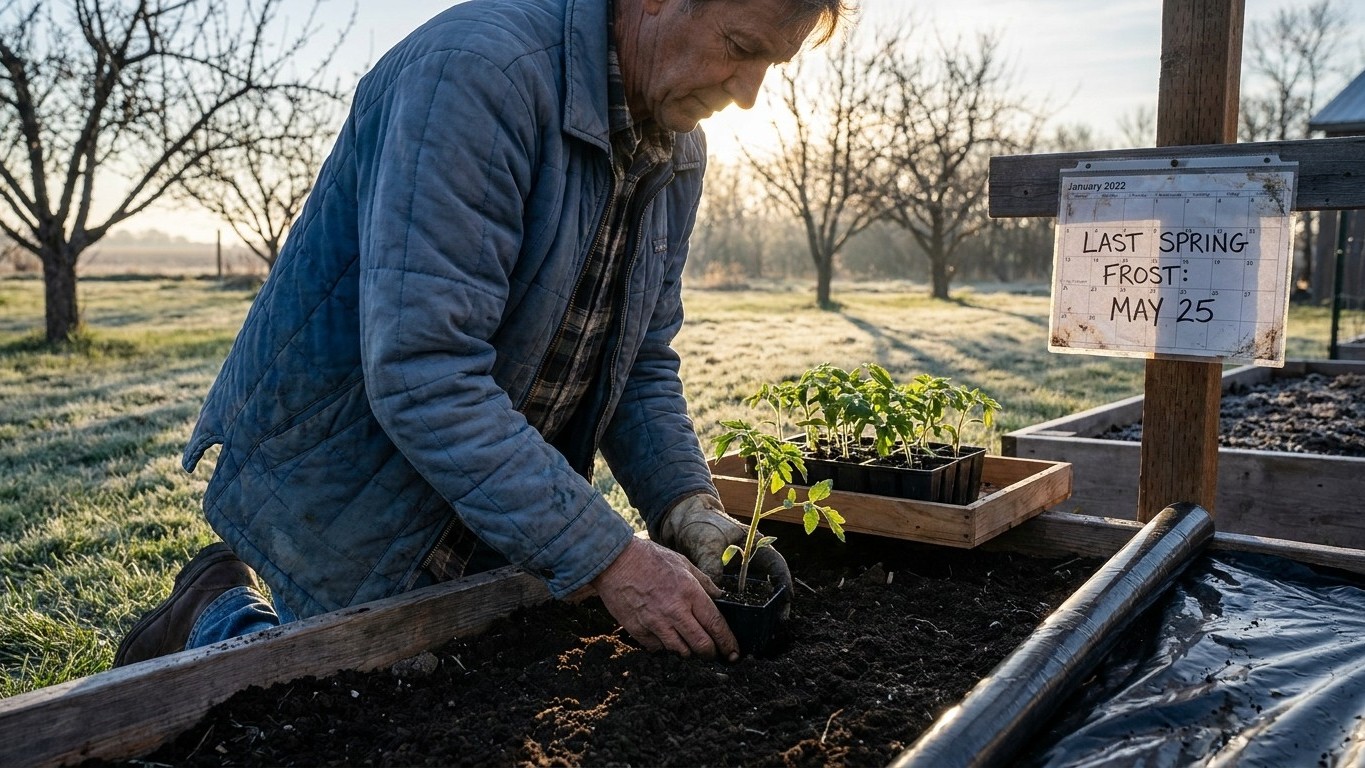

North Dakota gardeners work with one of the shortest frost-free windows in the Lower 48, sandwiched between a late spring thaw and an early fall freeze. The USDA places most of the state in zones 3a to 4b, which tells you plenty about what survives the winter and almost nothing about what you can grow in July. Here’s what the season actually permits, and where the averages stop being useful.
How long your season really is

Three numbers define what’s possible in a North Dakota garden, and none of them come from guesswork. The USDA Plant Hardiness Zone Map, built on 1991-2020 normals, places the state at 3a to 4b. The average last spring frost at the reference station falls between May 4 and May 15. The average first fall frost lands between September 25 and October 5.
| Measure | Value |
|---|---|
| USDA Hardiness Zone | 3a to 4b |
| Average last spring frost | May 4 to May 15 |
| Average first fall frost | September 25 to October 5 |
Subtract one from the other and you get the number that actually runs the show: a frost-free window that stretches, at best, from mid-May to late September. Call it four and a half months, if you’re lucky. That’s the entire growing season, and it rules out plenty before you’ve picked a single seed packet. Long-season crops that need 90, 100, or 120 frost-free days to mature, think many watermelon varieties, some pumpkin cultivars, or the slower heirloom tomatoes, are a gamble here, not a plan, which is why Growing Pumpkins in North Dakota requires picking the right variety and timing to fit within this narrow window. Shorter-season staples fare much better within this window, which is why Growing Potatoes in North Dakota remains one of the more reliable choices for gardeners working with these tight frost dates. The same logic applies to Growing Sweet Corn in North Dakota, where selecting early-maturing varieties makes the difference between a harvest and a frost-killed stand. Cold-hardy root vegetables also earn their keep here, and Growing Parsnips in North Dakota shows how a crop that actually improves after a fall frost can turn this short window into an advantage rather than a limitation. The same resilience shows up in Growing Beets in North Dakota, another, while perennial crops offer a different kind of advantage: Growing Asparagus in North Dakota means investing in a bed that, once established, returns year after year without needing to fit its full lifecycle inside a single short season cold-tolerant crop that thrives despite the short window, much like Growing Spinach in North Dakota, which takes advantage of cool spring and fall temperatures on both ends of the season. cold-hardy root crop, and Growing Carrots in North Dakota follows a similar pattern, with sweetness that only deepens once the fall chill sets in root crop that tolerates the state’s cool soil and short season without much fuss. The same tight math applies to Growing Peppers in North Dakota, where heat-loving plants need every warm day they can get before frost cuts the season short. Knowing When to Carve a Pumpkin in North Dakota starts with understanding just how tight this window really is for a crop that needs every one of those frost-free days. You can push them with black plastic mulch, row covers, or a head start indoors, but the calendar itself isn’t on your side.
Averages are not promises
Here’s the part that catches people off guard: these are averages, not safe dates. By definition, half of all years run colder or later than the number suggests. A “May 4 to May 15” last frost date means some years you’ll get a frost on May 20, or even later. Planting tender transplants the week the average says is clear is a bet you’ll win most years and lose badly in others. Gardeners who’ve been burned once tend to build in a buffer, waiting a week past the average before setting out anything that can’t handle a freeze.
There’s also a real gap between what the reference station measures and what happens in your actual yard. Airport weather stations, which is where most of this data comes from, tend to run warmer than surrounding rural and suburban ground. Low spots, open fields, and areas away from pavement or buildings often see frost arrive a week or two earlier in fall and linger a week or two later in spring. If your garden sits in a low corner of the yard, treat these dates as optimistic.
What the summer does to a garden here
Heat sounds like a good thing until you’re watching tomato blossoms drop off the vine. At the reference station near Fargo, the average is 11.7 days a year with highs of 90F or above, a modest number by national standards, but a meaningful one for certain crops. Once temperatures push past roughly 90F, tomato flowers commonly fail to set fruit at all. The plant keeps blooming, but nothing follows. Lettuce and spinach, meanwhile, bolt and turn bitter under that same heat, and cool-season crops like peas or broccoli simply stop being viable once the thermometer climbs that high through the day.
That combination, a short frost-free window bookended by cold, with a modest but real heat spike in the middle, shapes the whole structure of the growing year here. This isn’t a place with one long, gentle season where everything grows continuously from May to September. It’s closer to two overlapping windows: an early stretch good for cool-season crops before the heat arrives, and a second stretch in late summer and early fall once temperatures ease back down, with a tighter middle window for heat-tolerant crops in between.
The other number worth knowing is the mean daily minimum of the coldest month, which sits at 0.2F. That’s not the record low, and it’s not a single cold snap, it’s the average nightly low across the coldest month of the year. That figure is what actually determines whether a perennial, shrub, or fruit tree survives the winter here at all, regardless of how it performs during the growing season. A plant can thrive all summer and still die in January if it isn’t rated for that kind of cold.
Put together, these two figures argue for planning the garden in two acts rather than one continuous run: cool-season crops timed to beat the heat, heat-tolerant crops timed to the shoulder in between, and hardy perennials chosen specifically for that 0.2F winter minimum rather than for how pretty they looked in a catalog photographed somewhere in Zone 6.
What tends to go wrong in North Dakota
NDSU Extension doesn’t publish one master pest list, it publishes a dedicated fact sheet per species, which is itself a useful signal: these are the problems common enough to warrant their own page. Four or five names come up again and again in home gardens and yards across the state, each with its own timing and its own kind of damage.
- Colorado potato beetle: shows up early in the season, right as potato and eggplant foliage emerges, stripping leaves down to the stems if left unchecked.
- Corn earworm: arrives mid to late summer, boring into developing ears of sweet corn from the tip down, often undetected until harvest.
- Apple maggot fly: active in summer as apples size up, laying eggs that tunnel through the fruit and leave it unmarketable even when the outside looks fine.
- Boxelder bug: a late-summer and fall nuisance around boxelder, maple, and ash trees, more a home-invasion headache once cool weather sends them looking for shelter than a plant-killer.
- Emerald ash borer: a slower, multi-year threat to ash trees, with damage building over several seasons rather than appearing overnight.
Yellowheaded spruce sawfly rounds out the list for anyone growing spruce, showing up in late spring and early summer to defoliate needles fast enough to surprise homeowners who’ve never dealt with it before. None of these six come with a one-size-fits-all treatment schedule worth repeating here, timing and method depend on how established the pest is on your property and what NDSU’s current guidance says that season. If something’s chewing on your plants that isn’t on this list, that’s exactly the kind of question your county extension office is built to answer.
Where to check before you plant
Everything above is a state-level starting point, not a substitute for local knowledge. North Dakota spans several degrees of latitude, and a hardiness range of 3a to 4b within one state means conditions at one edge can look meaningfully different from the other. A planting calendar built around the reference station’s frost dates can run two or three weeks off for a garden near the Canadian border or in a low-lying river valley elsewhere in the state.
NDSU Extension is the land-grant service for the state, and it’s the right first stop for anything specific to your crop, your pest, or your soil. Beyond the statewide site, every county runs its own extension office, and that’s where the frost dates, planting windows, and pest pressure get adjusted for your actual location rather than an airport thirty or a hundred miles away. A five-minute call or a look at your county’s page can catch the gap between what a statewide average suggests and what your yard has actually done in past years.
Where to Go Next
The freeze dates and cold snaps above play out differently depending on what you’re actually trying to grow, so it helps to look at the specifics. If garlic is on your list, planting dates, varieties and winter cold for garlic walks through why that hard, early fall freeze — NOAA puts it at the Fargo airport between September 25 and October 5 — matters so much for timing your cloves in the ground. For the lawn itself, what to plant and when to feed it starts from that same brutal number, a 0.1-degree average daily low in the coldest month, and explains why warm-season grasses like Bermuda and zoysia are off the table here. And if tomatoes are the goal, planting dates, varieties and local pests for tomatoes pushes back on the tidy May 4 to May 15 window, since that range belongs to the Fargo airport station alone — plant in town, in a low spot, or north and west of the city, and frost can linger a week or more past that. Each page takes the same cold-driven logic from this guide and applies it to the crop or yard job at hand.