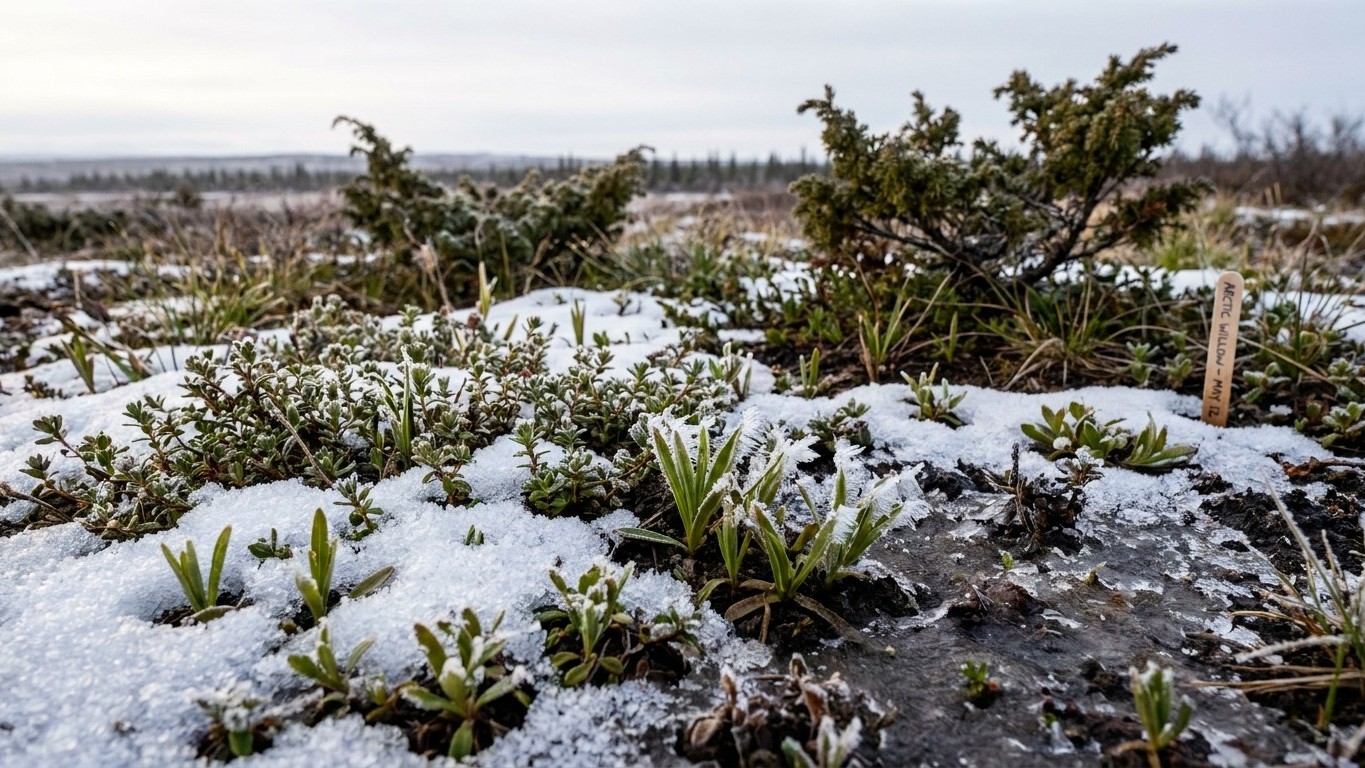

Gardening in the Northwest Territories comes down to one brutal math problem: a frost-free window of roughly 116 days, bookended by a Canadian hardiness zone that ranks among the coldest in the country. Everything else, from what you plant to when you harvest it, follows from that number.
How long your season really is

Start with the numbers as Environment and Climate Change Canada records them at the Yellowknife A station. The average last spring frost falls on May 25. The average first fall frost falls on September 18. In between sits a growing season of about 116 days, and the plant hardiness zone for the reference city is 1b under the Canadian system.
| Metric | Value |
|---|---|
| Hardiness zone (Canadian system) | 1b |
| Average last spring frost | May 25 |
| Average first fall frost | September 18 |
That zone number needs a warning label. 1b is a Canadian hardiness zone, built from seven climate variables including winter minimums, snow cover, and wind exposure. It is not a USDA zone, and there is no clean conversion between the two systems. Natural Resources Canada itself has published comparisons showing a single Canadian zone can overlap nine different USDA zones. If you’re cross-referencing a plant tag stamped with a USDA number, set it aside here. It won’t tell you anything reliable.
The frost dates deserve the same caution. These are averages pulled from the 1981-2010 climate normals, not guarantees. By definition, in half of all years the last spring frost lands after May 25, and in half of all years the first fall frost arrives before September 18. Some years hand you a longer season. Others cut it down to nothing. Treating May 25 as a safe planting date is how a tray of seedlings ends up blackened overnight.
What does 116 days rule out? Anything bred for a long, slow finish. Full-season winter squash, late tomato varieties, and Growing Pumpkins in Northwest Territories meant for October harvest are not realistic outdoor plans in most years here. Even Growing Sweet Corn in Northwest Territories demands careful variety selection to fit inside that window. That’s not pessimism, it’s arithmetic: a 100-day tomato variety needs 100 days of growing weather just to reach the point where frost can still take the fruit before it ripens. By contrast, short-season staples and hardy perennials fare far better, which is why Growing Potatoes in Northwest Territories remains one of the most reliable choices for a 116-day window, alongside Growing Carrots in Northwest Territories and Growing Asparagus in Northwest Territories, whose established crowns skip the race against frost entirely and Growing Spinach in Northwest Territories, another cool-season root crop that fits comfortably inside the same window, and Growing Beets in Northwest Territories, and Growing Parsnips in Northwest Territories follows the same logic, tolerating the cold and even sweetening after a frost. Heat-loving crops need the same scrutiny, which is why Growing Peppers in Northwest Territories requires transplants and season-extension tricks rather than a direct-seeded outdoor plan. In fact, knowing When to Carve a Pumpkin in Northwest Territories starts with understanding whether your pumpkins will even ripen before that first fall frost. Add the fact that Yellowknife sits on the YELLOWKNIFE A station’s normals, and any garden further north or at higher elevation should expect an even tighter window, not a wider one.
The gardeners who do well here lean on short-season varieties, started indoors and transplanted the moment the soil allows it, with row cover or cold frames standing by for the nights that don’t cooperate.
What the summer does to a garden here
Heat stress is simply not part of the equation. The reference station records 0.0 days a year above 90F. Compare that to states where tomatoes stop setting fruit and lettuce bolts the moment temperatures cross that threshold in July, and you start to see what’s different about growing here: there’s no midsummer crash to plan around.
That absence of heat cuts both ways. On one hand, cool-season crops like lettuce, spinach, and peas don’t face the usual midsummer shutdown that forces gardeners further south into a spring crop and a separate fall crop with a dead zone in between. Here, the growing season behaves more like one continuous stretch rather than two shoulder seasons bookending a heat wall.
On the other hand, heat-loving crops never get the push they need. Tomatoes, peppers, and melons rely on warm days to trigger flowering and fruit set, and without any days reaching 90F, they’re working with a much narrower margin even during the height of summer. This is where the coldest winter figure matters too: a mean daily minimum of -21.1F in the coldest month means nothing tender survives outdoors past the growing season, and it also signals just how far this climate sits from anything resembling heat stress.
The practical upshot: plan for one uninterrupted growing window rather than two separate pushes, lean into crops that don’t need real heat to perform, and treat any heat-loving variety as something to baby along under plastic or in a warm microclimate against a south-facing wall, not something to plant and expect a normal harvest from.
What tends to go wrong in Northwest Territories
No territorial extension service publishes its own home-garden pest list, so the closest documented reference comes from the University of Alaska Fairbanks Cooperative Extension, covering a neighboring climate with real biological overlap. The insects themselves don’t respect the border. The calendar they follow might shift by a few weeks. Treat the list as a starting point for identification, not a treatment schedule, and confirm anything you find with a territorial office before acting.
- Aphids, appearing as soon as new growth emerges in late spring and building through early summer, leave curled, sticky leaves and stunted shoots.
- Cutworms, active right after transplanting in late spring, sever young seedlings at the soil line overnight.
- Root maggots, showing up as soil warms in early summer, tunnel into roots of brassicas and onions, causing wilting that looks like drought stress.
- Slugs, most active during cool, damp stretches in early summer and again in early fall, chew ragged holes in leafy greens and seedlings.
- Spruce beetle, active through summer in surrounding forested areas, attacks stressed spruce trees rather than garden vegetables, but matters for anyone gardening near a treeline.
Four of these five hit hardest in the same narrow window: the weeks right after the average last spring frost, when seedlings are at their most vulnerable and the season is already too short to lose time replanting. Never claim a pest is absent from a given area based on this list. Confirm identification with a territorial agriculture office before treating anything.
Where to check before you plant
The Northwest Territories spans a huge range of latitude, and the figures above come from a single reference station in Yellowknife. A planting calendar built around that station can run weeks off for a community further north or at a different elevation, and there’s no way around that other than checking locally.
The Government of the Northwest Territories runs its agriculture services through the Department of Industry, Tourism and Investment. That’s the right first stop for anything specific to your community: local frost patterns, soil conditions, and pest reports that a territory-wide average simply can’t capture.
A gardener in one part of the territory might be transplanting two weeks before someone else just a short drive away, and the only way to know which side of that line you’re on is to ask the people tracking conditions where you actually live.
What to Grow, and How to Care for It
Once you’ve got a handle on the frost dates and the short window you’re working with, the next question is what actually earns a spot in the garden. Garlic is one of the easier yes-answers: the territory’s long, dark winter gives it more chilling than it needs to split into cloves, and growing garlic in Northwest Territories covers the planting dates and varieties that make sense here. If it’s the lawn you’re worried about rather than the vegetable beds, cool-season grass is really the only option, and Northwest Territories lawn care lays out what to plant and when to feed it given how few hot days the territory actually gets. And for anyone determined to grow something that feels like summer, growing tomatoes in Northwest Territories walks through the planting dates and varieties that leave you enough time to ripen a crop before frost shuts things down again. Between the three, you’ve got the cold-season staple, the ground underfoot, and the one warm-season fruit worth the gamble.