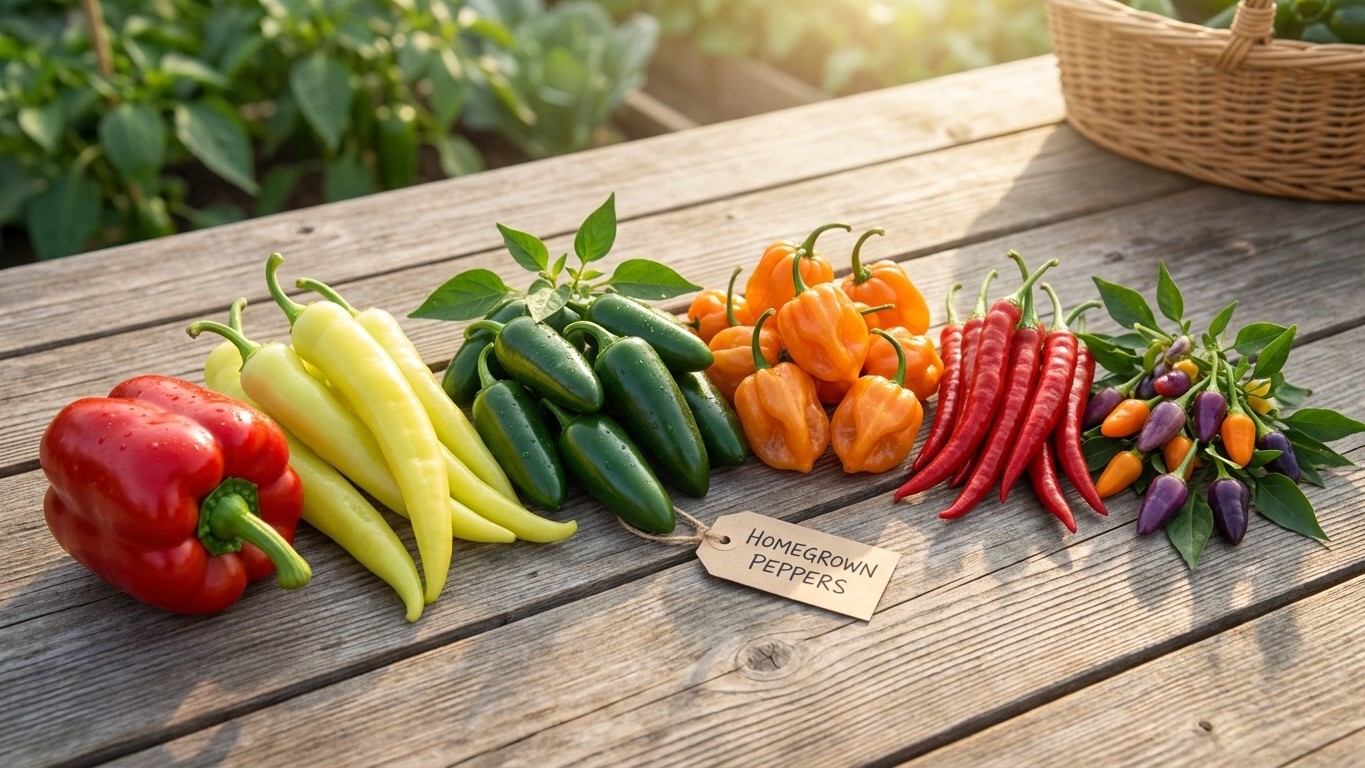

The fastest way to choose a pepper for your garden isn’t to scroll through catalog names, it’s to pick the type first. Bell, banana, jalapeno, habanero, cayenne, the mild and meaty Poblano Pepper, and the broader category of hot peppers, like the Serrano Pepper or the strikingly ornamental Black Pearl Pepper, each answer a different need: sweet stuffing peppers versus pickling peppers versus peppers meant to bring real heat. Once you know which type fits your kitchen, the cultivar name becomes a detail, not a decision.
Six Types, One Decision Before the Name
Clemson Cooperative Extension groups the pepper cultivars it recommends to home gardeners into six types, and that grouping does more work than any variety name ever will. Bell peppers are the thick-walled, sweet peppers built for stuffing, roasting, and eating raw off a relish tray, with cultivars like the Plato Pepper bred for that classic sweet, stuffing-ready shape, the vibrant Sweet orange Pepper for gardeners after that same sweetness in a different color, the Sweet Sunset Pepper for those wanting yet another vibrant hue on that same sweet, stuffing-ready plant, the Valencia Pepper for a similarly sunny-colored, sweet bell option, the Antebellum Pepper for gardeners wanting that same reliable, sweet bell shape from a classic Southern heirloom-style cultivar, or the Biscayne Pepper for a disease-resistant bell bred to hold that same classic sweet, stuffing-ready shape. Banana peppers are the mild, elongated, waxy-skinned peppers people pickle whole or slice onto sandwiches, with cultivars like the Sweet Banana Pepper bred to deliver that classic mild, waxy-skinned profile, or the Cubanelle Pepper for gardeners after that same mild sweetness in a classic frying pepper shape. Jalapeno peppers are the everyday hot pepper, sturdy enough for salsa, poppers, and pickling, with enough heat to notice without overwhelming a dish, and cultivars like the Early Jalapeno Pepper are bred to deliver that reliable heat even in shorter growing seasons, while the Jalapeno M Pepper offers gardeners a disease-resistant take on that same classic profile. The Habanero Pepper sits near the top of the heat range most home gardeners grow, lantern-shaped and fruity underneath the burn, with cultivars like the Hot Returns Pepper representing that fiery, fruity profile, the Caribbean favorite Scotch Bonnet Pepper offering that same lantern shape with its own distinct swe, and the aptly named Fooled You Pepper giving gardeners that same habanero look without the intense heatetness, while gardeners chasing even more extreme heat often turn to the record-setting Carolina Reaper Pepper. Cayenne peppers are the long, thin, drying peppers destined for grinding into powder or hanging in strings on a porch, with cultivars like the Super Cayenne II Pepper bred for that same reliable drying and grinding quality, and other cultivars like the Charleston Hot Pepper bred specifically for that drying and grinding use, the classic Long Slim Cayenne Pepper that defines the type’s signature slender shape, the striking Buena Mulata Pepper known for its color-shifting pods as it ripens, the early-maturing Carolina Cayenne Pepper for gardeners wanting that same classic heat sooner in the season, or the disease-resistant Capistrano Pepper for gardeners after that same slender cayenne shape with added garden resilienceieties/super-cayenne-ii/”>Super Cayenne II Pepper for those after a higher-yielding, disease-resistant take on the type. And other hot peppers covers everything that doesn’t fit neatly into the first five groups, a catch-all for gardeners chasing a specific shape or heat those categories don’t quite capture, with cultivars like the Mitla Pepper offering exactly that kind of distinctive option outside the standard types.ries don’t cover, like the ornamental, fiery Basket of Fire Pepper, the oddly shaped, hard-to-classify Mad Hatter Pepper, or the blistering, superhot Ghost Pepper Pepper for gardeners chasing heat well beyond the habanero range.
None of that ranking depends on a cultivar name. A gardener who wants a stuffing pepper can skip every jalapeno cultivar on the list without reading a single description. A gardener chasing pickling peppers can ignore the habaneros entirely. The type answers “what do I want this pepper to do,” and the cultivar name only answers “which exact plant gets me there.” Skipping that first sort is how gardeners end up with six packets of hot pepper seeds and no bell pepper for the stuffed pepper recipe they’d actually planned to cook.
Recommended Cultivars by Type
This list is not a seed catalogue’s assortment. It’s the set of cultivars Clemson Cooperative Extension recommends to home gardeners within each type, plus a further group North Carolina State University Extension describes without sorting into a type category at all. No days-to-maturity and no heat rating appear below on purpose: only two cultivars in this whole silo have a heat figure published by these two extension services, and printing blanks next to the rest would only invite guesswork.
By type
- Bell: California Wonder, Big Bertha, Purple Beauty, Golden California Wonder, Jupiter Pepper
- Banana: Sweet Banana, Hungarian Wax, Banana Supreme Pepper
- Jalapeno: Jalapeno M, Mucho Nacho, Purple Jalapeno
- Habanero: Habanero Orange, Red Savina Habanero
- Cayenne: Long Red Cayenne
- Other hot peppers: Serrano, Poblano, Thai Hot, Cherry Bomb, Carolina Reaper
Described without a type
North Carolina State University Extension describes fourteen additional cultivars without placing them in one of those six groups: Ancho, Fresno, Scotch Bonnet, Ghost Pepper, Shishito, Pimiento, Cubanelle, Pepperoncini, Tabasco, Datil, Fish Pepper, Peter Pepper, NuMex Big Jim, and Corno di Toro. Three more cultivars in the same source, Black Pearl, Chilly Chili, and Purple Flash, are ornamental peppers grown for foliage and fruit color rather than for the table, and none of them belong on a grocery or cooking list.
Why No List Can Promise a Heat Level
North Carolina State University Extension puts it plainly: pepper fruits are edible, “but spiciness is unpredictable in intensity.” That sentence is the reason this page won’t hand you a heat chart running down every cultivar above. Only two figures in this pepper silo carry a published number from a university extension source: the Carolina Reaper averages 1.64 million Scoville units, and jalapenos run 2,500 to 8,000. Every other cultivar on this list, from Big Bertha down to Fish Pepper, has no comparable figure behind it, and inventing one anyway would turn a guess into something that reads like measurement.
Weather does more to a pepper’s bite than the seed packet does. The same jalapeno plant grown through a hot, dry stretch tends to run hotter than one grown in a cooler, wetter season, because heat compounds build up under stress rather than on a fixed schedule. Soil, watering habits, even which side of the plant caught more sun can shift the burn from one fruit to the next on the same bush. Add to that the fact that seed suppliers don’t all sell identical genetics under the same cultivar name, and the gap between “jalapeno” on one packet and “jalapeno” on another can be real.
That unpredictability is also why the ornamental cultivars mentioned above, Black Pearl, Chilly Chili, and Purple Flash, don’t belong anywhere near a shopping list for the kitchen. They’re bred and sold for the color of their foliage and fruit, not for flavor or safety on a plate, and they sit outside the edible groupings this page covers.
Common questions
What’s the difference between a pepper type and a pepper variety?
Type is the category, bell, banana, jalapeno, habanero, cayenne, or other hot peppers, and it tells you the shape, thickness, and general heat range to expect. Variety, or cultivar, is the specific named plant within that type, like California Wonder within the bell type.
Which pepper type is best for beginners?
Bell and banana types tend to be the most forgiving for new gardeners, since both are widely adapted and productive without demanding the longer, warmer season some hot pepper types need to fully ripen.
Are all pepper plants sold at garden centers edible?
No. A handful of cultivars, including Black Pearl, Chilly Chili, and Purple Flash, are sold as ornamental plants for their foliage and fruit color and aren’t grown for eating.
Why don’t extension services publish a Scoville number for every cultivar?
Because heat varies by plant, season, and growing conditions even within the same cultivar. NC State Extension describes this variation as unpredictable, which is why only the Carolina Reaper and jalapeno carry a published figure among the cultivars covered here.