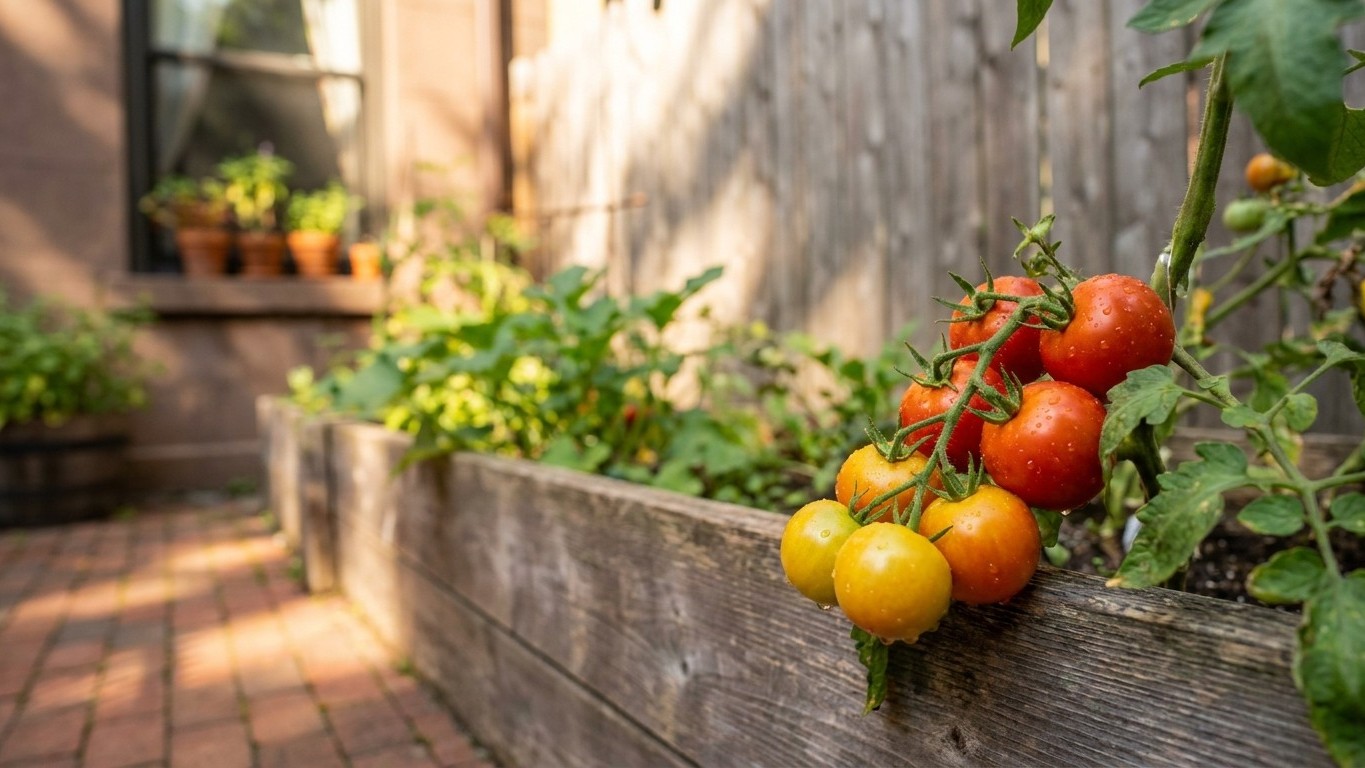

Central Park’s last spring freeze lands between March 23 and April 3 — a tidy window that gets quoted as if it applies statewide. It doesn’t. That date comes from a warm, paved corner of Manhattan, and while Long Island’s coast tends to follow along, the Hudson Valley, the Southern Tier and the Adirondacks push their last frost a month or more later, then bring fall’s first frost back around just as early. Treat that city date as a reference, not your calendar.
When to plant Tomatoes in New York

NOAA’s National Centers for Environmental Information calculate the Central Park last spring freeze at March 23 to April 3, based on the 1991-2020 climate normals and the 30 to 70 percent probability band for a 32°F freeze. That’s a New York City figure, taken at a warm, dense urban site. Long Island’s coastal towns often track close to it, but the Hudson Valley, the Southern Tier and especially the Adirondacks see their last frost run considerably later in spring, sometimes by a month or more, and their first fall frost arrives that much earlier. If you garden outside the five boroughs, treat the Central Park window as a starting reference point, not your planting date. The state runs from Long Island’s mild shoreline to short-summer mountain valleys, and our New York guides break down more of that regional variation crop by crop.
Starting seed indoors
Tomatoes need six to eight weeks of growth indoors before they’re ready to go into the garden as transplants. Counting back six to eight weeks from a Central Park transplant window that opens in early April puts indoor seed-starting at roughly early to mid-February for New York City gardeners, and later still for anyone transplanting after a later, upstate last-frost date. Sow seed a quarter inch deep in seed-starting mix, keep it around room temperature until it germinates, and move seedlings under strong light the moment they emerge so they don’t stretch into thin, leggy stems.
Hardening off and transplanting outside
Tomatoes are among the most frost-sensitive plants in the vegetable garden, so most growers wait a week or two past their local last-frost date before setting transplants outside, giving the soil extra time to warm and building in a margin against a late cold snap. For Central Park’s March 23 to April 3 window, that puts safe transplanting roughly from the first week of April into the third week of April, with some gardeners waiting toward the end of that stretch for extra insurance. Harden off transplants over seven to ten days before they go in the ground: set them outside in a sheltered, shaded spot for an hour or two the first day, and increase both sun and time outdoors gradually so the leaves don’t scorch or the stems don’t snap in wind they haven’t felt before.
Soil and site preparation
Tomatoes want a spot that gets full sun for most of the day, at least six hours and ideally more, plus soil that drains well enough that it never sits wet after a hard rain. Heavy clay is common in parts of New York and holds water and cold longer into spring than a loam does, which slows root growth and invites disease. If your soil stays soggy or takes days to dry after rain, a raised bed filled with a blended garden soil will warm faster in spring and drain better all season.
Work compost or well-rotted manure into the bed a few weeks before transplanting rather than the same day, so it has time to start breaking down and feeding the soil biology instead of sitting as a raw amendment around tender new roots. Turn or fork the bed only when the soil crumbles in your hand rather than sticking together in a ball. Working wet clay in early spring compacts it into hard clods that take the rest of the season to break up.
Space indeterminate varieties 24 to 36 inches apart in rows 3 to 4 feet apart to leave room for staking and airflow. Determinate varieties can go a bit tighter since they stay more compact, but crowding any tomato plant cuts down the air movement that keeps foliage dry and disease pressure lower through a humid New York summer.
Varieties that suit New York
The trait that matters most for a New York planting date is days to maturity counted from transplant, because it tells you how much of the frost-free season a variety actually needs. The trait that matters second most is disease resistance, since humid Northeast summers push the same foliar diseases that growers deal with just south in Pennsylvania’s tomato patches: early blight, late blight, and the wilts that live in the soil for years once established.
Short and mid-season varieties for a shorter window
For upstate gardens or anyone transplanting later than the Central Park window, shorter-season cultivars leave more room for error. Sun Gold, an indeterminate cherry tomato at 57 days from transplant, carries high resistance to Tobacco Mosaic Virus and Fusarium Wilt race 1. Sakura, at 55 days, is the fastest on this list and adds intermediate nematode resistance along with high resistance to Tomato Mosaic Virus and both Fusarium races 1 and 2. Jasper, at 60 days, stands out for carrying high resistance to late blight along with intermediate resistance to early blight, two diseases that do real damage in a wet New York August. Juliet and Supersweet 100, both around 60 days, round out the group with Late Blight and Early Blight resistance on Juliet and Verticillium and Fusarium resistance on Supersweet 100.
Longer-season slicers and paste tomatoes
Central Park’s growing season is long enough to carry even an 85-day paste tomato like Amish Paste to maturity, but that calculation assumes an on-time transplant and a warm summer. Cherokee Purple and Brandywine, both prized heirlooms at 72 and 78 days respectively, carry no listed disease resistance, so they do best in a sheltered, well-drained spot with good airflow rather than a shady or crowded corner. For a more disease-resistant slicer at a similar maturity, Celebrity Plus (78 days, determinate) and Big Beef Plus (72 days, indeterminate) both carry intermediate nematode resistance plus high resistance to Gray Leaf Spot and Tomato Mosaic Virus. For sauce and paste, San Marzano II (78 days) has no listed resistance, while Amalfi (68 days, determinate), Tiren (75 days) and Granadero (75 days) each bring at least one high-resistance trait against Verticillium Wilt, Tomato Mosaic Virus or early and late blight.
| Variety | Days from transplant | Habit | Notable resistance |
|---|---|---|---|
| Sakura | 55 | Indeterminate | Nematodes, Tomato Mosaic Virus, Fusarium 1 & 2 |
| Sun Gold | 57 | Indeterminate | Tobacco Mosaic Virus, Fusarium 1 |
| Jasper | 60 | Indeterminate | Late Blight (high), Early Blight |
| Juliet | 60 | Indeterminate | Late Blight, Early Blight |
| Amalfi | 68 | Determinate | Nematodes, Late Blight, Early Blight |
| Big Beef Plus | 72 | Indeterminate | Nematodes, Gray Leaf Spot, Tomato Mosaic Virus |
| Tiren | 75 | Indeterminate | Verticillium Wilt, Tomato Mosaic Virus, Fusarium 1 |
| Amish Paste | 85 | Indeterminate | None listed |
What to plant alongside
Basil is the classic tomato neighbor, and while the folklore claim that it improves tomato flavor doesn’t hold up, it does share the same water and heat preferences, fills bare soil between plants, and gives you a second harvest from the same bed. Marigolds have real research behind them, but the effect is on root-knot nematodes suppressed by tilling marigold roots into soil over a season, not a quick fix from a few marigolds tucked between transplants. Borage and other flowering herbs draw in bees and other pollinators that help fruit set, which matters more than most gardeners realize since tomato flowers are self-fertile but still benefit from the vibration a visiting bee provides.
Keep tomatoes away from potatoes, since both are nightshades that host the same late blight spores and the same Colorado potato beetle, and a blight outbreak in one bed spreads fast into the other. Corn is worth separating too. The tomato fruitworm and the corn earworm are the same insect, so planting them side by side gives the pest a continuous buffet instead of forcing it to travel. Fennel is best grown in its own bed entirely. It releases compounds into the soil that measurably slow the growth of many neighboring plants, tomatoes included. Dill is a mixed case: young dill can draw in predatory wasps that help control hornworms, but let it flower and go to seed near tomatoes and it starts competing hard for the same resources.
Watering, feeding and support
Watering
Tomatoes want deep, even moisture, roughly an inch or two of water a week including rainfall, delivered at the soil rather than over the leaves. New York’s humid summers keep foliage wet far longer after a watering or a rain than it would stay in a drier climate like the one tomato growers deal with in California’s Central Valley, and wet leaves are exactly what early blight and late blight spores need to establish. A soaker hose or drip line at the base of the plant, run in the morning so any splashed leaves dry by afternoon, does more to prevent disease than any spray.
Mulching and feeding
Mulch with straw or shredded leaves once the soil has warmed, two to three inches deep, to hold moisture evenly and stop rain from splashing soil-borne fungal spores up onto the lower leaves. Mix compost into the planting hole at transplant time, then hold off on nitrogen-heavy fertilizer once flowering starts. Too much nitrogen mid-season buys you a jungle of leaves and very little fruit. A side dressing of a balanced or slightly phosphorus-and-potassium-leaning fertilizer when the first fruit clusters set works better than repeated all-purpose feeding.
Staking and pruning
Indeterminate varieties, which keep growing and setting fruit until frost, need a stake, cage, or a Florida weave strong enough to hold a heavy, sprawling plant through a summer storm. Determinate varieties stop growing at a set height and set most of their fruit at once, so a standard cage without much pruning is usually enough. On indeterminates, pinching out the suckers that form in the joint between the main stem and a leaf branch, especially below the first flower cluster, keeps the plant from turning into a tangled mass that traps humidity and slows ripening.
Common problems

Blossom end rot
This shows up as a sunken, leathery, dark patch on the bottom of otherwise healthy-looking fruit. It comes from inconsistent watering interrupting how the plant moves calcium into developing fruit, not usually from a lack of calcium in the soil itself. Even, regular watering fixes it far more often than a calcium spray does.
Cracking
Concentric or radial splits on ripening fruit happen when a dry stretch is followed by a heavy rain or deep watering, and the fruit’s interior swells faster than its skin can stretch. Mulching to even out soil moisture between waterings reduces how often this happens.
Leaf curl
Upward-curling, leathery but still green leaves are usually just a physiological response to heat and inconsistent watering, and the plant keeps growing and fruiting normally. Pale, twisted, narrow new growth is a different problem entirely, usually herbicide drift from a nearby lawn treatment, and there’s no fixing fruit already affected.
Fusarium and verticillium wilt
Yellowing that starts on the lower leaves, often worse on one side of the plant, followed by wilting that doesn’t recover overnight, points to one of these soil-borne wilts. A brown streak inside a cut stem confirms it. Once a bed is infected, the fungus persists in soil for years, which is exactly why cultivars bred with Fusarium or Verticillium resistance, several of them named above, are worth choosing for that spot going forward.
Poor fruit set
Healthy flowers that dry up and drop without forming fruit are usually reacting to stress, most often extended heat, drought stress, or a heavy, humid stretch that keeps pollen from releasing properly. There’s little to do beyond keeping the plant evenly watered and waiting for a cooler run of weather to bring blossoms back into production.
Hornworms, aphids and whiteflies
Tomato hornworms are large enough to strip a branch of leaves in a day or two but are surprisingly hard to spot against the stem until the damage shows up. Hand-picking them off in the early morning works well on a small planting. Aphids cluster on new growth and the undersides of leaves and are usually knocked back with a strong jet of water or insecticidal soap. Whiteflies scatter in a small cloud when a leaf is disturbed and are harder to control once established, so catching them early with sticky traps or soap sprays matters more than treating a heavy infestation later.
Pests that actually show up in New York
New York State’s vegetable garden pest list runs to ten species, but most of them never touch a tomato plant. Only two on that list do real damage to tomatoes: Colorado potato beetle and fourlined plant bug. The rest, squash vine borer and striped cucumber beetle on squash and cucumbers, cabbage maggot and imported cabbageworm on brassicas, onion maggot on alliums, asparagus beetles on asparagus, viburnum leaf beetle on the ornamental shrub, and apple maggot on tree fruit, belong to other corners of the garden. If you grow squash or brassicas alongside your tomatoes, it’s worth knowing those pests are on the same statewide list, tracked by the Cornell University CALS Insect Diagnostic Laboratory.
Colorado potato beetle shows up first as ragged, chewed holes eaten straight through the leaf, not just around the edges, usually on younger plants earlier in the season. Look underneath the leaf for clusters of bright orange-yellow eggs before you see the beetle itself, humped-backed and striped black and yellow. Handpicking adults and squashing egg clusters works well in a home garden because the population rarely gets large enough to need anything more. On a heavier infestation, spinosad is the material most gardeners reach for next.
Fourlined plant bug damage looks like small, sunken, dark spots scattered across the upper leaf surface, almost like a fine rash, appearing in late spring to early summer as the bugs feed and move on. The insect itself is quick and hard to catch in the act, greenish-yellow with four black stripes down its back, but by the time you notice the spotting it has usually already left that leaf. Damage stays cosmetic on established plants and doesn’t call for spraying. Removing garden weeds nearby, where the nymphs build up early in the season, cuts down how many show up on the tomatoes at all.
Apple maggot is worth knowing about even though it leaves tomatoes alone. Cornell’s Insect Diagnostic Laboratory records adult flies emerging from mid-June into early July, peaking mid-to-late July, and active in New York through September, which matters if you’re growing apples in the same yard and need to time traps accordingly.
Harvest and end of season
Pick tomatoes once they’ve reached full color for the variety and give slightly under gentle pressure. Fruit that’s just starting to blush, sometimes called the breaker stage, will finish ripening off the vine with almost no loss of flavor, which is a useful option if raccoons, squirrels or an early cold snap threaten a fully loaded plant. Never refrigerate a tomato you plan to eat fresh. Cold storage breaks down the compounds responsible for flavor and turns the texture mealy. Ripen and store them at room temperature out of direct sun instead, and use them within a few days once fully ripe.
As nights cool in fall, fruit set slows and eventually stops well before the plant itself is killed by frost. Watch your local forecast rather than a calendar date, since the point at which the first fall freeze arrives varies widely across the state and runs considerably earlier upstate than in New York City. When a hard frost is forecast, pick every mature green tomato you can find. Fruit that’s already showing a bit of white or pale color at the blossom end will ripen indoors over the following weeks if kept in a paper bag or a single layer in a box; fruit that’s still hard and fully green is better used for relish or fried green tomatoes than left to ripen. Once the vines are killed by frost, pull them and clear the debris out of the bed, since blight spores and other pathogens overwinter in leftover plant material.
Local help
For county-level planting dates, soil testing, and answers specific to your part of the state, contact Cornell Cooperative Extension, New York’s land-grant university extension service. A local county office can also confirm which diseases and pests have been active in your area recently, information that changes from season to season in a way no single article can keep current.
Where to Go Next
Once you’ve got a feel for growing tomatoes here, the next question is timing — and that comes down to your frost window, not a fixed date on the calendar. The planting calendar for New York walks through counting back from that window, using Central Park’s last spring freeze (March 23 to April 3) and first fall freeze (November 14 to November 27) as the anchor points for when to start seeds and set out transplants.
With dates sorted, variety choice matters just as much, since not every tomato will ripen inside that frost-free stretch. The guide to tomato varieties that ripen in time lays out which ones actually finish within New York City’s roughly seven-month growing season.
And no matter what you plant or when, something will come looking for it. The rundown of tomato pests in New York covers the predictable lineup — cutworms and flea beetles at transplant, Colorado potato beetles and aphids through early summer, hornworms once it’s hot, and stink bugs later on — so you know what to watch for at each stage.
Common questions
Can I still plant tomatoes in June in New York?
Yes, a transplant set out in June still has time to produce a harvest, especially with a fast-maturing variety like Sakura at 55 days or Sun Gold at 57 days from transplant. You’ll get a shorter overall harvest window than an April transplant, but you’ll skip most of the early-season disease pressure that builds up over a wet spring.
Why did my tomato plant flower but never set fruit?
Stress is the usual cause, most often heat, drought, or a stretch of high humidity that keeps pollen from releasing properly inside the flower. Keep the plant evenly watered and mulched, and fruit set typically picks back up once conditions moderate.
Can I grow tomatoes in containers on a balcony?
Yes, determinate varieties like Celebrity Plus or Amalfi do well in large containers since they stay compact and don’t need the sprawling support an indeterminate vine does. Use the biggest pot you can manage, since a small container dries out fast and makes blossom end rot far more likely.
Should I plant tomatoes and peppers in the same bed?
It’s fine for one season, but avoid making a habit of it. Both are nightshades that share several of the same soil-borne diseases, so rotating them through different beds year to year does more good than keeping them apart within a single season.
Is it worth buying disease-resistant seed if I’ve never had a problem before?
It’s a reasonable insurance policy rather than a necessity. Fusarium and verticillium wilt live in soil for years once introduced, and by the time you see the wilting it’s too late to fix that bed for the current season, so resistant cultivars matter most for anyone who’s had a wilt problem in that spot before or who’s planting into soil with an unknown history.