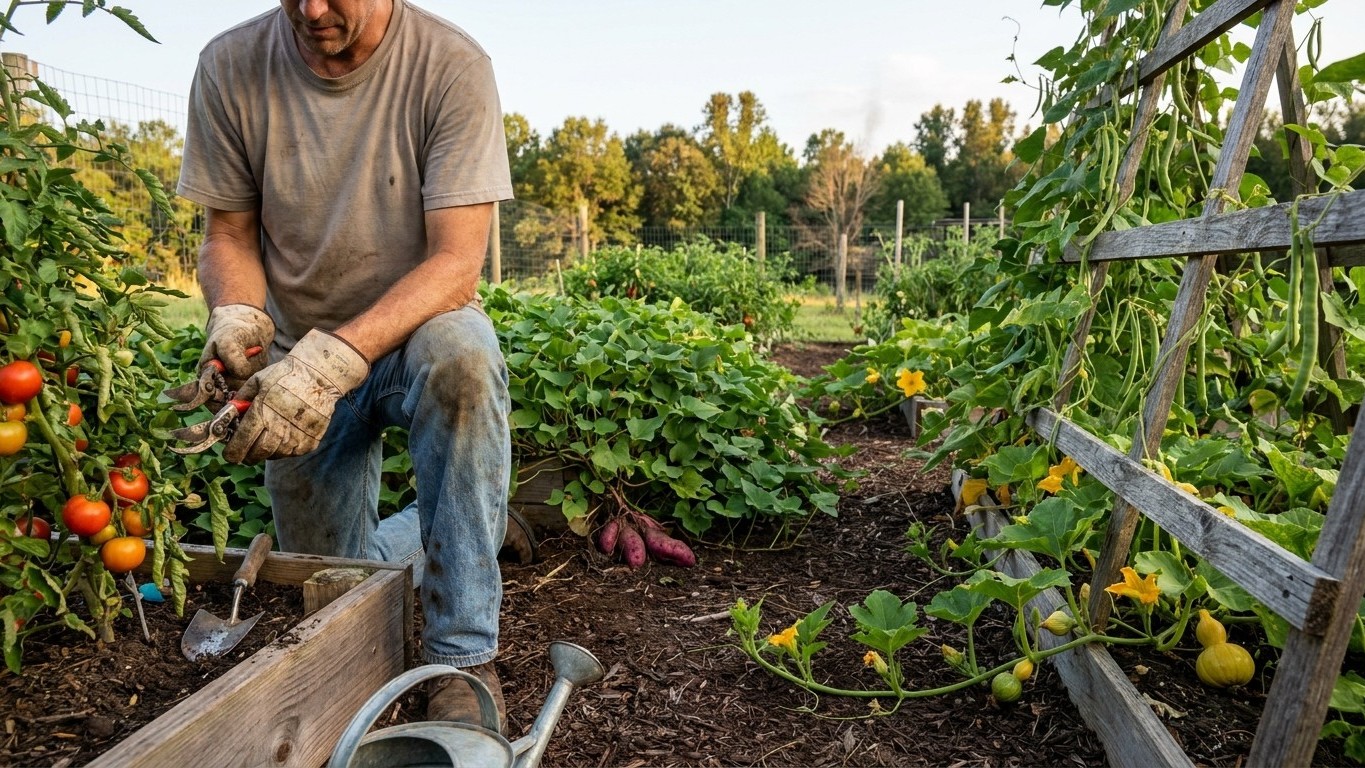

Georgia spans USDA zones 6a to 9b, which means “gardening in Georgia” describes several different growing realities depending on which county you’re in. The state-level averages give you a frame to start from: a frost-free window that runs roughly nine months in Atlanta, a stretch of brutal 90-degree days every summer, and a short list of pests the extension service actually flags for home gardens. Here’s what that frame allows, and where it stops being useful.
How long your season really is

Start with three numbers. The USDA Plant Hardiness Zone Map (2023, built on 1991-2020 normals) puts Georgia somewhere between zone 6a and zone 9b. At the reference station in Atlanta, the average last spring frost falls between March 11 and March 29, and the average first fall frost falls between November 13 and December 1. Put those two ranges together and you get the number that actually matters: a frost-free window of roughly 229 to 265 days, depending on where in each range the real date lands that year.
That’s a long window. Compare it to a northern state where the frost-free season might barely clear 150 days, and Georgia’s growing calendar looks almost generous. A 229-day floor is enough room for quick 55-day crops, the kind of window that makes Growing Carrots in Georgia a straightforward option even for late starts and leaves just as much margin for Growing Beets in Georgia, room too for warm-season staples where the long stretch of heat that shapes Growing Peppers in Georgia works in your favor rather than against you, enough successive plantings and steady heat to make Growing Sweet Corn in Georgia a reliable summer staple rather than a rushed single crop, and for full-season crops that need 100 days or more, sweet potatoes, pumpkins, dry beans, the kind of plant that a shorter-season gardener has to treat as a gamble, along with the two-part timing that Growing Potatoes in Georgia requires. That same long window also leaves plenty of room for slow, cold-tolerant roots, which is why Growing Parsnips in Georgia works even though the crop needs months in the ground and a taste of frost before harvest, and it stretches far enough on both ends to fit two separate rounds of Growing Spinach in Georgia, one in late winter and another once fall cools things back down. Here it’s closer to a plan, as long as you get the timing right at the start and the end, right down to knowing When to Carve a Pumpkin in Georgia once the fall harvest comes in.
The catch sits in the word “average.” NOAA builds these dates from a 30 to 70 percent freeze probability band, not a guarantee. Half of all years, by definition, land on the worse side of that average. A last frost date of March 11 doesn’t mean frost never happens on March 20; it means the odds tilt that way most years, not every year. Treat the early edge of the window as optimistic, not safe, especially for anything you can’t cover overnight if a late cold snap rolls through.
The zone range itself tells the same story from a different angle. Zone 6a and zone 9b aren’t neighbors, they’re a full climate apart. Atlanta sits in the middle of that spread, but north Georgia and the mountains run colder and freeze earlier in fall, while the coastal plain stays milder longer. Any planting date pulled from a statewide average is a starting guess, not a local instruction.
What the summer does to a garden here
Atlanta averages 35.8 days a year at or above 90F. That’s not a footnote, it’s the number that shapes the whole growing year. Heat above roughly 90F isn’t simply “good weather for a garden.” Tomato flowers drop and stop setting fruit once daytime highs push consistently past that mark, especially with warm nights that don’t let the plant recover. Lettuce and other cool-season greens bolt, turning bitter and running to seed instead of producing leaves worth eating.
The practical result is a growing year with a shape to it, not a flat stretch of good conditions from March to November. Spring carries the cool-season crops through their run. Then a block of summer weeks, sometimes stretching a month or more, becomes hostile territory for anything that prefers moderate heat. Tomatoes planted in April can stall out in July even while they look green and healthy, simply refusing to set new fruit until temperatures ease.
The winter side tells a different story. The coldest month at the Atlanta reference station averages a daily minimum of 35.6F, mild by most standards and rarely cold enough to threaten a plant’s basic survival. That mildness is exactly why the fall shoulder season matters here: once the summer heat load breaks, there’s often another two to three months of workable, cool-but-not-freezing weather before the average first frost even arrives. For a lot of Georgia gardens, the smart read isn’t one long season, it’s two productive seasons bracketing a rough middle, with the fall side often outperforming the exhausted late-summer beds.
What tends to go wrong in Georgia
UGA Cooperative Extension’s Bulletin 577, the state’s home gardening handbook, names a specific set of pests that show up in Georgia vegetable gardens often enough to matter. A handful of them account for most of the calls a county office gets.
Cutworms hit early, right after transplanting, cutting young seedling stems off at soil level overnight, often before a gardener even sees the insect responsible. Aphids follow close behind in cool spring weather, clustering on new growth and stunting it, though they tend to fade once summer heat sets in. Tomato fruitworm, the same insect known as corn earworm depending on which crop it’s found in, arrives in summer and tunnels directly into tomato fruit and corn ears, doing damage that’s often only visible once you cut the produce open. Squash vine borer shows up in early to midsummer, and its larvae bore into squash and pumpkin stems from the inside, causing a healthy-looking vine to wilt and collapse within days.
A gardener who can recognize these four will catch most of what actually shows up in a Georgia garden. Pressure from any of them varies by county and by year, and the extension list runs longer than this, aphids, pickleworm, melonworm, spider mites, Mexican bean beetle and Colorado potato beetle all get named in the same bulletin. None of that is a treatment schedule. Identification and timing belong to the crop-specific guides and to a county agent who can look at what’s actually damaging a particular plant.
Where to check before you plant
Everything above is a state-level average, useful for framing a season, not for setting a planting date on a specific piece of ground. Georgia stretches across several degrees of latitude and more than one hardiness zone, from the mountains near the Tennessee line down to the coastal plain near Florida. A planting calendar built around Atlanta’s numbers can run three weeks off in either direction once you’re near either edge of the state.
The state’s land-grant extension service, UGA Cooperative Extension, is the source built to close that gap. Its publications, including the home gardening bulletin cited above, are written with Georgia’s actual range of conditions in mind, not a single reference city. Beyond the statewide material, every county runs its own extension office, staffed by agents who track local frost patterns, pest pressure, and soil conditions specific to that county.
That local office is the better next call for anything date-specific: an actual last-frost risk for your zip code, a pest showing up on a particular plant, or a soil test before amending a new bed. The county office is where that frame gets adjusted to fit the ground you’re actually planting.
Where to Go Next, Crop by Crop
The season’s rules don’t stop at soil temperature and frost dates — they play out differently depending on what you’re growing. If you’re planning a fall planting, it helps to know that whether garlic actually divides into cloves comes down to how much winter cold it gets, not how carefully you watered it. Your yard has its own version of this trade-off: Georgia’s climate really only supports one kind of lawn at a time, and the case for choosing a grass type around which season you’re willing to sacrifice lays out why cool-season and warm-season grasses can’t both win here. And if tomatoes are the plan, timing is everything — the planting window built around NOAA’s 32°F freeze dates for the Atlanta area shows just how narrow that margin can be, even a few weeks either way. Each of these gets into the specific dates, varieties, and local conditions that make general advice usable in your own garden.