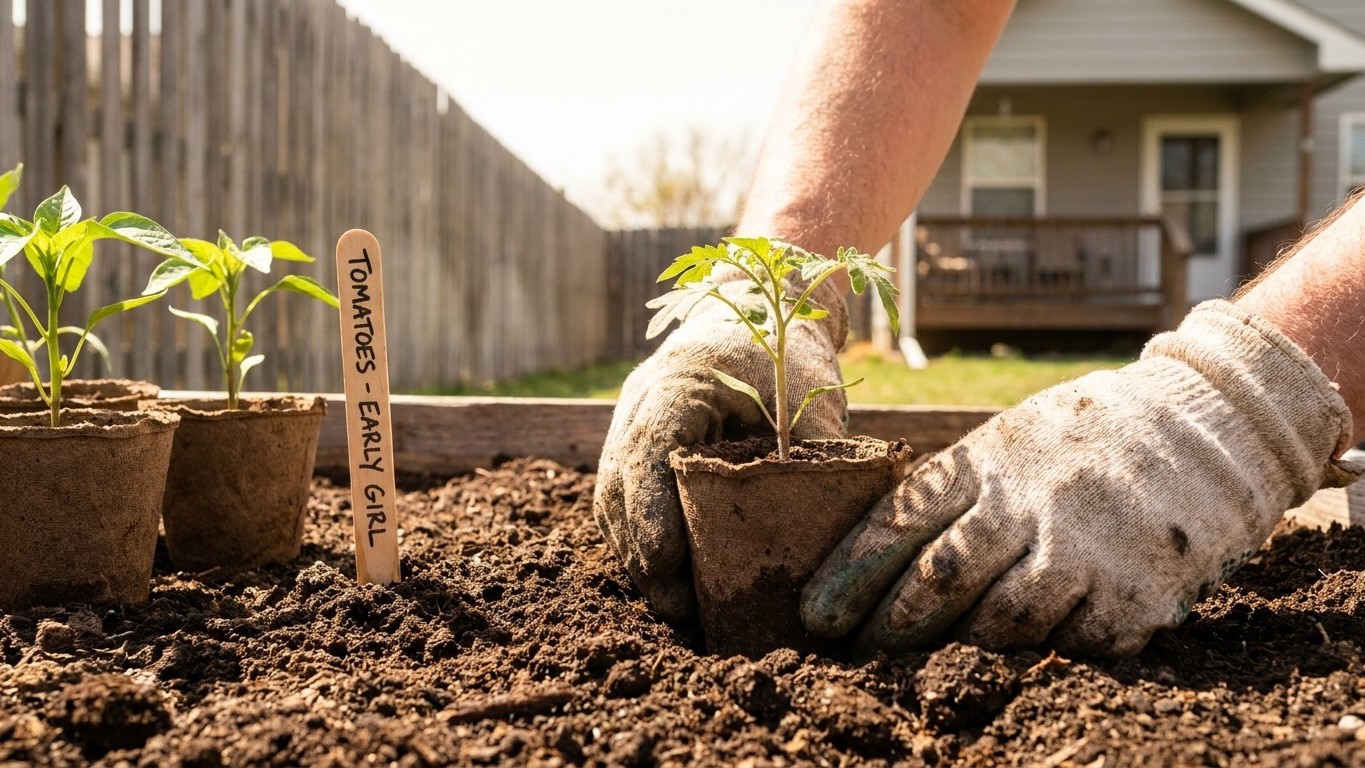

Nebraska sits in USDA zones 4a through 5b, with an average frost-free window running from mid-to-late April through mid-to-late October. That’s roughly six months, give or take two weeks depending on where you are in the state. Everything else about growing food or flowers here branches off that one number.
How long your season really is

Start with the numbers themselves. The USDA Plant Hardiness Zone Map, built from 1991-2020 averages, places Nebraska across zones 4a to 5b. That range alone tells you something: this is a big state, and a plant that survives winter in Omaha might not make it through one in the Panhandle. According to NOAA climate normals for the reference station used here, the average last spring frost falls between April 12 and April 23, and the average first fall frost lands between October 15 and October 26.
Subtract one from the other and you get a frost-free season of somewhere around 175 to 195 days, depending on exactly where those dates fall in a given year. That’s the number that actually governs what you can grow. It’s enough time for the vegetables most home gardeners rely on: tomatoes, beans, squash, cucumbers, most leafy greens like those covered in Growing Spinach in Nebraska, and, with a bit of planning around Growing Peppers in Nebraska, a solid pepper harvest too. That window is also enough for perennial crops to establish themselves, which is why Growing Asparagus in Nebraska remains a popular choice for gardeners willing to wait a couple of seasons before the first real harvest. The same season length also supports Growing Sweet Corn in Nebraska, a summer staple that fits comfortably within that window. This same window also lines up well with Growing Potatoes in Nebraska, one of the more forgiving crops for the state’s variable spring weather, and it also gives root crops enough time to mature, as anyone Growing Parsnips in Nebraska will tell you, since parsnips need a long, slow season before they’re worth pulling. That same fall frost timing also gives root vegetables like beets enough runway to mature fully, which is why Growing Beets in Nebraska works so well within this frost-free window, and it also determines When to Carve a Pumpkin in Nebraska, since pumpkins left too long on the vine after the first hard freeze won’t hold up for Halloween display, a risk worth keeping in mind for anyone Growing Pumpkins in Nebraska on that same schedule. It is not, in most years, enough time for crops that need a long, uninterrupted growing period without help, things like certain long-season melons or heat-loving crops bred for a Deep South summer. Those aren’t impossible, but they’re a gamble that depends on starting transplants indoors and hoping the fall frost holds off.
Here’s the part gardeners tend to forget: those frost dates are averages, not promises. An average last frost date means that, by definition, roughly half of all years see frost after that date. The other half don’t. That’s not a technicality, it’s the whole reason a planting calendar built on averages still leaves room to get burned. A tomato transplant set out right at the average last frost date has a real chance of meeting one more cold night before the weather settles in for good.
There’s also a built-in caution in the data itself. These frost dates come from one reference weather station, typically located at an airport. Suburban yards and rural gardens tend to run cooler at the edges of the season than that station does, often by one to two weeks, and more if you’re at higher elevation or in a low-lying spot where cold air pools. So if the reference dates say April 18, your actual yard might not be reliably frost-free until closer to the start of May. That gap matters more than most gardeners assume, and it’s the reason a set planting date works better as a starting guess than a rule.
What the summer does to a garden here
Frost isn’t the only thing that shapes the season. At the Omaha reference station, the average year sees 28.1 days that reach 90F or higher, and the average daily minimum temperature in the coldest month sits at 15.2F. Those two numbers describe two very different stresses on a garden, and both matter.
The winter number decides what survives from year to year without protection. A daily minimum near 15F in the coldest month means perennials, shrubs, and any plant marketed as hardy need to actually be rated for zone 4 or 5 conditions, not just “cold hardy” in some vague marketing sense. That’s the whole reason the hardiness zone map exists.
The summer number is the one gardeners underestimate. Nearly a month of days above 90F doesn’t just mean “hot.” It means real stress on specific crops at a specific point in their growth. Tomatoes stop setting fruit when daytime and nighttime temperatures both run too high, generally once the mid-90s become routine; the flowers simply drop without pollinating. Lettuce, spinach, and other cool-season greens bolt, sending up a flower stalk and turning bitter, once sustained heat sets in. That’s not a defect in the plants, it’s what they’re built to do when conditions signal summer is ending their window.
The practical shape this gives the Nebraska garden year isn’t one long, steady growing season. It’s closer to two productive stretches, an early one before the heat peaks and a second one once it breaks in early fall, with a rough patch in the middle where certain crops simply stall or quit. Recognizing that pattern up front changes how a gardener plans succession plantings and when they choose to give up on lettuce for a couple of months rather than fight it.
What tends to go wrong in Nebraska
Insects show up on a schedule of their own, and Nebraska Extension’s vegetable garden guidance flags a handful that home gardeners here run into most often. Grasshoppers, in several species including the migratory, differential, twostriped, and redlegged types, build up through summer and can strip leaves fast once populations spike in drier years. Squash bugs and squash vine borers target the same family of plants from two different angles, one sucking sap from leaves and wilting vines, the other tunneling into stems and killing them from the inside, both typically becoming a problem as squash and pumpkin vines mature through midsummer.
Cucumber beetles and bean leaf beetles chew leaves and can also spread plant diseases as they move from plant to plant, making them worth watching for early rather than after damage is obvious. Tomato and tobacco hornworms, often unnoticed until they’re nearly full grown, can strip a tomato plant of leaves within days once they hit their final growth stage in mid-to-late summer. Japanese beetles and blister beetles round out the list the extension service highlights, both known for skeletonizing leaves on ornamentals and vegetables alike.
None of this means every garden in the state deals with all of these every year. Pressure varies by region and by season, and this list reflects what the state’s extension service flags as recurring concerns for home gardens, not a guarantee of what will show up in any one yard. If something is chewing on your plants and you’re not sure what it is, that’s a job for your county extension office, not a guess based on a photo online.
Where to check before you plant
Everything above describes Nebraska as a whole, and a state spanning zones 4a to 5b, with frost dates that shift by weeks from one end to the other, doesn’t behave the same everywhere. The figures cited here come from a single reference station, and a planting calendar built around that city’s averages can run two to three weeks off for a garden near the state line, whether that’s earlier in the Panhandle or later along the Missouri River bottoms.
Nebraska Extension, the state’s land-grant university extension service, publishes county-level guidance that accounts for those differences, along with pest identification help and localized planting windows. Your own county office is worth a call or a visit to their local page before you commit to a planting date, especially in a state where elevation and latitude both shift meaningfully from border to border.
Digging Into the Specifics
Everything above is the general shape of a Nebraska season, but the details change depending on what you’re actually growing. If garlic is on your list, it helps to know that the cold doing all this work for you is also the thing you’re planting around: growing garlic in Nebraska lays out the planting dates and varieties that make use of those six to eight weeks below 40°F instead of fighting them. The lawn runs on a different clock entirely, and it’s worth knowing before you buy seed that Nebraska lawn care explains why a tall fescue and Kentucky bluegrass blend is the one combination built for winters this cold and summers that never get hot enough for long enough to justify anything else. And if tomatoes are the real reason you’re out here in the first place, growing tomatoes in Nebraska works backward from Omaha’s last spring freeze — that ten-day window between April 12 and April 23 — to show why counting back six to eight weeks from it is the whole trick to getting timing right instead of guessing at it.